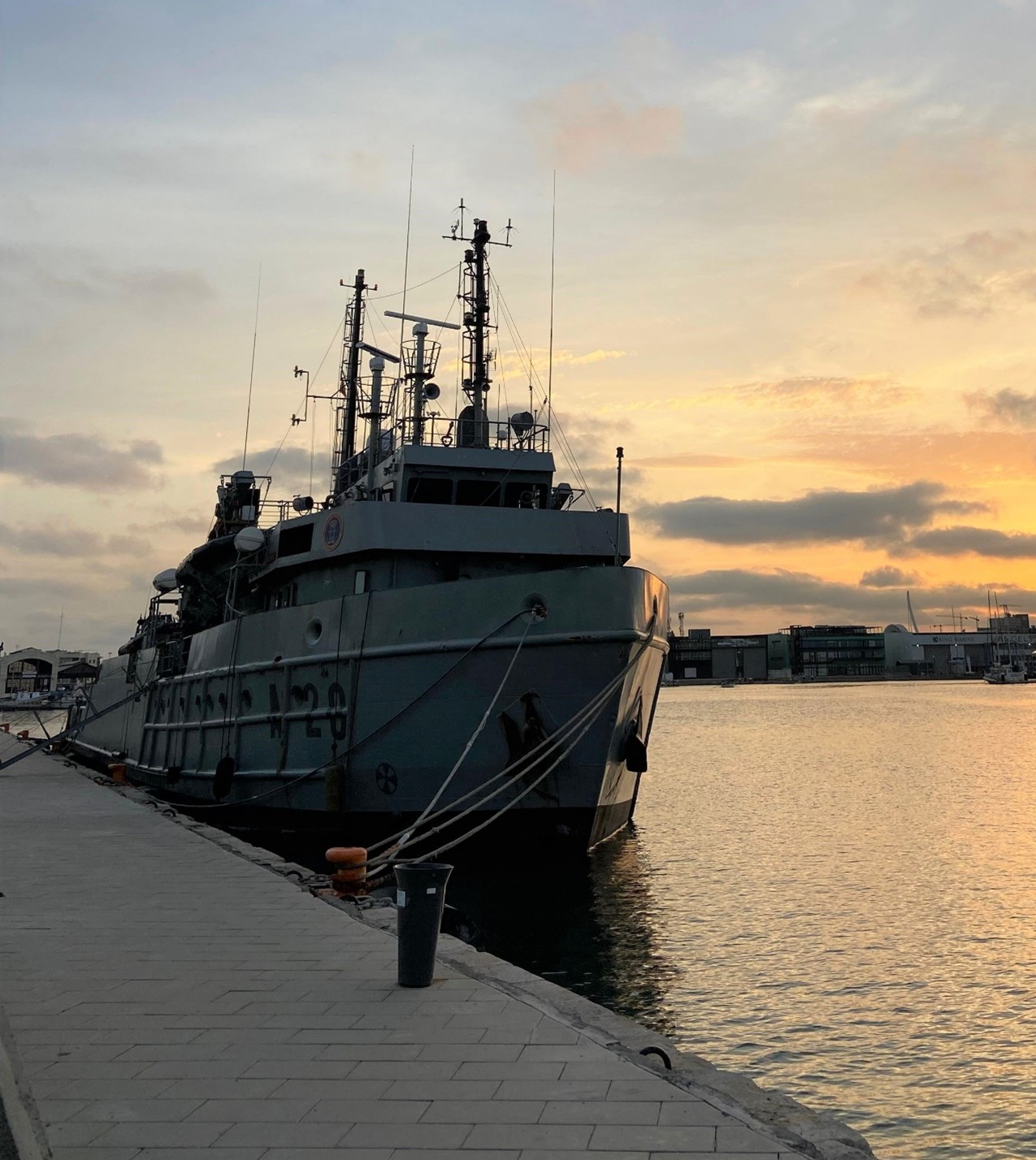

The ‘Neptuno’ Search and Rescue Vessel is stepping up surveillance and protection of the seabed in the waters off the Valencian coast
In conjunction with specialist teams from the Navy Diving Centre and the Counter-Mines Force, unmanned underwater vehicles and underwater intervention capabilities have been deployed
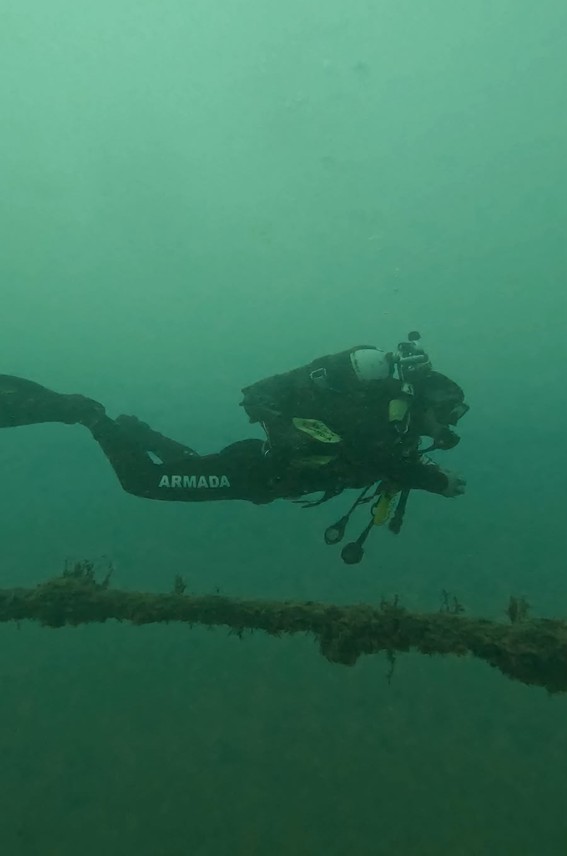
The Search and Rescue Vessel (BSR) ‘Neptuno’ has taken part, alongside the Diving Operations Team (EOB) from the Navy Diving Centre (CBA) and the Unmanned Underwater Vehicle (UUV) Team from the Mine Countermeasures Force (MCM), in a surveillance and reconnaissance operation of the seabed off the Valencian coast.
Over the course of several days, the participating units have carried out activities aimed at improving understanding of the underwater environment and contributing to the surveillance and protection of their infrastructure, the security of which is essential for communications, energy supply and other services of national interest.
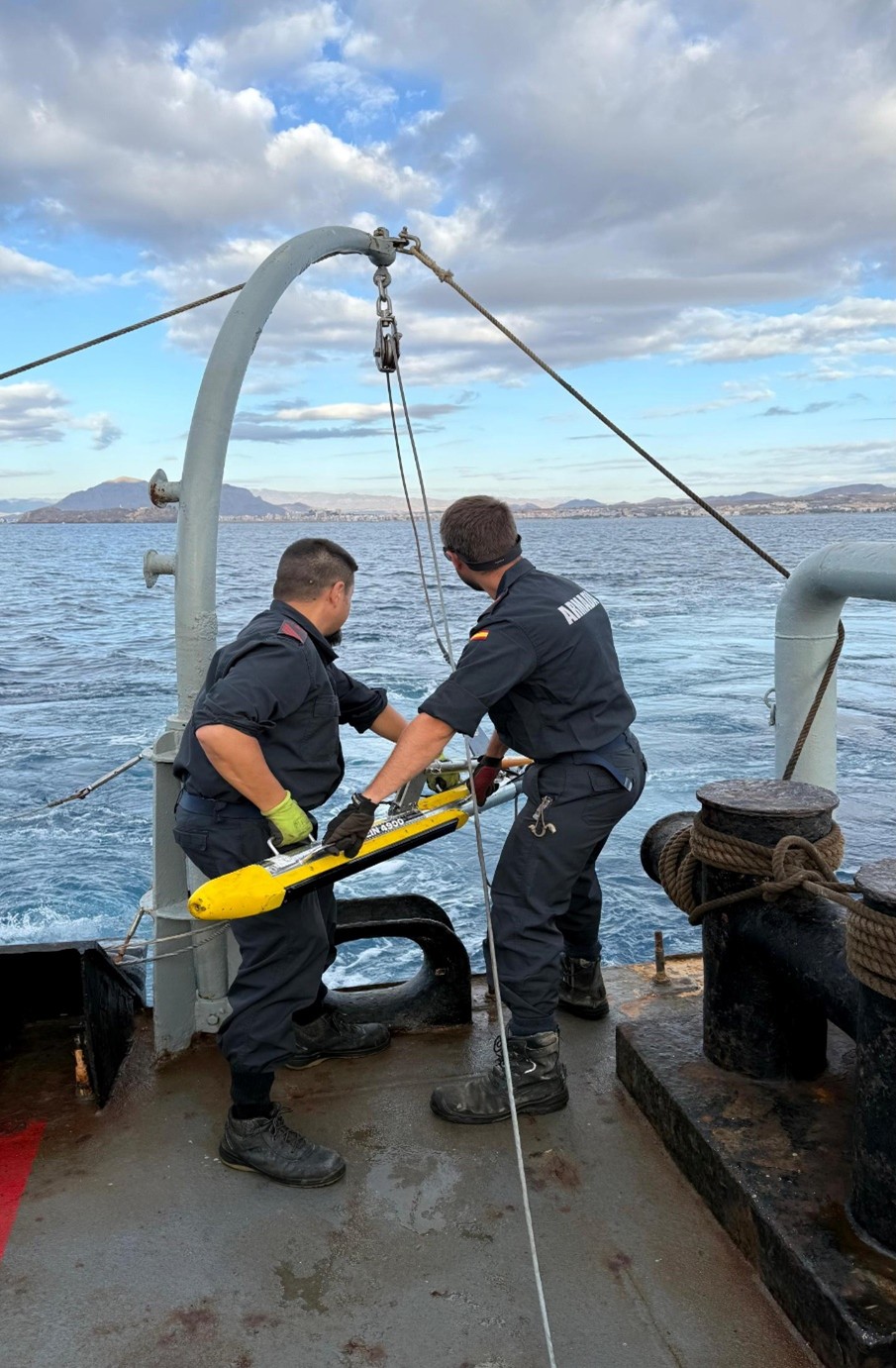
Specialised teams from the CBA and the MCM Force have deployed underwater vehicles capable of carrying out seabed exploration and reconnaissance missions. These systems enable information about the underwater environment to be gathered autonomously, thereby expanding the Navy’s surveillance capabilities.
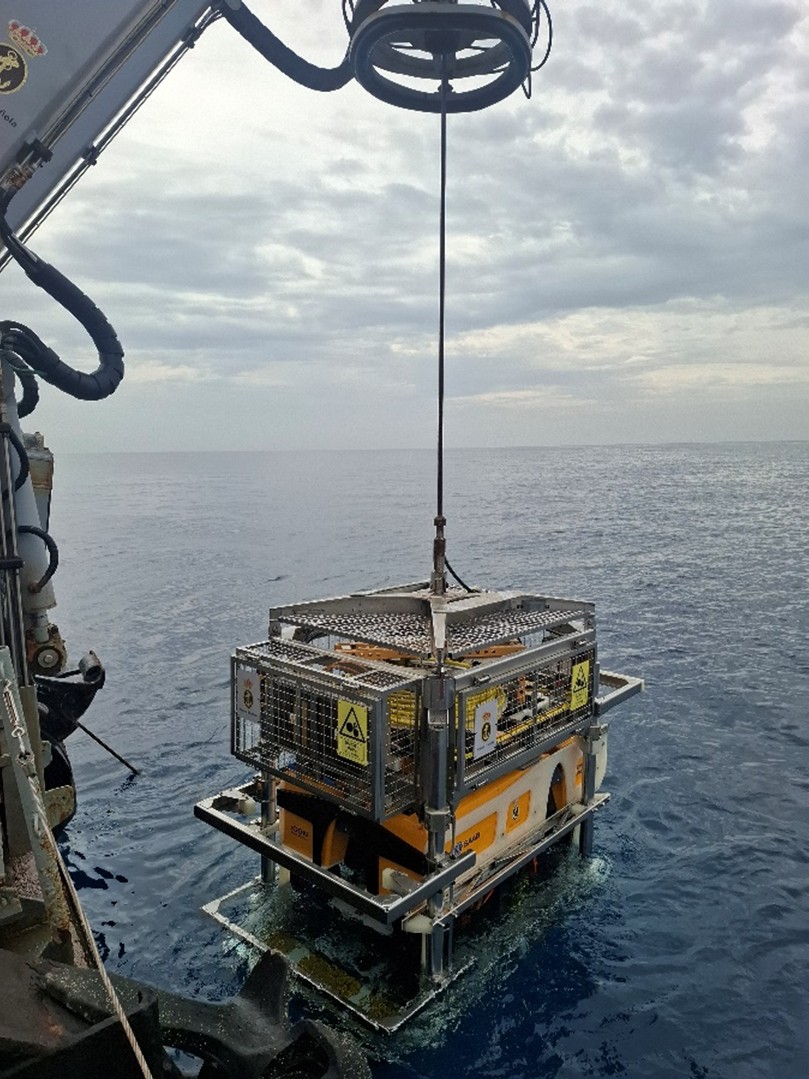
This activity, which forms part of the Presence, Surveillance and Deterrence (OPVD) operations, has enabled the coordinated integration of these vehicles’ reconnaissance capabilities with the ‘Neptuno’s’ underwater intervention resources, which include remotely operated vehicles (ROVs), specialised diving equipment, and hyperbaric support and treatment facilities.
The combination of these capabilities allows surveillance and reconnaissance operations to be complemented by the ability to intervene directly on the seabed, providing greater versatility, safety and responsiveness in the event of any incidents in the underwater environment.
This operation highlights the importance of integrating unmanned systems and underwater intervention equipment, as well as the high level of specialisation of the Navy’s personnel, in ensuring the surveillance and protection of maritime areas of national interest.
The ‘Neptuno’ at the Maritime Operations Command
The rescue vessel ‘Neptuno’ forms part of the fleet, within the Maritime Action Force (FAM), which comprises a group of units whose main task is to prepare to protect national maritime interests and to control maritime areas under national sovereignty and of national interest.
At sea, it is capable of carrying out underwater search, detection, location, reconnaissance and intervention operations on any submerged object. To this end, it has specialists in deep-sea diving, a diving facility with surface supply and a hyperbaric chamber, as well as unmanned underwater vehicles with significant intervention capabilities, such as the Leopard ROV.
During this operation, and under the operational control of the Commander of Operations Command (CMOPS), the vessel rejoins the Maritime Operations Command (MOM).
The MOM is a body within the operational structure of the Armed Forces, reporting to the Chief of the Defence (JEMAD), and is responsible, at its level, for the planning, conduct and monitoring of operations relating to presence, surveillance and deterrence in maritime areas under national sovereignty, responsibility and interest. It is under the command of the Admiral of Maritime Operations (ALMART), Vice-Admiral Vicente Cuquerella Gamboa, and is headquartered in Cartagena.
Lieutenant Commander Ignacio Zaragoza Ruiz is in command of the BSR ‘Neptuno’.
Naval Diving Centre Operational Diving Team (EOB-CBA)
The CBA’s EOB comprises personnel specialising in underwater operations, who are prepared for rapid deployment by land, sea or air, both in planned operations and in emergency situations.
It has the capability to carry out search, location and recovery operations for submerged objects, refloating operations and specialised underwater work, including deep-sea diving using state-of-the-art rebreather equipment.
It also has SPARUS II autonomous underwater vehicles, which enable it to carry out exploration and reconnaissance work on the seabed, complementing the operational capabilities of its divers.
UUV team from the Counter-Mines Unit
The UUV team of the Counter-Mines Force reports directly to the commander of that Force (COMTEMECOM) and is made up of specialist personnel with training and experience in the operation of unmanned underwater vehicles.
It has two SPARUS II vehicles, whose main task is to detect and classify potential underwater mines, enabling these tasks to be carried out without directly exposing personnel to the risks associated with minefields.
The versatility of these systems also allows them to be used in missions to explore, identification and identify underwater targets of interest, thereby helping to improve the Navy’s understanding of the environment and its surveillance capabilities.
Presence, Surveillance and Deterrence Operations
Presence, Surveillance and Deterrence Operations are an effective tool for maintaining surveillance of sovereign territories, enabling the early detection of threats and facilitating an immediate and viable response to a potential crisis. Together with the MOM, the Land
Operational Command (MOT), Air Operational Command (MOA), Space Operational Command (MOESPA) and Cyber Operational Command (MOC) form the structure of the Permanent Commands.
Fotos