

The Patrol Boat Isla Pinto strengthens maritime surveillance in the waters of Melilla and Spanish positions in North Africa
This deployment is intended to enhance maritime situational awareness and security in maritime areas of interest.
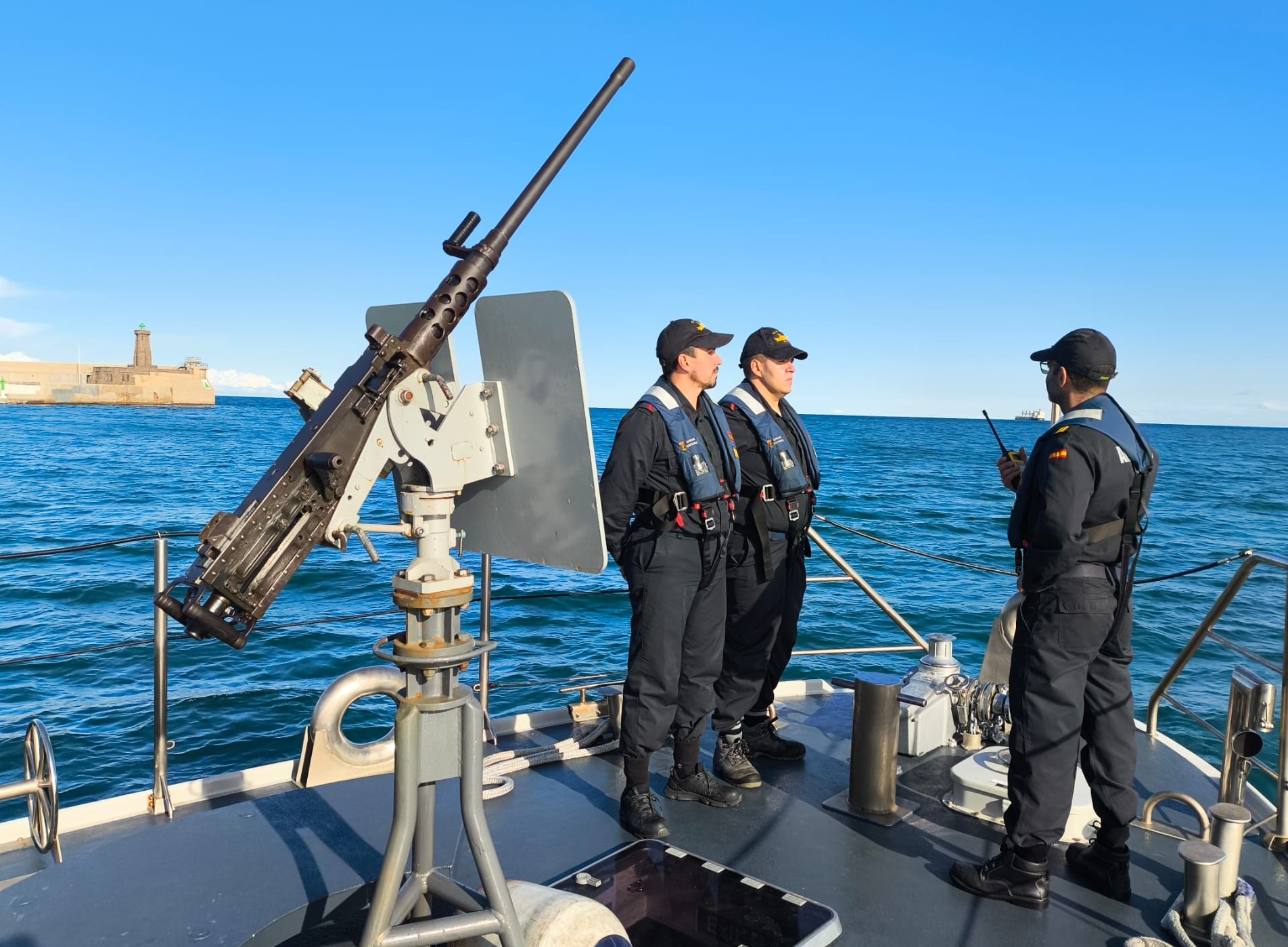
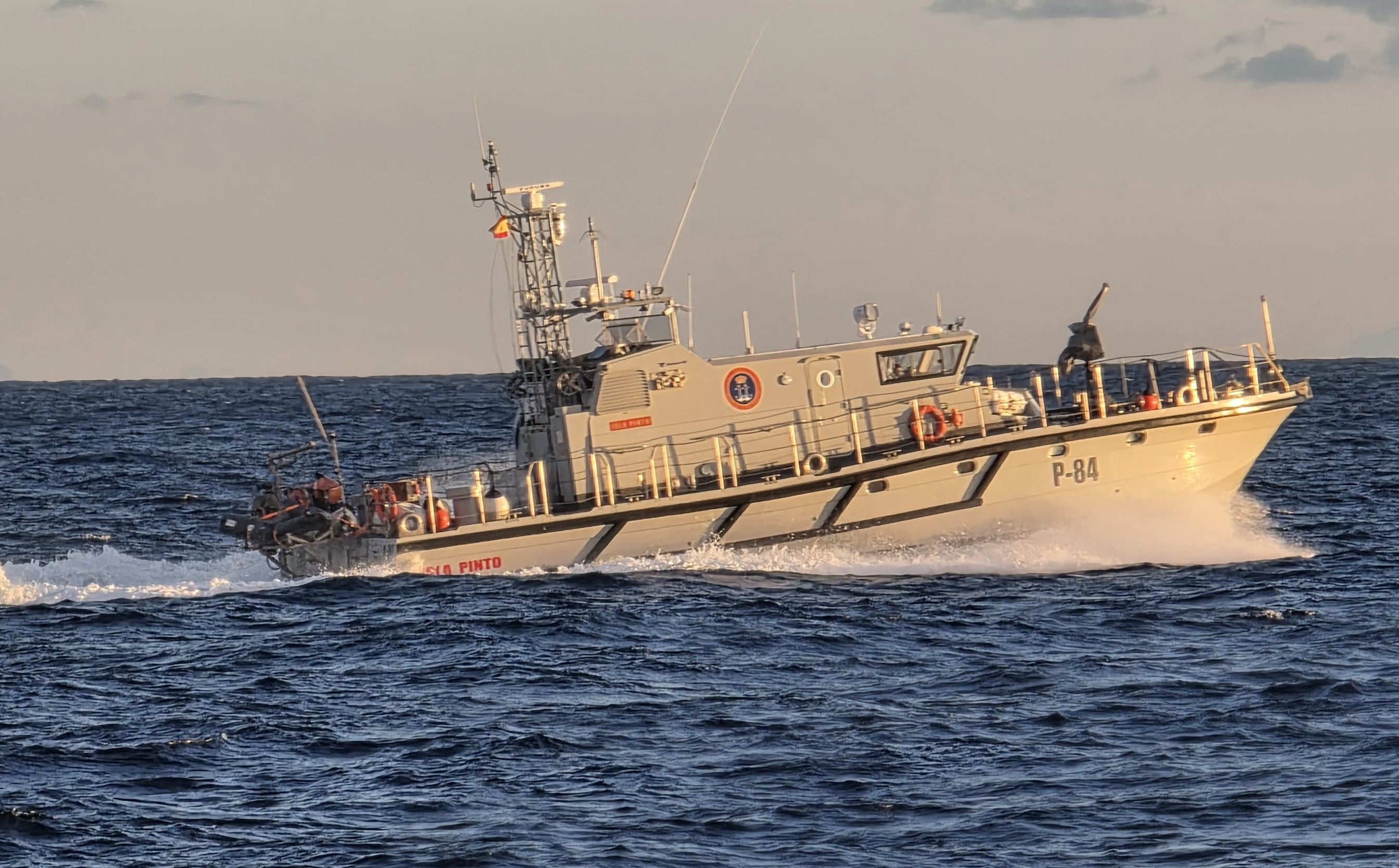
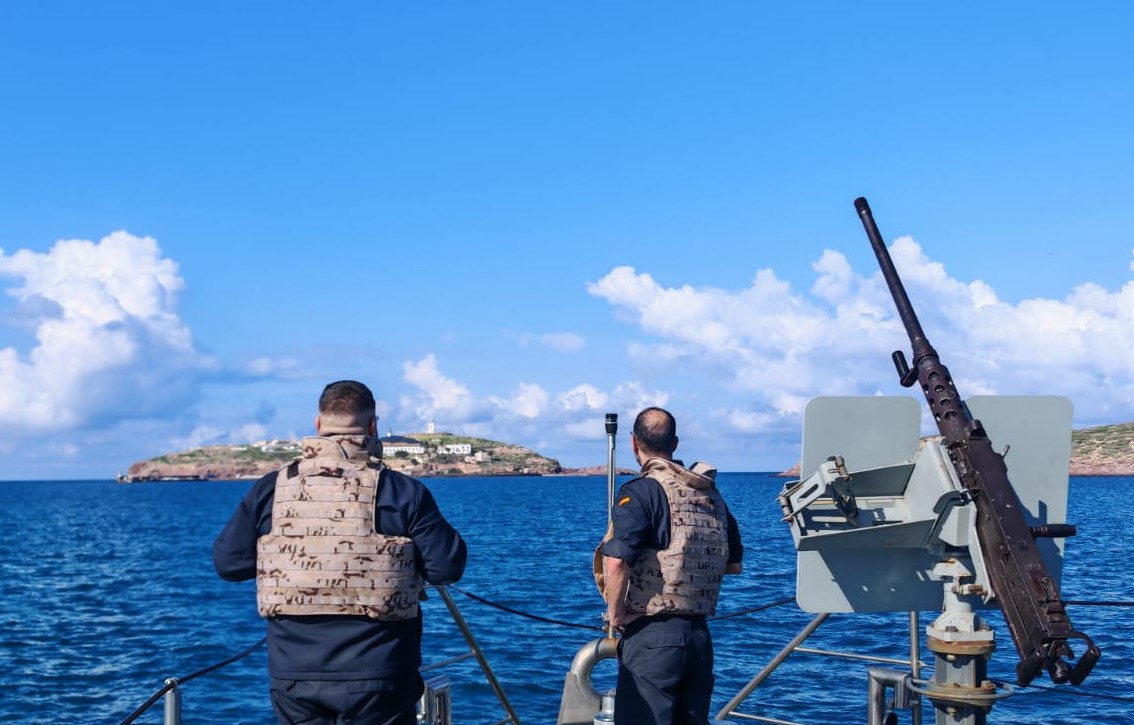
The Coastal Surveillance Patrol Boat Isla Pinto (P-84) is carrying out a maritime surveillance mission to provide naval presence and control in areas of permanent interest. The aim is to help guarantee security in the territorial waters of Melilla and other Spanish territories in North Africa.
Among its main tasks, Isla Pinto carries out activities to verify and control maritime traffic, while monitoring fishing activity within its assigned area of operations. It also maintains continuous operational coordination with the Melilla Civil Guard to strengthen inter-institutional cooperation, improve maritime situational awareness, and enhance the security of territorial waters.
This mission is conducted within the framework of the Armed Forces Presence, Surveillance and Deterrence Operations with the vessel integrated into the Maritime Operational Command (MOM by its Spanish acronym) and under the operational control of the Commander of the Operations Command (CMOPS by its Spanish acronym). These missions are an effective tool for maintaining surveillance of permanent areas of interest, enabling the early detection of threats and facilitating an immediate and viable response to any potential crisis.
Preparation and training
Prior to the current operation, Isla Pinto and its crew completed a period of training and capability inspection in Cádiz, under the leadership of the Commander of the Maritime Action Units of Cádiz.
Subsequently, the Unit continued its training programme in Melilla territorial waters, with the aim of maintaining a high level of readiness and full operational capability throughout its operational cycle. In this programme, activities focus on platform control exercises, internal security, force protection and maritime situational awareness, all of which are essential for the effective fulfilment of its missions.
The vessel has a propulsion system consisting of two MTU engines, each with 1,380 hp, allowing a maximum speed of 32 knots, an auxiliary generator with two diesel engines, portable weaponry up to 12.7 mm, a FLIR optronic system, two navigation radars and a RHIB boat.
Daily life on board
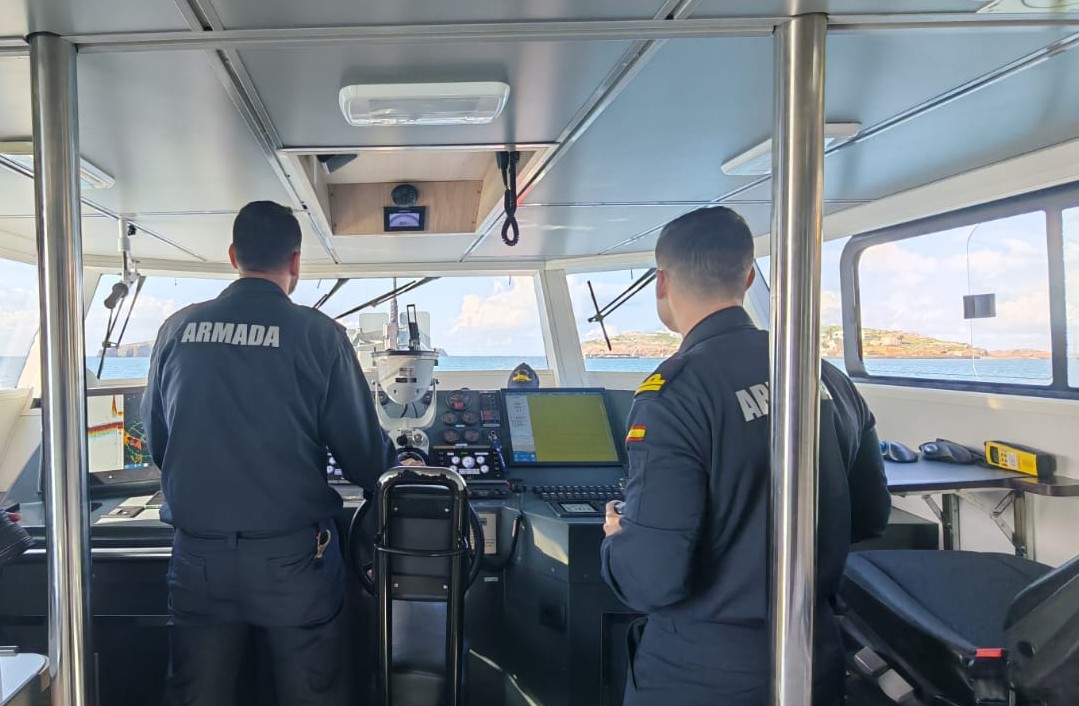
Watchkeeping duties are organised on the bridge, in the engine room and on deck, ensuring the safety and proper operation of the vessel at all times.
The patrol vessel’s commanding officer, Lieutenant Commander Daniel González-Aller Joly, highlights the high level of commitment, professionalism and training achieved by the ship’s crew, as well as “the pride involved in contributing to the security of waters of interest far from the Spanish mainland”.
Maritime Operational Command and Presence, Surveillance and Deterrence Operations
The Maritime Operational Command is the operational arm of the Armed Forces. Subordinate to the Chief of the Defence Staff (CHOD), it is responsible for planning, conducting and monitoring operations involving presence, surveillance and deterrence in areas of maritime sovereignty, responsibility and national interest. Based in Cartagena, it is commanded by Vice Admiral Vicente Cuquerella Gamboa, Admiral of Maritime Action.
Different Navy vessels integrated into the Maritime Operational Command carry out presence, surveillance and deterrence operations under the operational control of the Operations Command. These operations are an effective tool for maintaining surveillance of areas of sovereignty and interest, increasing awareness of the maritime environment, and contributing to its comprehensive protection alongside other state institutions. They also facilitate the early detection of threats and enable an immediate and viable response to potential crises.
Fotos