
The vessel ‘Intermares’ arrives in Mauritania to help build the capabilities of our partner countries in West Africa
The Training and Fisheries Cooperation Vessel is launching a comprehensive training and instruction programme as part of its cooperative security activities
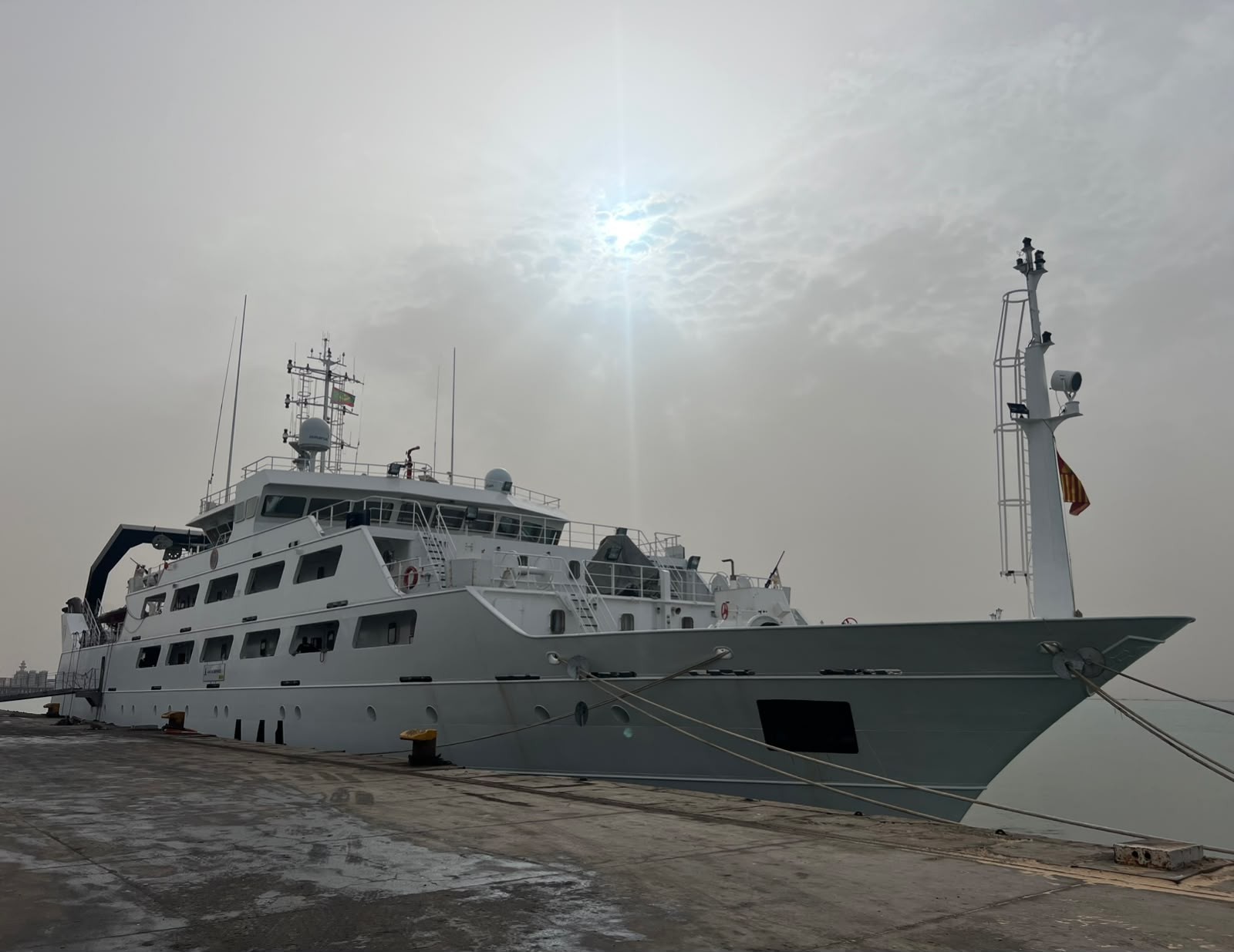
The Training and Fisheries Cooperation Vessel (BECP) ‘Intermares’ has docked at the port of Nouakchott (Mauritania) as part of bilateral cooperation activities that reaffirm Spain’s commitment to stability and institutional strengthening in the West African region.
Following its port call in Santa Cruz de Tenerife, where training activities were held with staff from the Ministry of Agriculture, Fisheries and Food (MAPA), the ‘Intermares’ has arrived in Mauritania, where it will make port calls in Nouakchott and Nouadhibou.
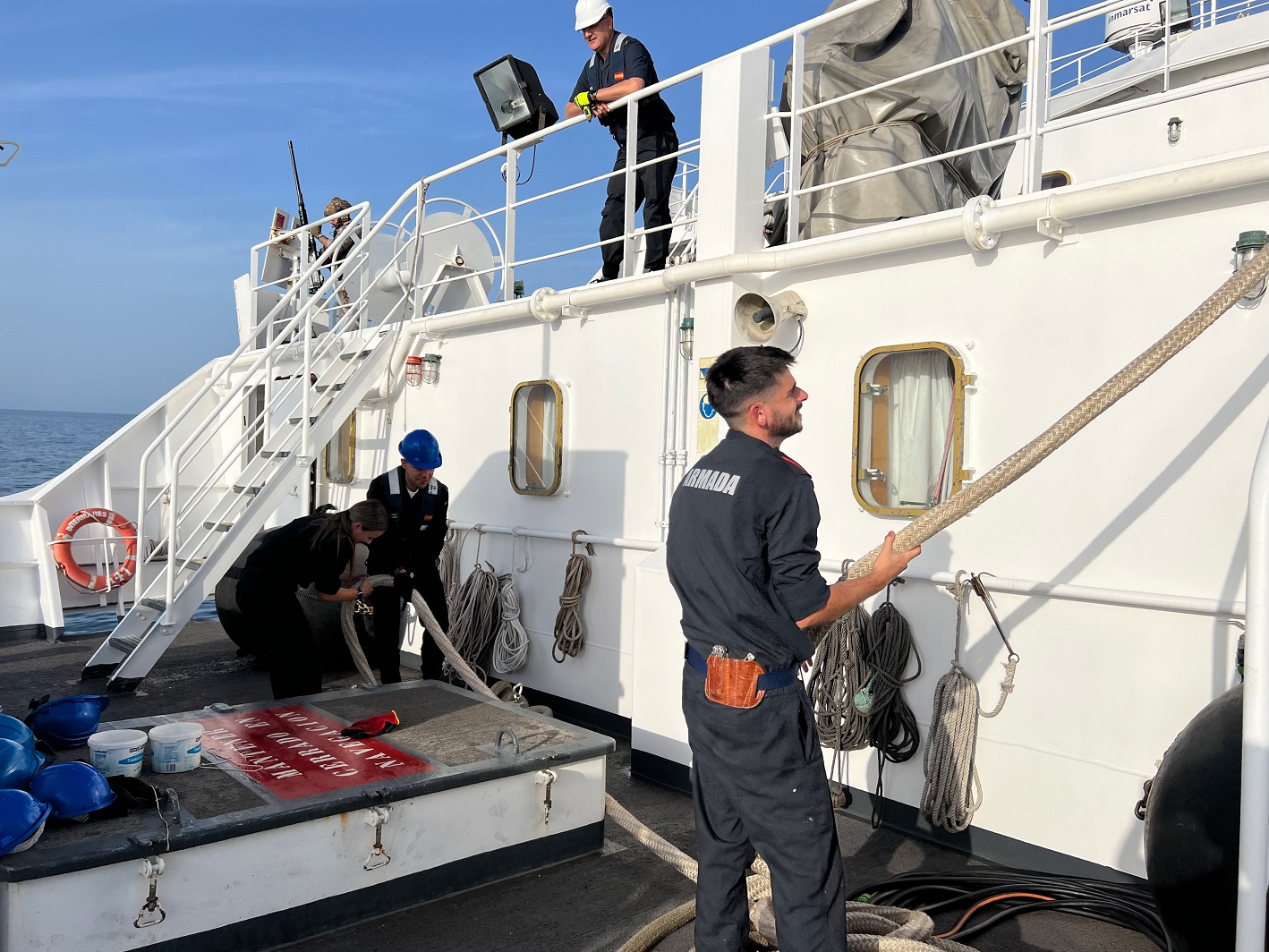
In Nouakchott, the ship’s crew will deliver the Fisheries Inspection and Control course and the Safety and Rescue course, whilst in Nouadhibou the Fishing Nets and Gear course and the Fish Processing and Handling course will be delivered. These training programmes, organised by the Ministry of Agriculture, Fisheries and Food in collaboration with the Ministry of Defence, are aimed at personnel involved in the fisheries sector and are designed to contribute to training, the exchange of knowledge and experience, and the strengthening of local capacities.
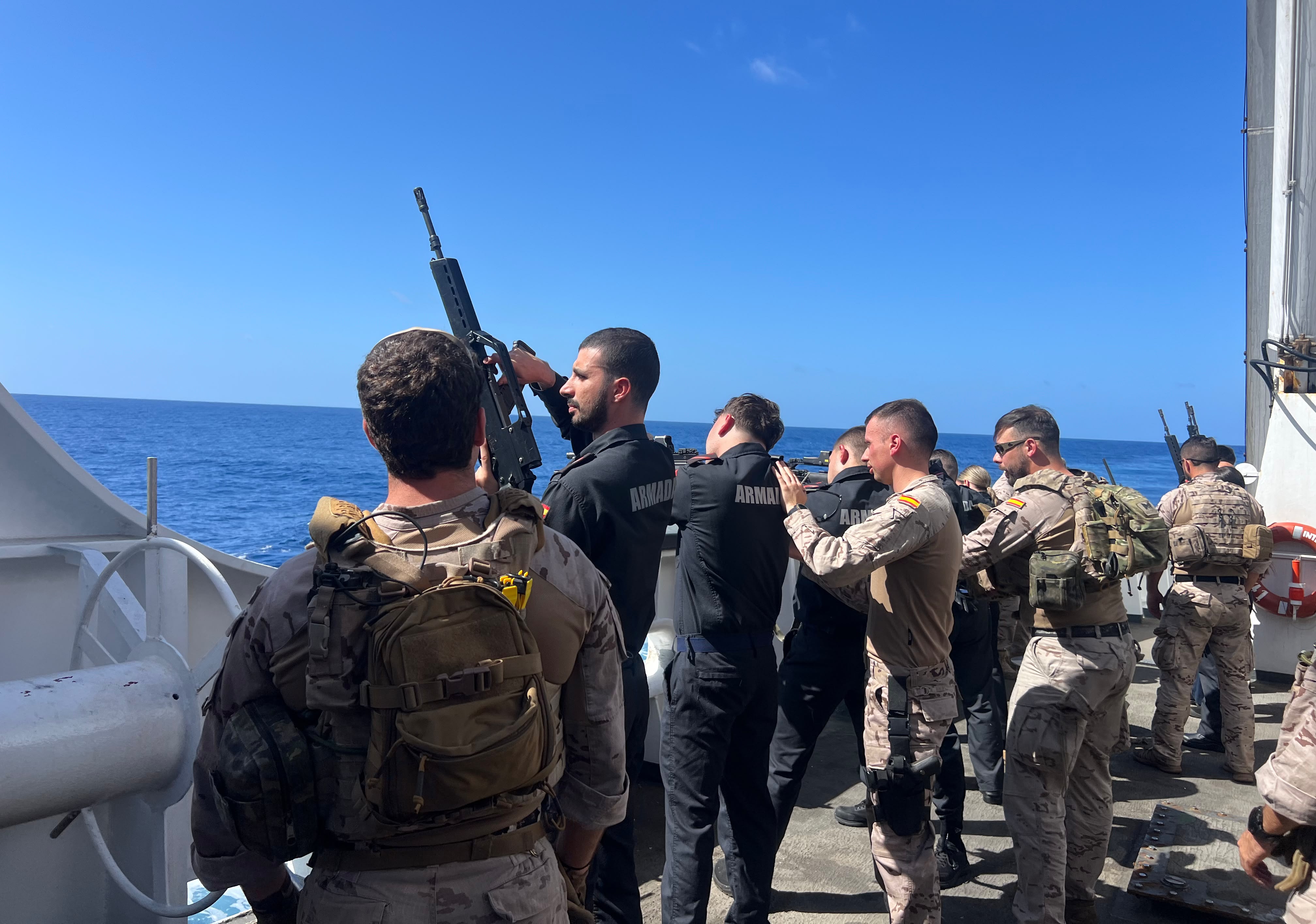
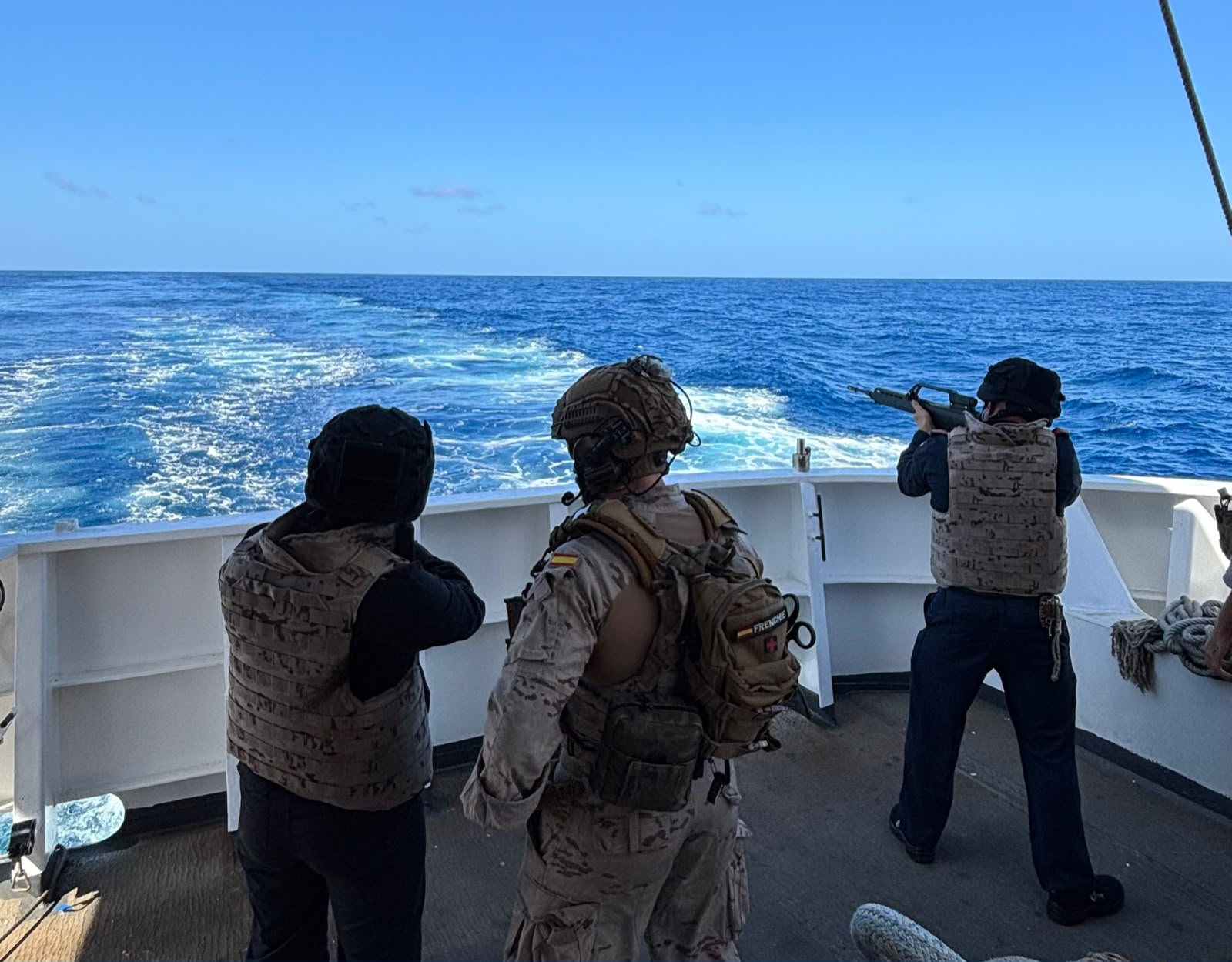
The ship will then sail to Dakar (Senegal), where Marine Corps teams on board the ‘Intermares’ will carry out training and instruction activities for members of the Senegalese Armed Forces, as part of the Cooperative Security Activities undertaken by Spain with that country. Furthermore, the fisheries training programme promoted by MAPA in collaboration with the relevant Senegalese authorities and bodies will continue. Among the planned activities are the course on Scientific Observers and the course on Fisheries Inspection and Control.
The deployment of the ‘Intermares’ demonstrates the Navy’s ability to use its vessels as platforms for cooperation and training.
BECP ‘Intermares’
The Training and Fisheries Cooperation Vessel (BECP) ‘Intermares’ has established itself as a leading platform for training and cooperation in the maritime and fisheries sector. Its facilities enable the recreation of real working conditions on board and the delivery of practical training tailored to the fisheries sector, thereby helping to bring new professionals into the sector and ensure a new generation of workers.
At international level, the vessel carries out training and cooperation activities in collaboration with organisations such as the Food and Agriculture Organisation of the United Nations (FAO), as well as with other national and international institutions and authorities in third countries.
Fotos