

Special Operations deploys to Senegal to conduct Cooperative Security training activities
- Spanish Air and Space Force personnel, alongside members of the Joint Special Operations Command, train their Senegalese counterparts in mission planning involving air assets and unmanned aerial systems (drones)
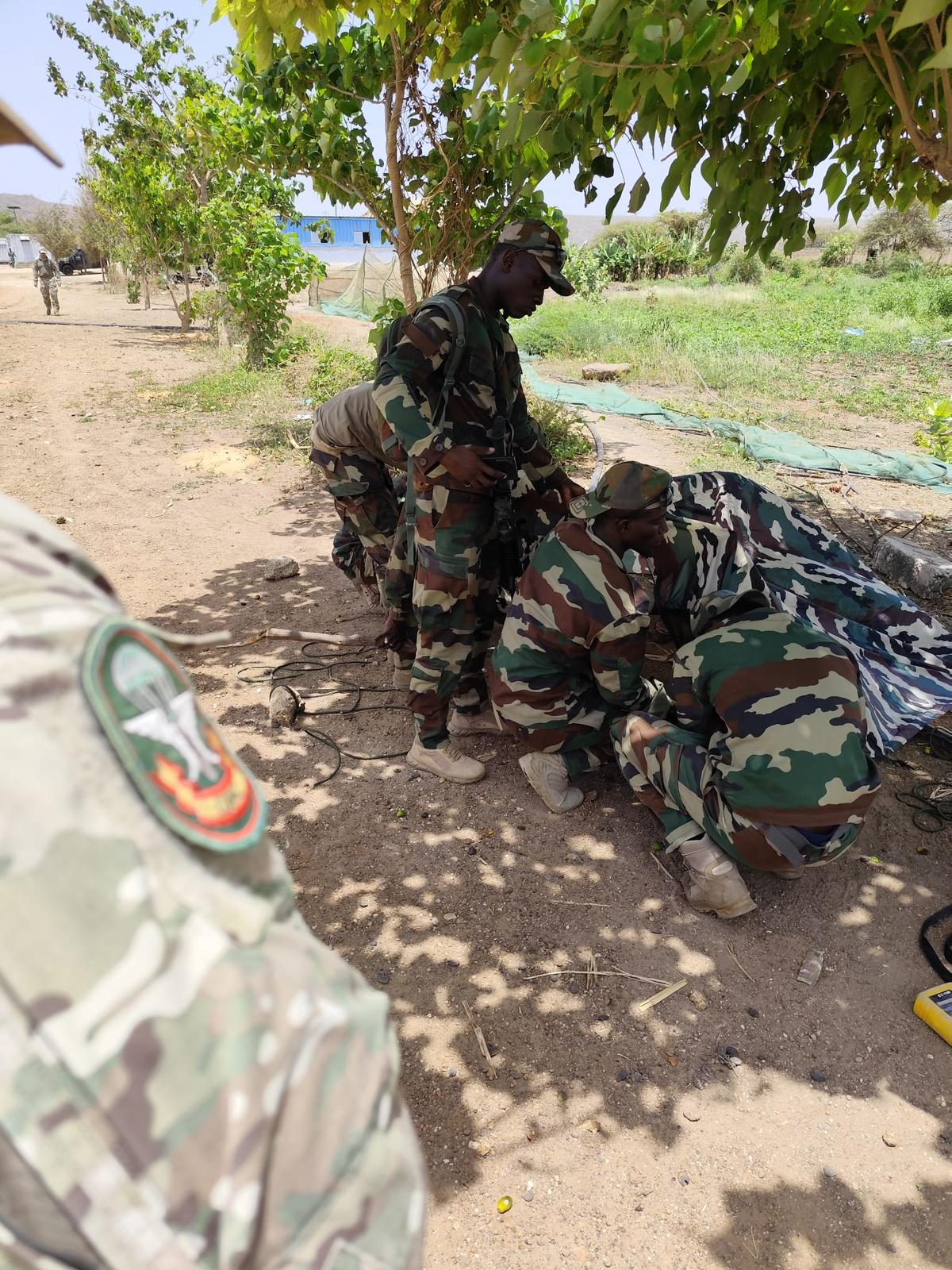
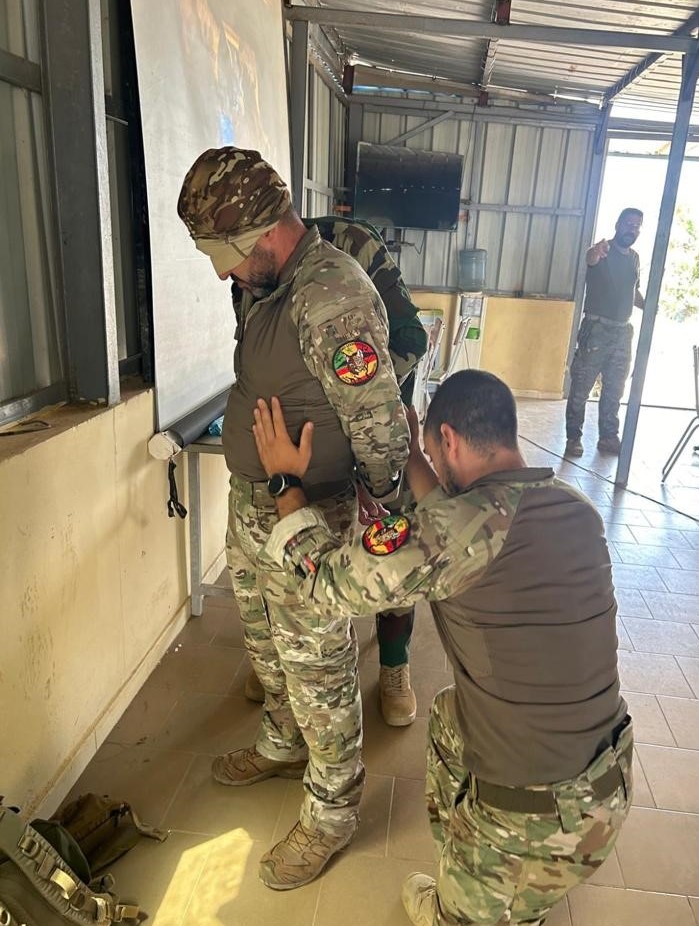
A team of instructors from the ‘Escuadrón de Zapadores Paracaidistas’ (EZAPAC) of the Spanish Air and Space Force, in coordination with personnel from the Joint Special Operations Command (MCOE), has deployed to Senegal within the framework of Cooperative Security Activities (ASC in Spanish). Their mission is to support the training of the Force Spéciale Aérienne (FSA), an elite unit of the Senegalese Air Force.
This ASC programme, currently being conducted in Thies and set to last for three weeks, marks its eleventh edition. The training has been designed to enable Senegalese units to conduct comprehensive planning for all types of special operations missions, supported with both air platforms and unit drones.
In addition, the individual training of FSA operatives has been enhanced, taking into account emerging threats within Areas of Operations, such as reconnaissance drones and loitering munitions (commonly referred to as ‘kamikaze drones’).
The activity includes both theoretical and practical instruction in Direct Action, Special Reconnaissance, and Military Assistance, core tasks in which the operational utility of drones significantly enhances mission effectiveness.
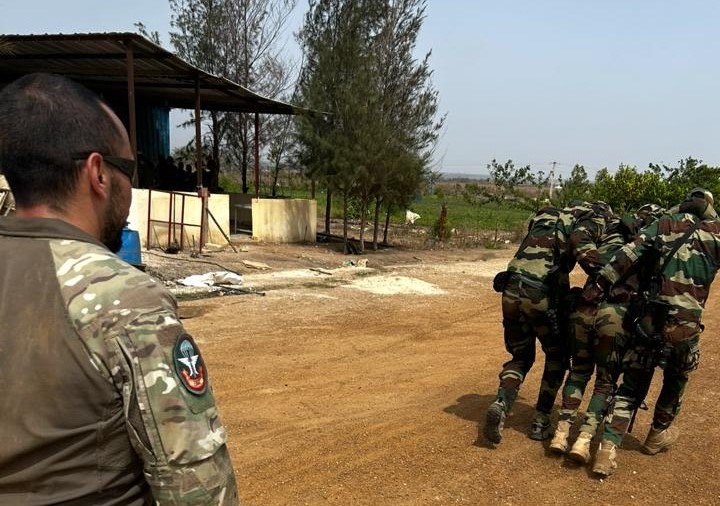
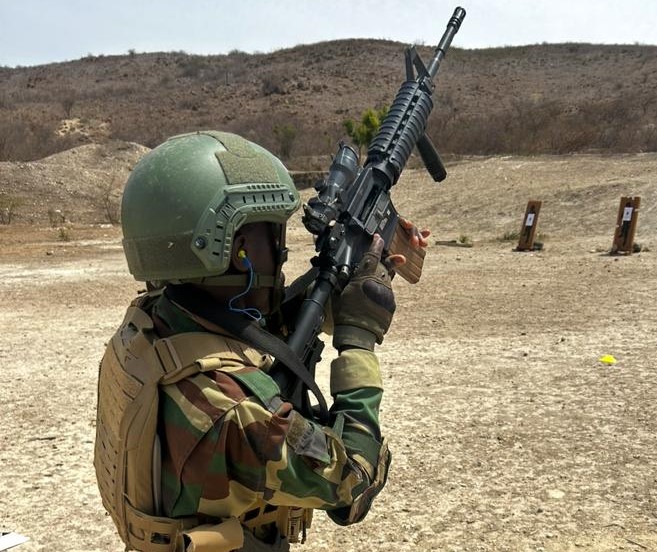
Regarding individual soldier training, Senegalese personnel are engaging in a range of tactical activities, including live-fire combat drills, Tactical Combat Casualty Care (TCCC), the establishment of observation posts, and the setup of field communications nodes.
The Cooperative Security Activity (ACS) will conclude with a live-fire exercise simulating a deliberate action on a designated objective. This final phase will serve to consolidate and apply all having been shared throughout the three-week training programme.
EZAPAC and FSA: A Bond Forged in Partnership
The relationship between EZAPAC and the FSA dates back several years.
With strong commitment and continuous support, EZAPAC played a key role in the establishment of Senegal’s special operations forces. Since 2016, Spain has maintained an uninterrupted presence of instructor teams deployed in Senegal. On an annual basis, one or more EZAPAC teams conduct joint training with the FSA; a collaboration that has become a vital pillar in the development of the FSA’s military capabilities. The FSA remains one of the elite units within the Senegalese Armed Forces.
Within this framework of close cooperation, Spanish First Sergeant ‘Grinch’ (callsign) emphasises:
This is my third time in Senegal working alongside the FSA. They are a highly capable and professional unit, always willing to train with us. The level of joint effort over the years has forged a strong sense of brotherhood between us.
With these deployments and through these Cooperative Security Activities, Spain continues to demonstrate its unwavering commitment to stability and security in West Africa; a region of strategic importance to national security.
Cooperative Security Activities
In June 2014, Spain and Senegal agreed to strengthen their bilateral cooperation through joint training activities aimed at enhancing or developing military capabilities within the Senegalese Armed Forces, in support of the African country and its population’s safety. To that end, the Spanish Army, Navy, and Air and Space Force have been conducting various military assistance activities, including advisory support and operational training with Senegalese units.
At present, as is also the case in Tunisia, Mauritania, and Cape Verde, Spain continues to carry out military engagements in Senegal, a key partner in the stability of West Africa. Spanish Armed Forces personnel are providing training in combat operations focused on counter-terrorism, as well as instruction in a range of mission sets, such as search and rescue operations. Additionally, they deliver training related to military support in infrastructure reconstruction with specialised assets and capabilities.
Fotos