

EUMAM Mozambique closes leadership programme for the country's Armed Forces
- Spanish Lieutenant Colonel González-Lázaro Sueiras, head of the Training Section, was responsible for planning and supervising this course
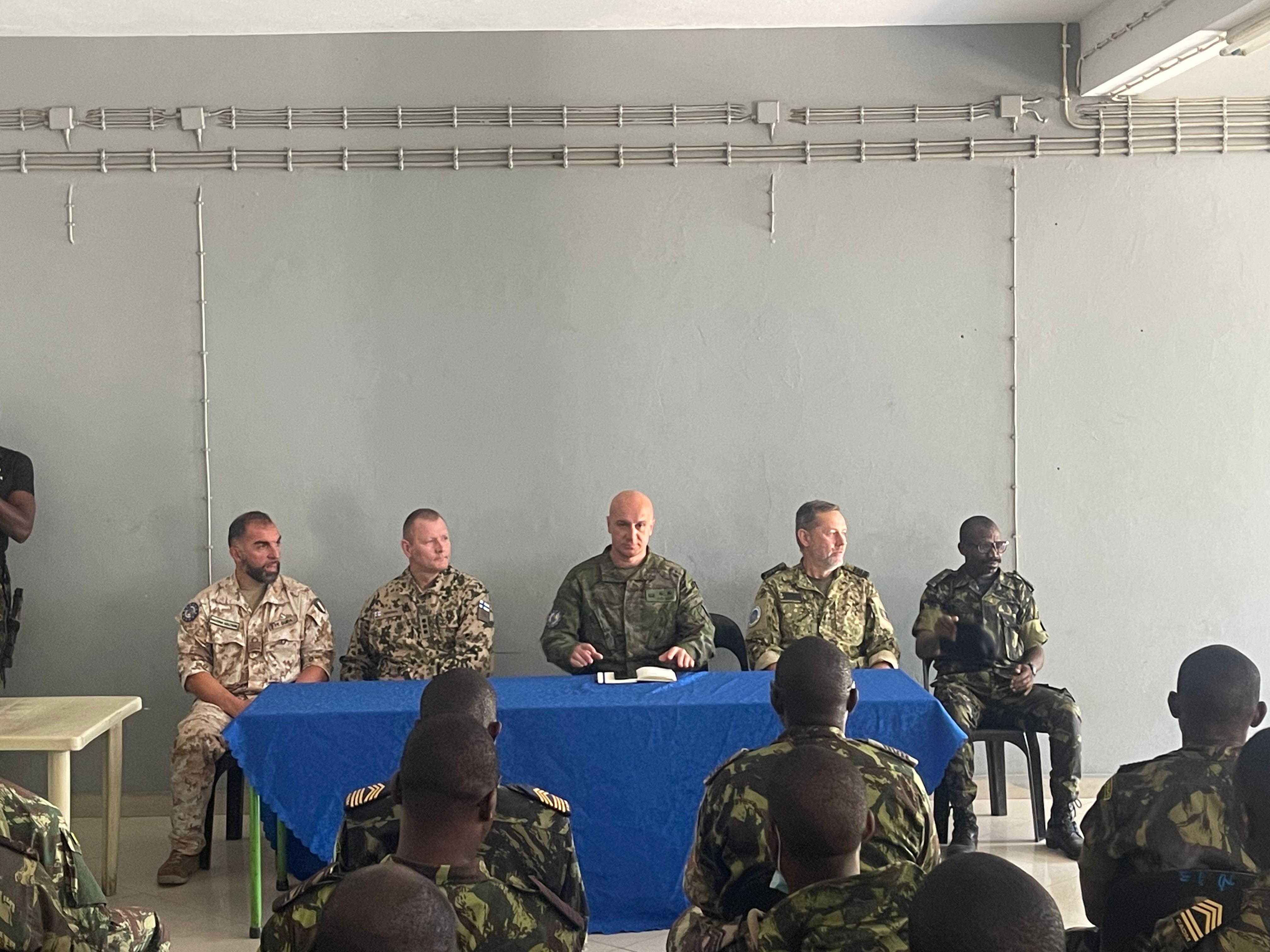
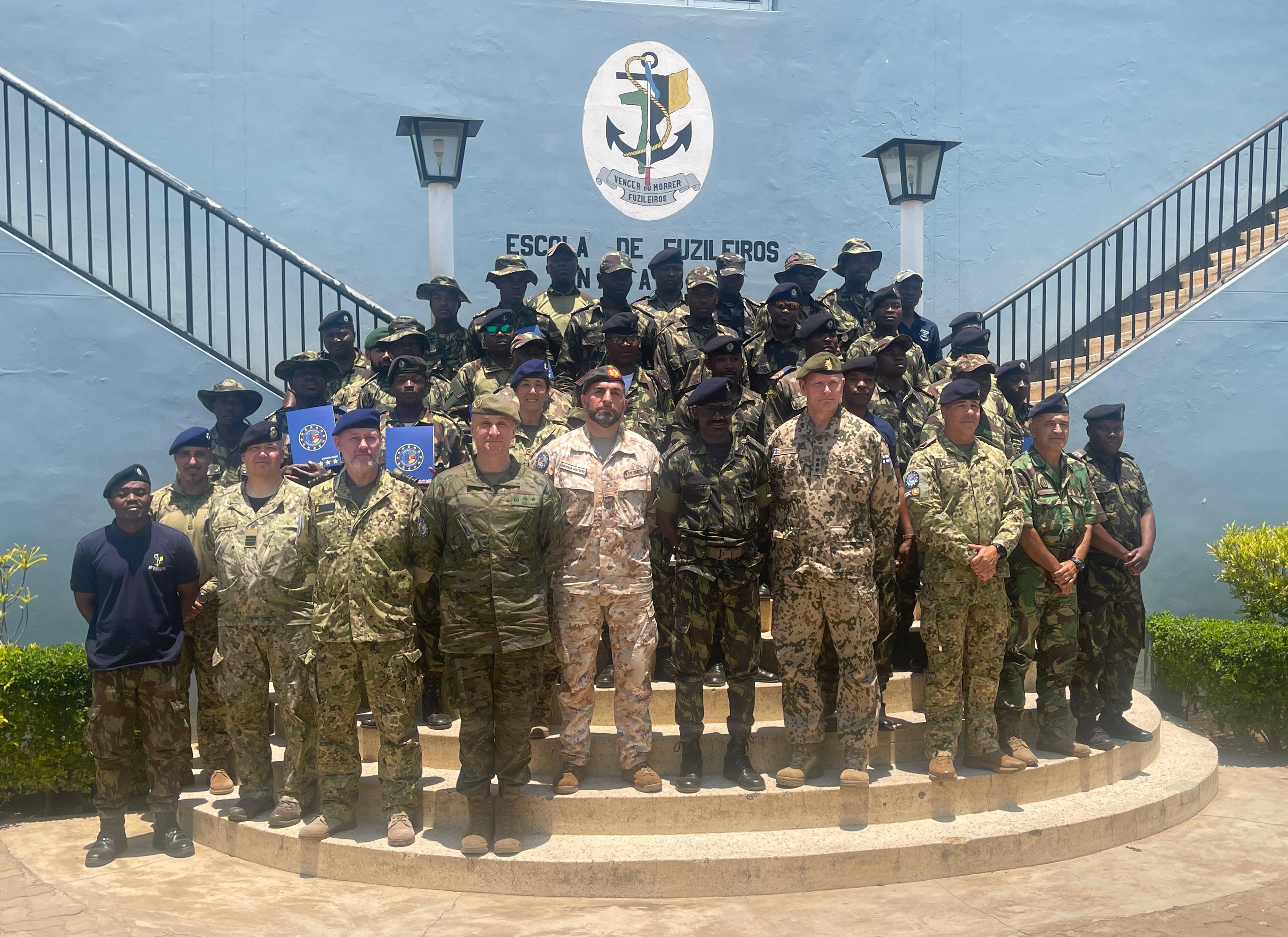
The European Union Military Assistance Mission in Mozambique (EUMAM MOZ) has closed the Train the Trainers leadership programme at the Katembe Naval Rifle School in Mozambique.
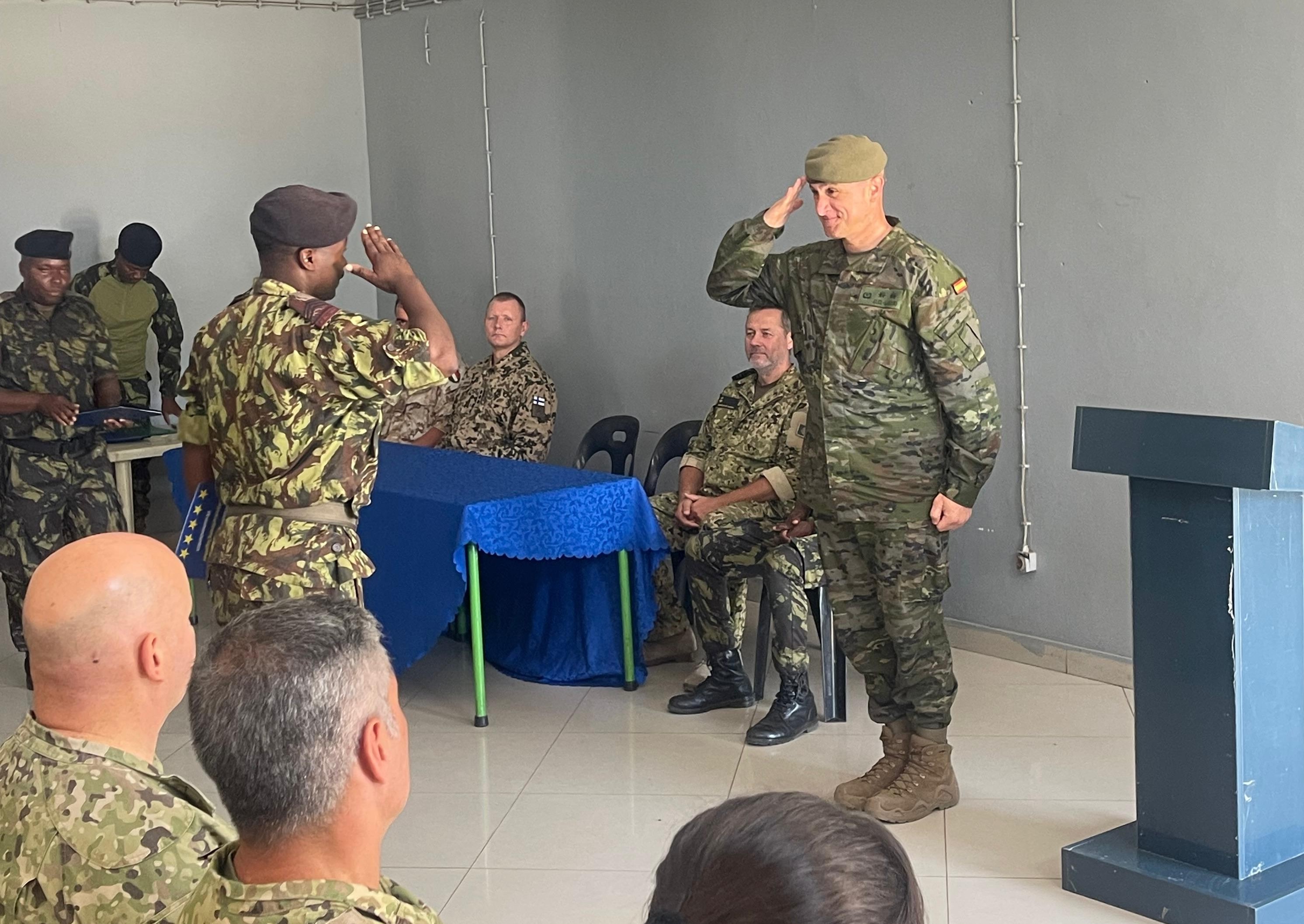
The ceremony was presided over by the second commander of the European military mission, Finnish Colonel Jarmo Keskinen, who was accompanied by Spanish Lieutenant Colonel Bernardo González-Lázaro Sueiras, head of the Training Section, who was responsible for planning and supervising the implementation of this training course.
On this occasion, 23 non-commissioned officers from the Mozambican Armed Defence Forces (FADM) successfully completed this specialised module, which is designed to equip them with the teaching skills necessary to instruct training courses in their own units.
This activity is part of the European Union's efforts to increase stability in the region, thus contributing to the creation of a secure environment by strengthening the military capabilities of our partner countries on the African continent.
Non-commissioned officers: the backbone of the Mozambican Force
The academic programme has combined theory and practice to address critical skills in the command of small units. Students received advanced training in functional leadership models, team management, organisational communication, and group dynamics, among other subjects. In this context, the instruction placed special emphasis on a behavioural approach to ensure that future military trainers not only master tactics but also the management of the human resources under their command.
In his address to the new trainers graduating from the course, and on behalf of the entire EUMAM mission, Lieutenant Colonel González-Lázaro underscored the critical importance of the non-commissioned officer corps, which he defined as the "backbone and heart of the operational force. While the officer plans and exercises command, it is the sergeant who ensures that those orders are transmitted and directly leads their execution alongside the soldier," said the Spanish officer, while highlighting virtues such as discipline and loyalty.
With the completion of this course, EUMAM MOZ is advancing in its goal of consolidating self-sufficient local armed forces capable of protecting their population and guaranteeing Mozambique's sovereignty while respecting the rule of law and human rights.
EUMAM Mozambique: shared security
On 16 April 2024, the Political and Security Committee (PSC) agreed that, between June and September of that year, there should be a gradual transition from the European Union Training Mission (EUTM) Mozambique, which began in 2021, to a model of assistance combining advice, mentoring and specialised training in support of the Mozambican Armed Forces' Rapid Reaction Force units. The mission was therefore renamed the European Union Military Assistance Mission in Mozambique (EUMAM Mozambique).
Currently, two Spanish officers are working on the management and implementation of training and advisory programmes, thus responding to the premise that Spain's security extends beyond its borders and begins in those places where instability arises. Through EUMAM Mozambique, the Spanish Armed Forces are fulfilling their commitment to the multilateral system and the European Union, working in coordination with other allied nations to address common threats such as international terrorism.
Fotos