

Spanish personnel of the 57th TAD Orion complete their deployment in Djibouti as part of Operation Atalanta
-
With the arrival of the 58th contingent and the deployment of the D.4 aircraft, the Spanish Air and Space Force continues its uninterrupted commitment to maritime security in the Indian Ocean
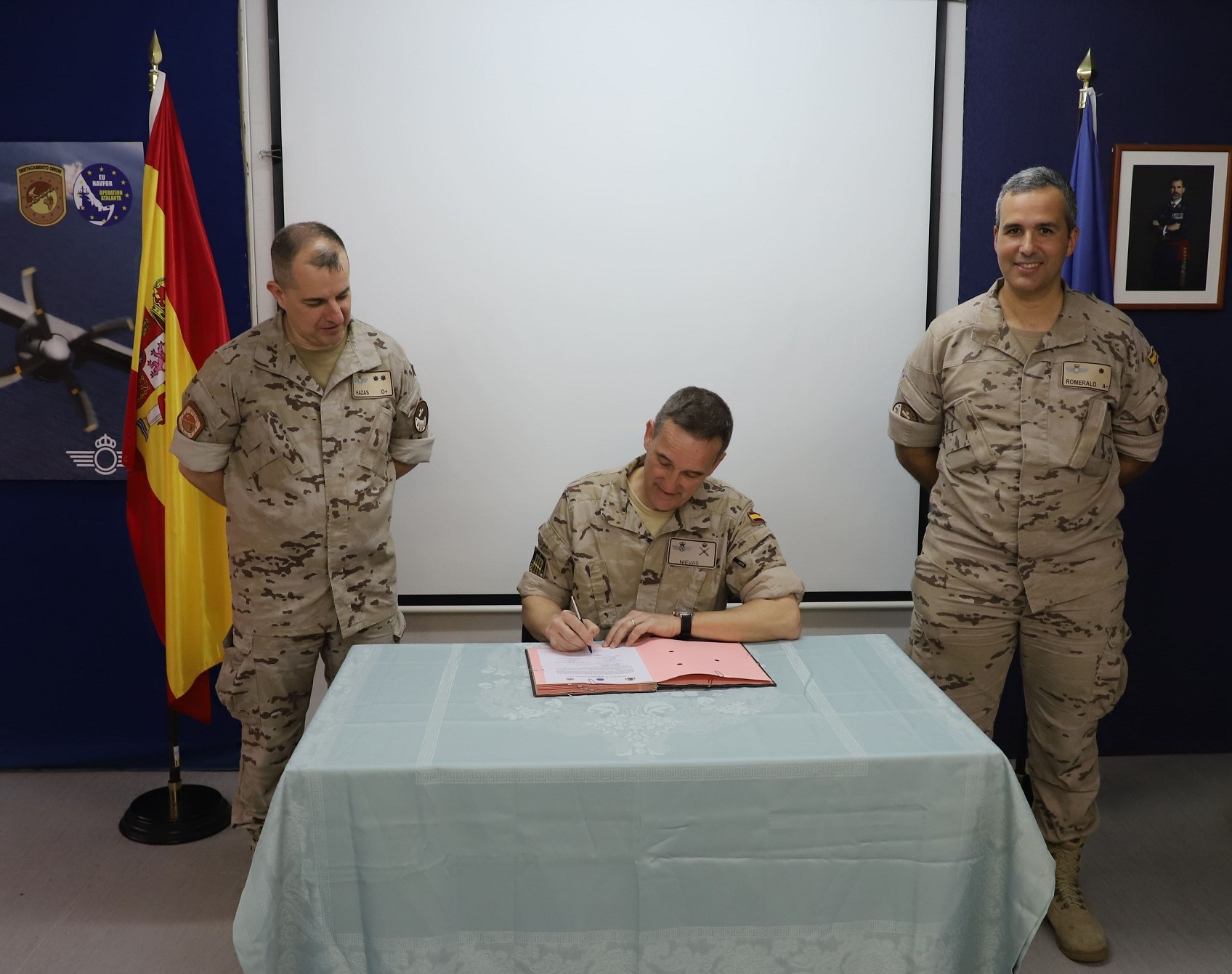
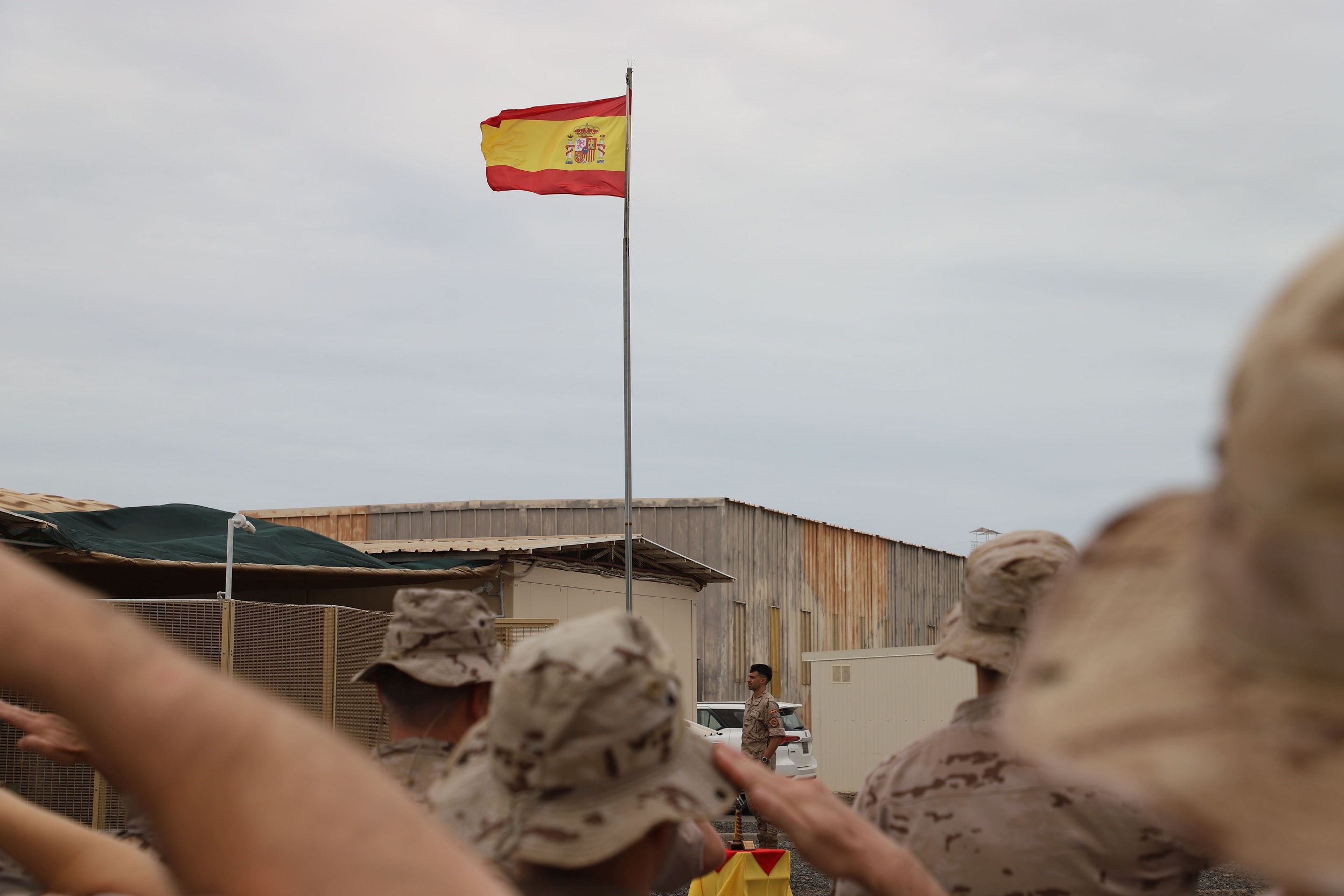
In Djibouti, within the framework of the European Union’s EUNAVFOR Operation Atalanta, the 57th and 58th contingents of the Tactical Air Detachment (TAD) Orion have conducted the Transfer of Authority (TOA) at the Spanish detachment facilities located at French Air Base 188 Colonel Massart.
The ceremony was presided over by Brigadier General Miguel Ángel Sáez Nievas. It was also attended by civilian and military representatives from several countries, as well as the Deputy Head of the European Union Delegation to Djibouti, Krystian Spodary.
During the ceremony, Commander Alberto Romeralo De la Cruz, head of the outgoing 57th contingent, formally handed over command of TAD Orion to Lieutenant Colonel Ángel Francisco Hazas Sánchez, who now begins his mission leading the personnel of the 58th contingent.
The deployment will be completed with the arrival of the D.4 VIGMA aircraft, which will conduct maritime surveillance operations in the Horn of Africa region.
In his address, General Sáez Nievas thanked Commander Romeralo and his team for their continuous efforts “to ensure infrastructure and communications, and to maintain procedures that guarantee interoperability with the other allied forces in the area”. He also wished success to the lieutenant colonel “who takes over at a time when the international situation in the region presents major challenges”. In this regard, he noted that the Orion forces, within Operation Atalanta, “contribute to strengthening Europe’s response capability in the region and to ensuring the security of our vessels against piracy”.
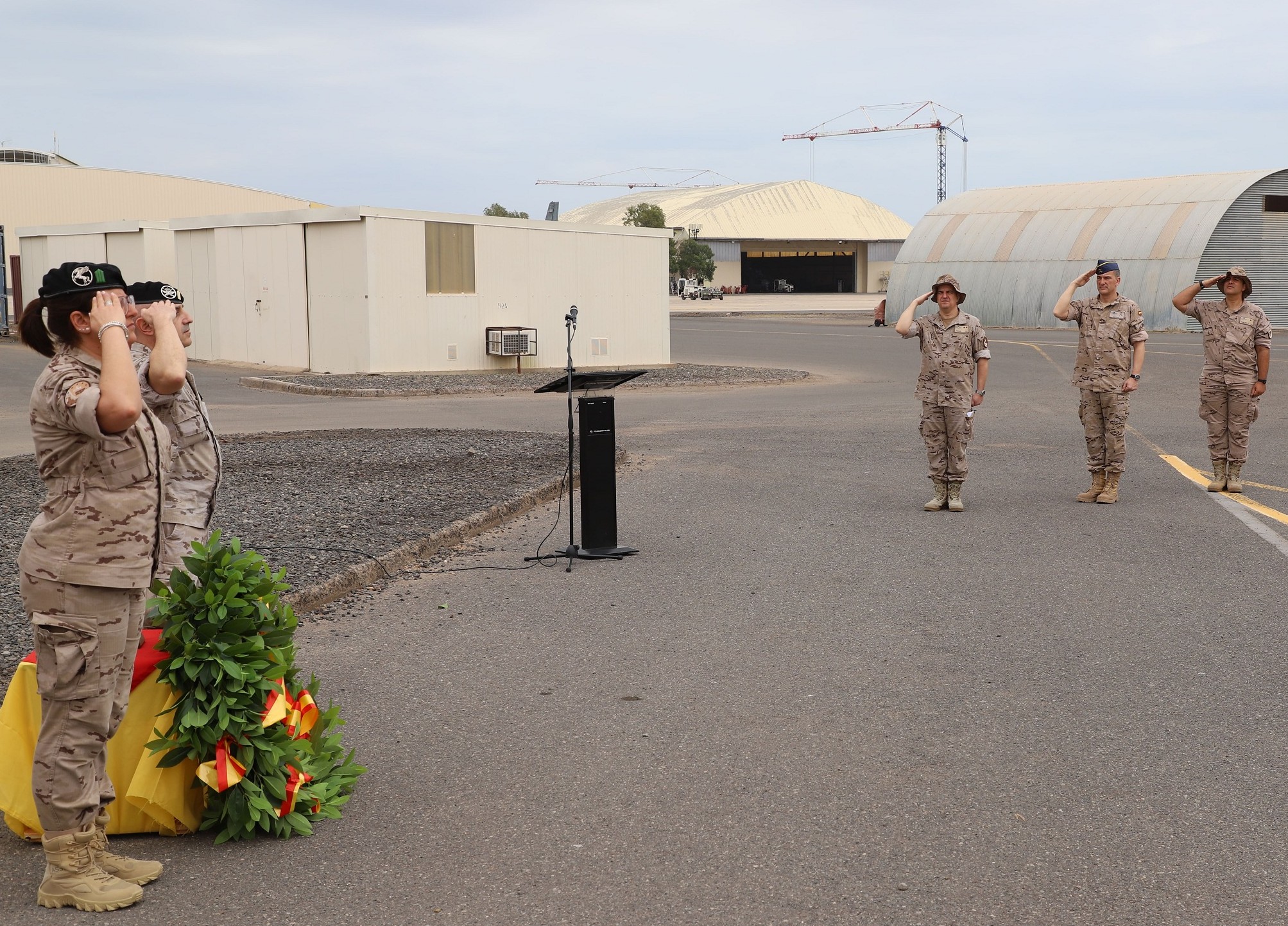
The ceremony, which concluded with a tribute to the fallen, marks the end of the mission for the 57th contingent. During more than three months of deployment, their efforts focused on adapting ground support equipment and improving living areas within the facilities. This work is essential to guarantee the safety, effectiveness, and continuity of air operations, ensuring the full and immediate operational capability of the D.4 Maritime Surveillance Aircraft upon its arrival in Djibouti.
Operation Atalanta: Spain’s firm commitment
Spain has been involved in Operation Atalanta since its inception in 2008. It is the only European Union nation to have maintained an uninterrupted presence throughout the operation. With every rotation, Spain reaffirms its commitment to regional stability and the security of international maritime routes in the face of piracy and other criminal threats, while also contributing to the protection of World Food Programme (WFP) vessels.
At the end of 2024, the Council of the European Union approved the extension of the operation’s mandate until 28 February 2027, reflecting both the achievements attained and the challenges ahead. Over time, the Area of Operations has expanded through successive mandates and currently includes the Gulf of Aden and neighbouring countries, including the port and city of Muscat (Oman), the Somali Basin, the Red Sea, and the Gulfs of Suez and Aqaba.
Spain currently contributes to EUNAVFOR Operation Atalanta with approximately 350 personnel and the following main assets: the frigate Canarias, embarked with a helicopter and a Special Operations team, as well as a maritime reconnaissance and surveillance aircraft deployed with TAD Orion, which will deploy shortly to Djibouti to operate throughout the inter-monsoon period.
Fotos