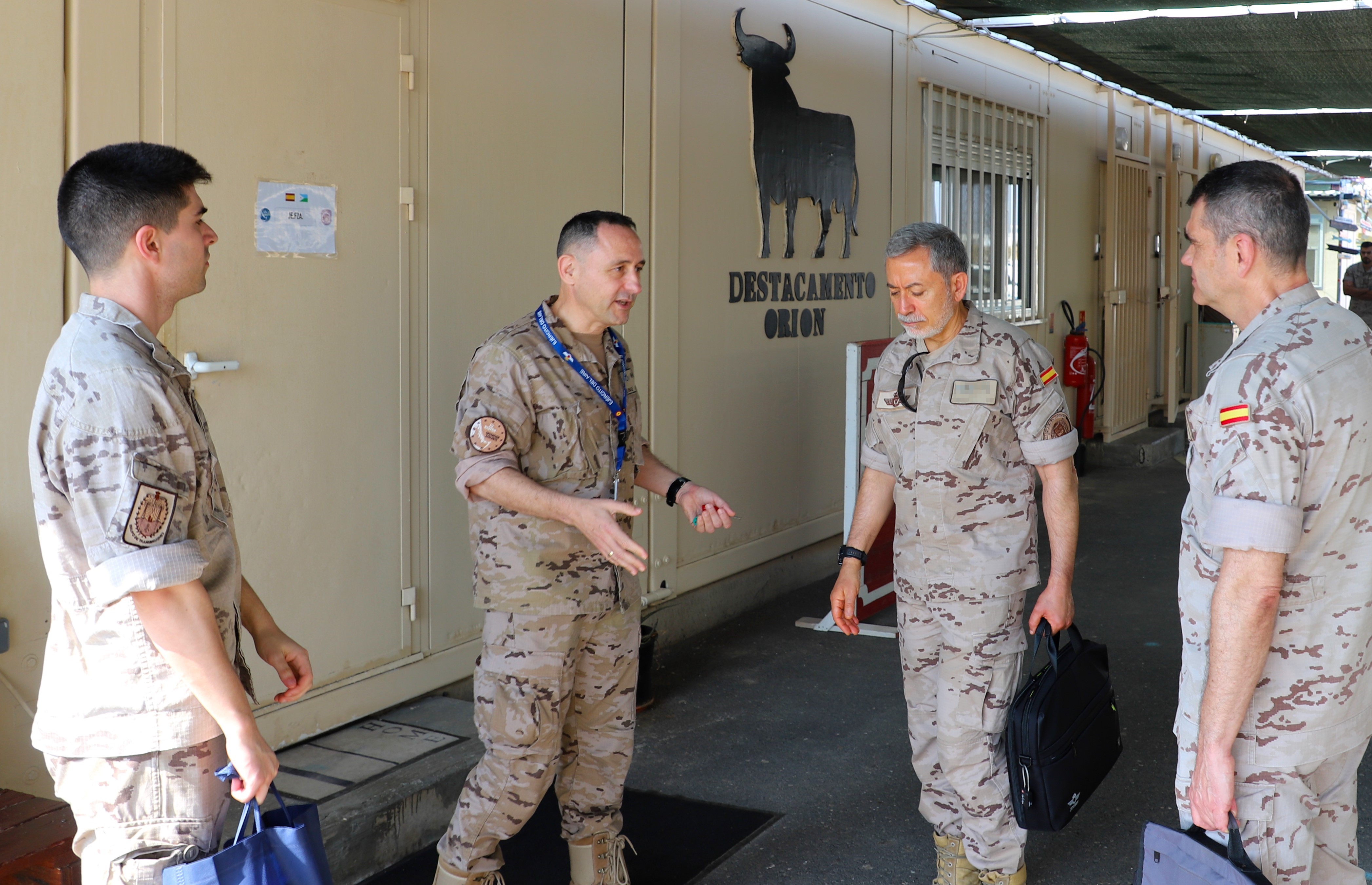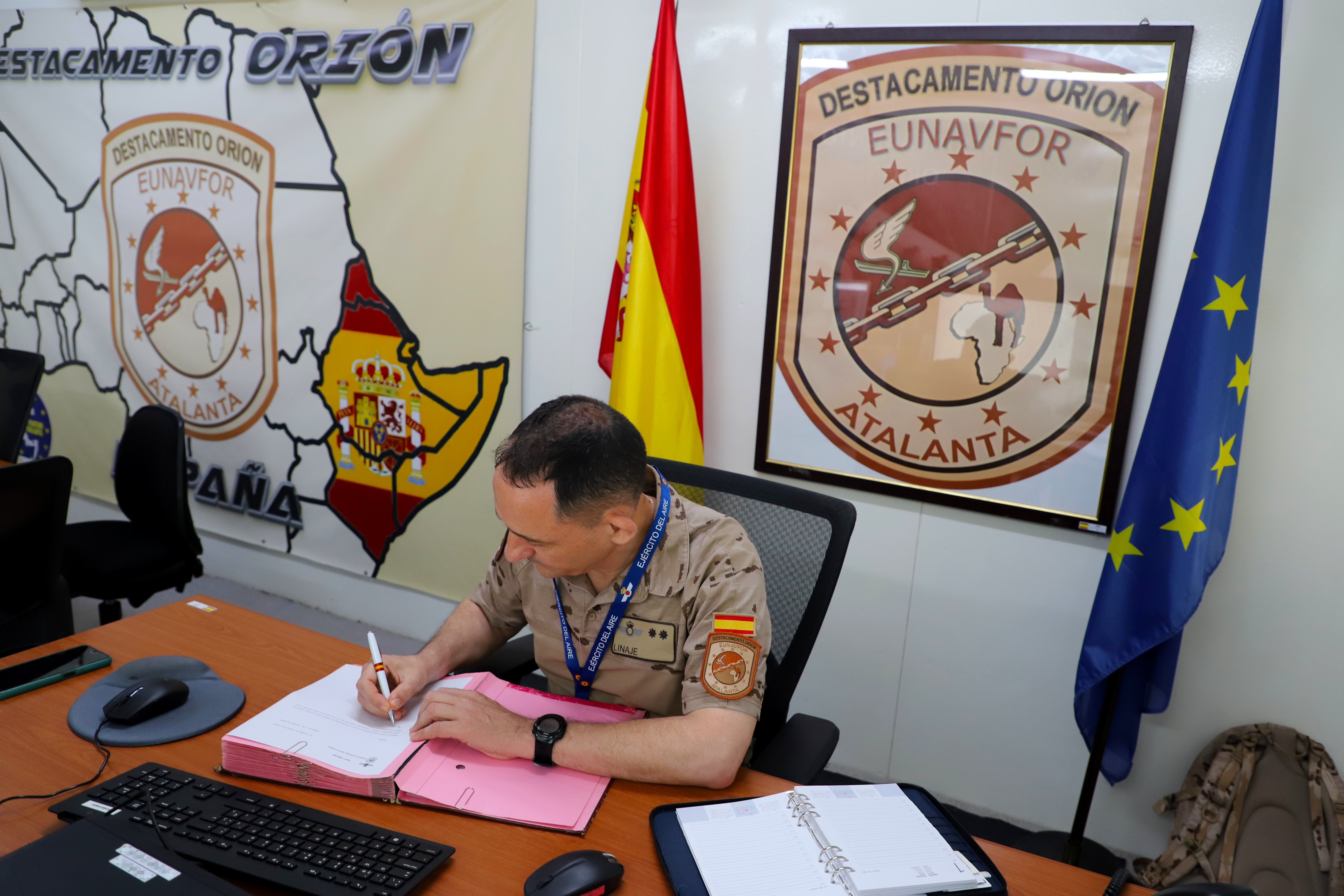


‘The 'Orion' Detachment are Atalanta's eyes from the air’, says Lieutenant Colonel Linaje
-
Lieutenant Colonel Carlos Linaje de la Iglesia of the Spanish Air and Space Force, commanding officer of the 'Orion' Tactical Air Detachment (DAT), underscores the significance of Spain's aerial contribution to the success of Operation EUNAVFOR Atalanta after 16 years of deployment
Since late 2008, Operation EUNAVFOR Atalanta has been deployed in the Horn of Africa region to contribute to the deterrence and prevention of acts of piracy and illicit trafficking off the coast of Somalia. Over these sixteen years, Spain has consistently contributed naval and aerial assets.
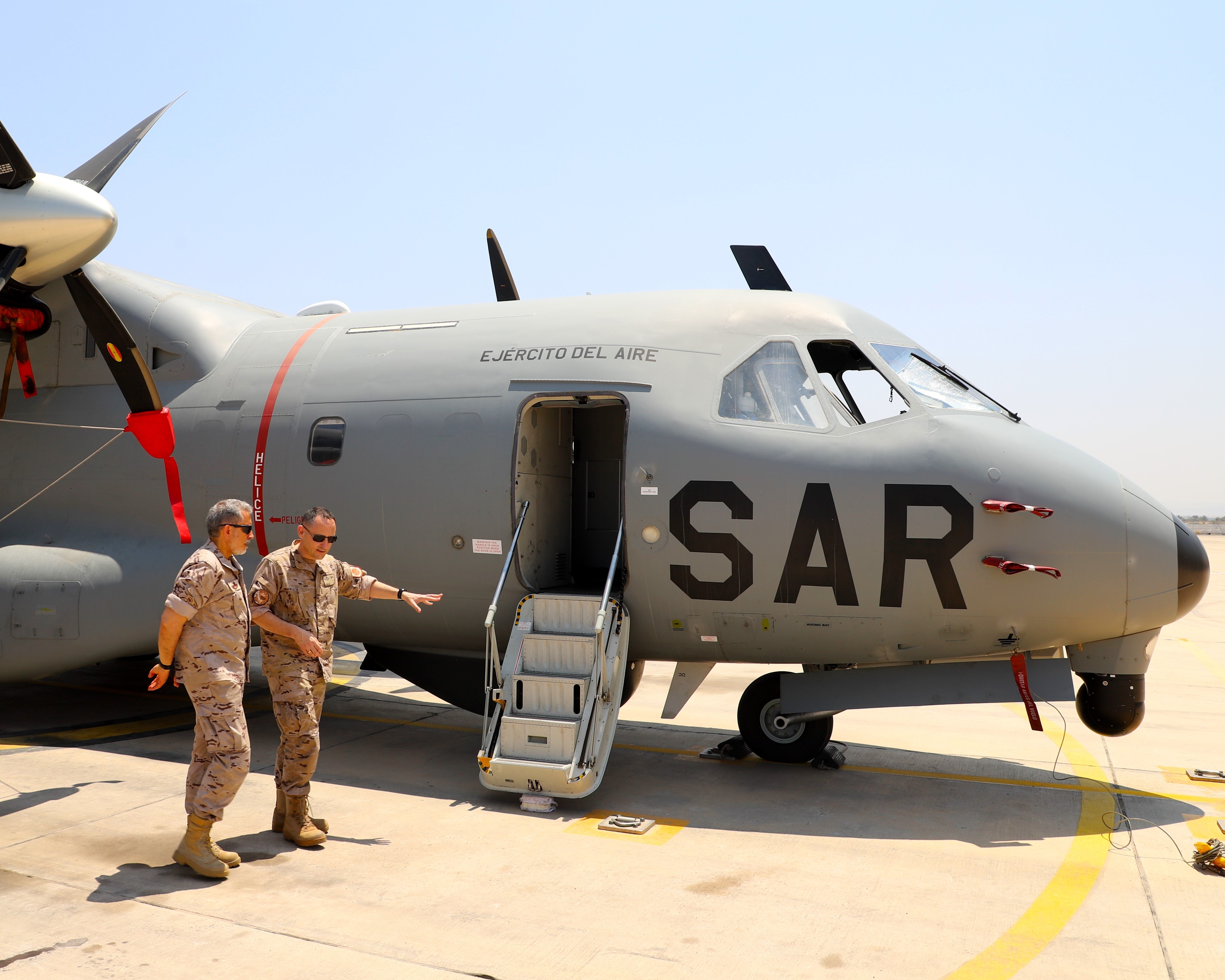
Currently, within Atalanta, the frigate 'Reina Sofía' is operating in the Indian Ocean, while the D4 aircraft of the 'Orion' Tactical Air Detachment (DAT), based in Djibouti, conducts patrol and reconnaissance missions to enhance maritime traffic security and regional stability. In this interview, Lieutenant Colonel Carlos Linaje de la Iglesia, commanding officer of the 'Orion' DAT, highlights the importance of Spain's aerial contribution to the success of Operation EUNAVFOR Atalanta.
Since the inception of Atalanta in 2008 and Spain assuming the leadership of this European mission in 2019, what do these developments mean for the 'Orion' detachment?
Since the inception of Operation Atalanta, the 'Orion' Detachment has operated continuously from its base in Djibouti. The fact that operational command is exercised from Spain reflects not only our nation's leadership but also its firm political and strategic commitment to the European Union. Moreover, hosting the Operational Headquarters in Spain streamlines the integration of assets and enhances coordination between air and naval components, thereby strengthening the overall effectiveness of the mission.
What are the primary tasks and missions of the 'Orion' detachment?
From the air domain, we contribute directly to the core objectives of Operation Atalanta: counter-piracy operations, the protection of World Food Programme (WFP) vessels, and the monitoring of fishing activity in the area. These tasks remain in effect following the European Council’s decision on 16 December to extend the mission until February 2027. In this context, the air component carries out surveillance and reconnaissance missions along key maritime communication routes, as well as monitoring for illicit activities within the area of operations.
How do these tasks relate to and complement the naval component of Operation Atalanta?
We operate in different domains—maritime and aerial—but our respective systems' capabilities function in a combined and coordinated manner; our relationship always involves close collaboration to achieve the objectives of EUNAVFOR Atalanta. To this end, the D4 aircraft collaborates with all assets in this operation, including our frigate 'Reina Sofía'. Essentially, the aerial detachment serves as ‘Atalanta's eyes’ from the air, enabling naval assets, like the 'Reina Sofía' frigate, to conduct their maritime operations with the most comprehensive information possible, which we provide from the air. In fact, on occasion, Navy personnel have been integrated into the aircrews of maritime patrol aircraft.
Participation in EUNAVFOR Atalanta extends beyond European Union member states; how is the relationship with these nations?
We maintain a cordial relationship with all nations participating in the operation, always based on dialogue and mutual cooperation. In this regard, I would like to highlight our special relationship with the French Armed Forces' Base 188 in Africa. The 'Orion' detachment occupies a small portion of this base, and our French colleagues, with a strong spirit of mutual collaboration, always support us in everything we need to operate and carry out our primary mission: preventing piracy and protecting World Food Programme shipments, among other tasks.
The D4 maritime reconnaissance and surveillance aircraft is not always deployed in Djibouti. What is the reason for this? Does it affect the mission's operability?
That's correct, and this is due to the fact that, unlike other latitudes, this area of the Indian Ocean is affected by meteorological incidents caused by the monsoon. In this context, and considering the need to maximize operational effectiveness, the aircraft remains in the area during periods more conducive to illicit activities. However, it is important to emphasize that the 'Orion' detachment never remains inactive, as operations continue permanently, even when the D4 aircraft is not in Djibouti.
Recently, the D4 aircraft of the detachment reached 4,000 flight hours in Operation 'Atalanta'; what does this operational milestone signify?
This milestone is objective proof of our Armed Forces' technical and operational capabilities and, more specifically, of the Air and Space Force. Moreover, it is another demonstration of Spain's support and commitment to the security and development of the countries in the region; in this case, within the framework of the European Union. Additionally, and essentially, Atalanta serves all Spaniards and our allies.
Personally, I would like to acknowledge that this aerial achievement is due to the outstanding work and effort of all personnel who have been deployed over these years in Djibouti. Ultimately, the military personnel comprising the 'Orion' detachment are the true architects of Spain's uninterrupted contribution to Operation Atalanta over 16 years; they deserve all our recognition for their dedication and commitment.
Finally, what is the assessment of these 16 years of deployment?
I believe that we only need to look at the figures to realize the success of this European mission. Since its inception, piracy actions have drastically decreased, leading to improved security of maritime activities and communications in the area. However, despite this significant improvement, illicit activities have not been entirely eradicated. In my opinion, the geostrategic importance and stability of the area, through which a significant portion of global trade passes and where many Spanish fishing vessels operate, make it necessary. Perhaps, now more than ever, to collaborate in maintaining maritime security, which Operation EUNAVFOR Atalanta facilitates.
Fotos