

The Combat Supply Ship (BAC) Cantabria completes its deployment in NATO's Operation Noble Shield
- After more than two months on mission, the ship is sailing back to Ferrol
The Combat Supply Ship (BAC in Spanish) “Cantabria” —under the command of Commander Manuel Romero Nieto— has completed its integration into NATO's Standing Maritime Group 2 (SNMG-2), as part of NATO's Operation Noble Shield.
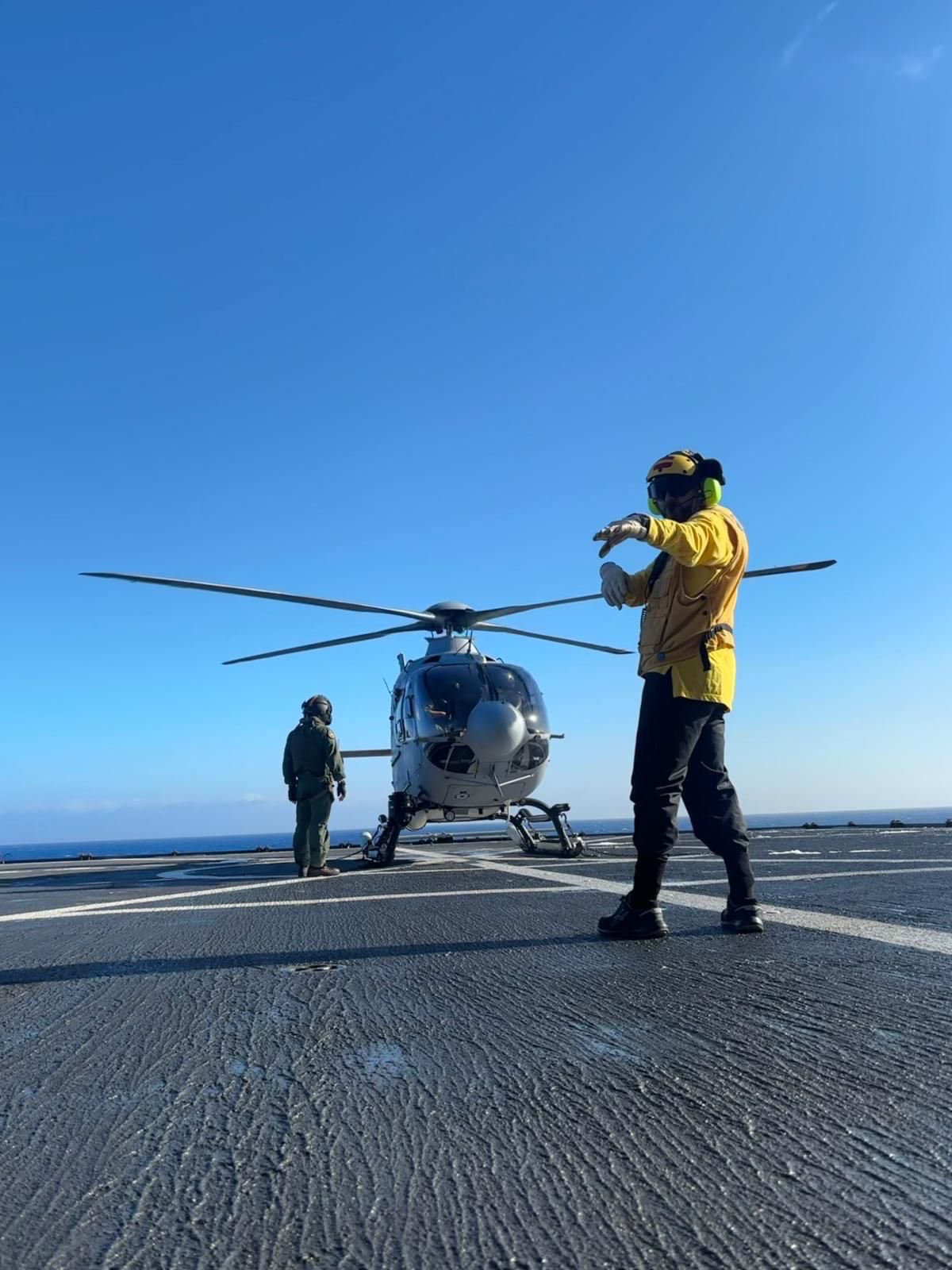
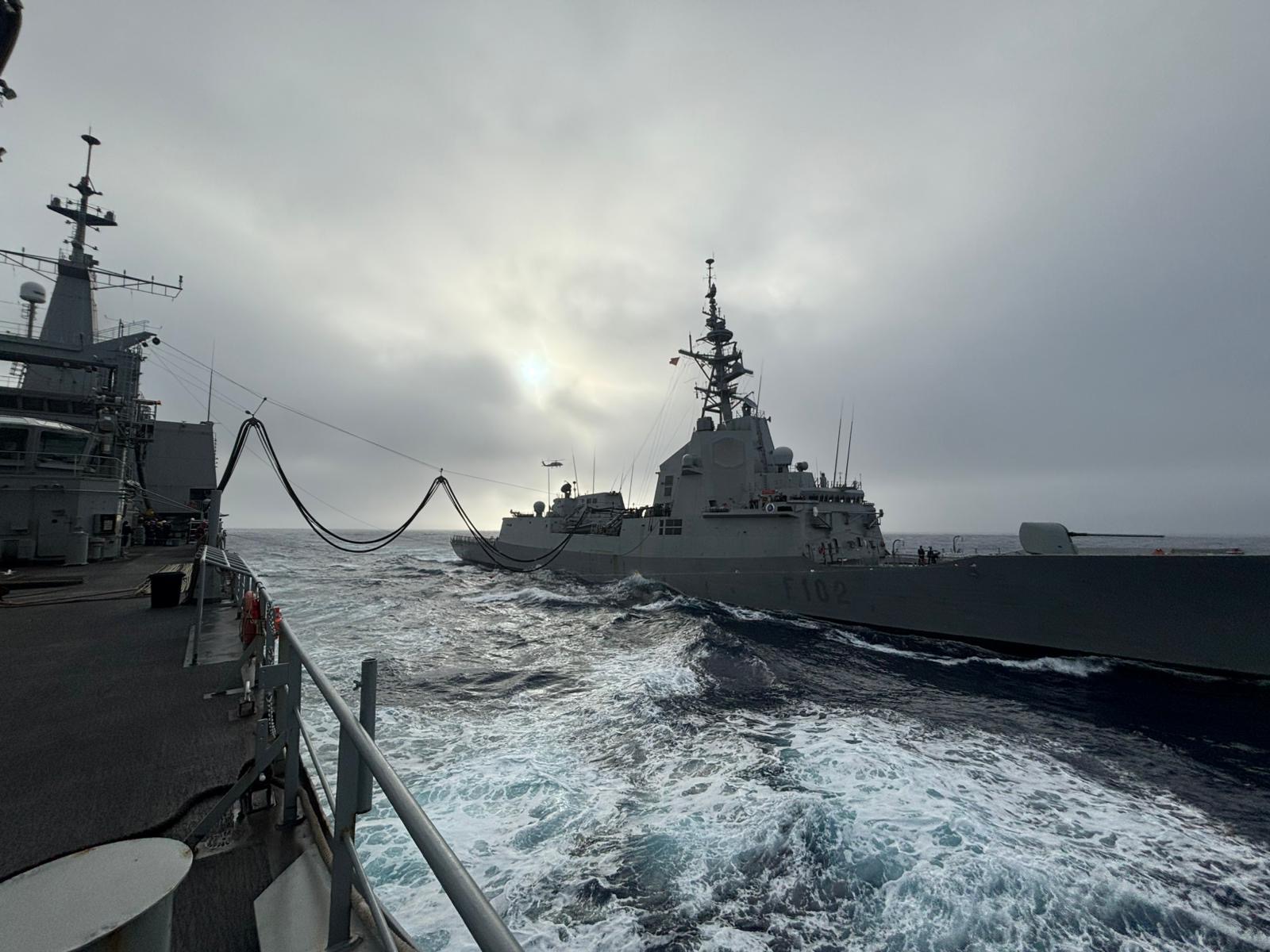
Since 13 October, the “Cantabria” has contributed its logistical capabilities to increase the autonomy of the group's units and other allied units in the Mediterranean Sea. The Spanish ship's support during its 65-day deployment has been characterised by the supply of more than 2,207,000 litres of fuel (DFM - Diesel Fuel Marine) and 20,000 litres of JP-5 military aviation fuel.
At the start of the deployment, the Cantabria supported the Expeditionary Combat Group Dédalo 25-3, which was returning from the east coast of the United States. This support mainly enabled the units to be supplied with fuel, thus avoiding an intermediate stopover during their crossing of the Atlantic Ocean.
Among the exercises and training carried out, the crew of the Cantabria has been trained in asymmetric warfare exercises with the SNMG-2 Group, as well as in the neutralisation of unmanned surface vehicles (USVs) and maritime interdiction operations (MIO) boarding exercises.
As part of its participation in NATO's Noble Shield operation, the ship has contributed to the fulfilment of the deployment's objectives, aimed at strengthening maritime security and freedom of navigation in the Mediterranean. Its presence has enabled it to support the surveillance and control of maritime areas of interest, as well as the protection of maritime lines of communication, contributing to the detection and deterrence of illegal activities.
The integration of the BAC “Cantabria” into the allied naval force has strengthened cooperation, interoperability and cohesion with the navies of allied countries, in line with Spain's commitment to collective defence, regional stability and international security.
SNMG: Spain's commitment
NATO has Standing Naval Forces (SNF) that provide the Alliance with a continuous naval presence. This multinational deterrent force is an essential maritime requirement for the Alliance. These forces carry out a programme of scheduled exercises, manoeuvres and port visits, and can be deployed rapidly in times of crisis or tension.
NATO's SNFs consist of four groups: the NATO Standing Maritime Groups (SNMG), comprising SNMG1 and SNMG2; and the NATO Standing Mine Countermeasures Groups (SNMCMG1 and SNMCMG2).
SNMG1 and SNMG2 operate according to the Alliance's operational needs, thus contributing to maintaining optimal flexibility. Their composition varies and they usually consist of between two and six ships from NATO countries. SNMG1 and SNMG2 are under the authority of Allied Maritime Command (MARCOM) in Northwood, United Kingdom. Spain has participated in NATO's SNFs since 2017.
Fotos