

The submarine “Isaac Peral” joins NATO's “Sea Guardian” operation in Mediterranean waters
- Until the end of November, the ship will reinforce Spain's commitment to the fight against terrorism and maritime security, as a reliable and committed ally of the Atlantic Alliance
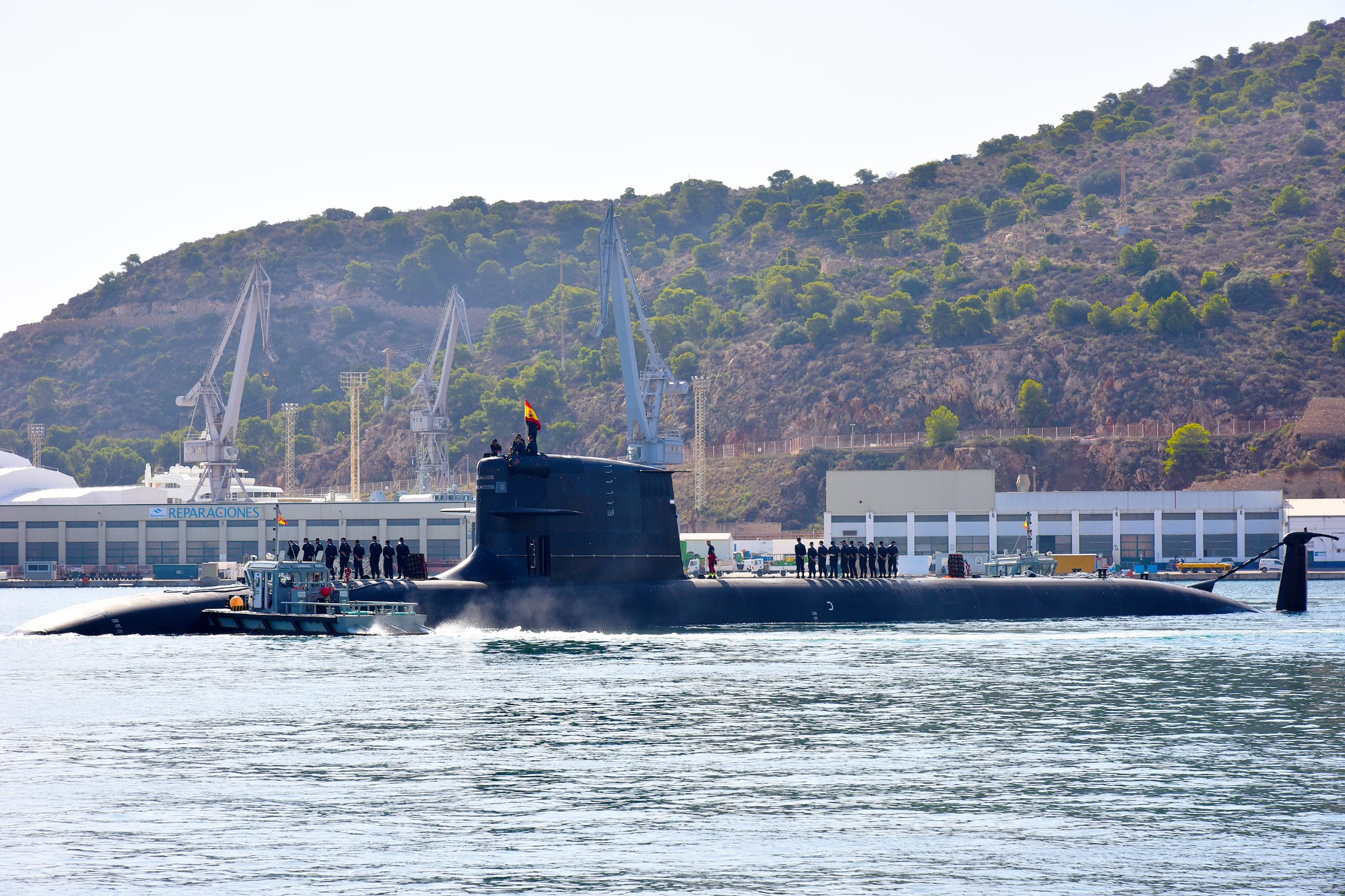
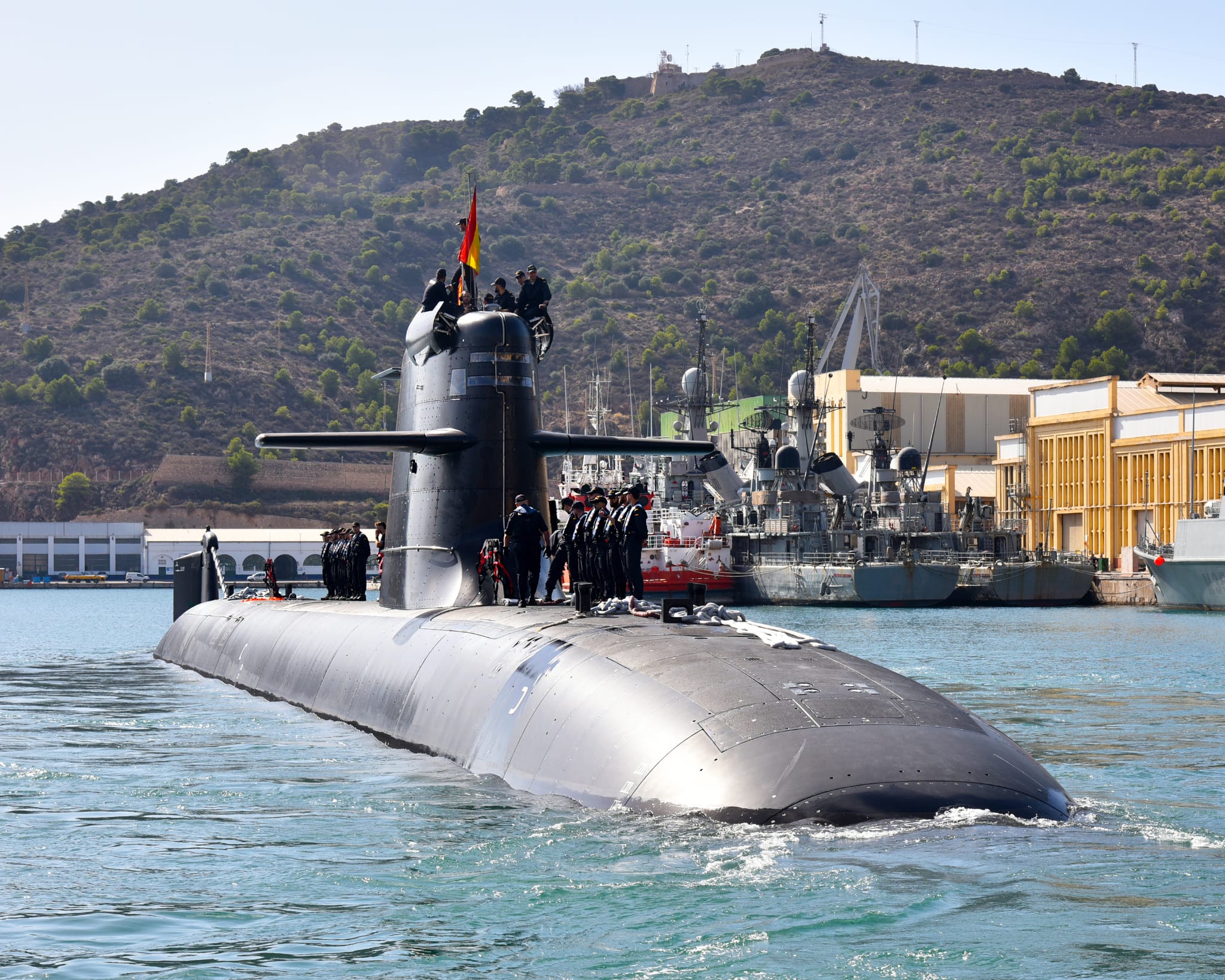
The submarine Isaac Peral (S-81) has set sail to begin its deployment in Mediterranean waters as part of NATO's Sea Guardian (OSG) maritime security operation. In this way and for more than a month, it will make a decisive contribution to strengthening knowledge of the maritime environment, as well as supporting the fight against terrorism and building regional maritime security capabilities within the framework of the Alliance.
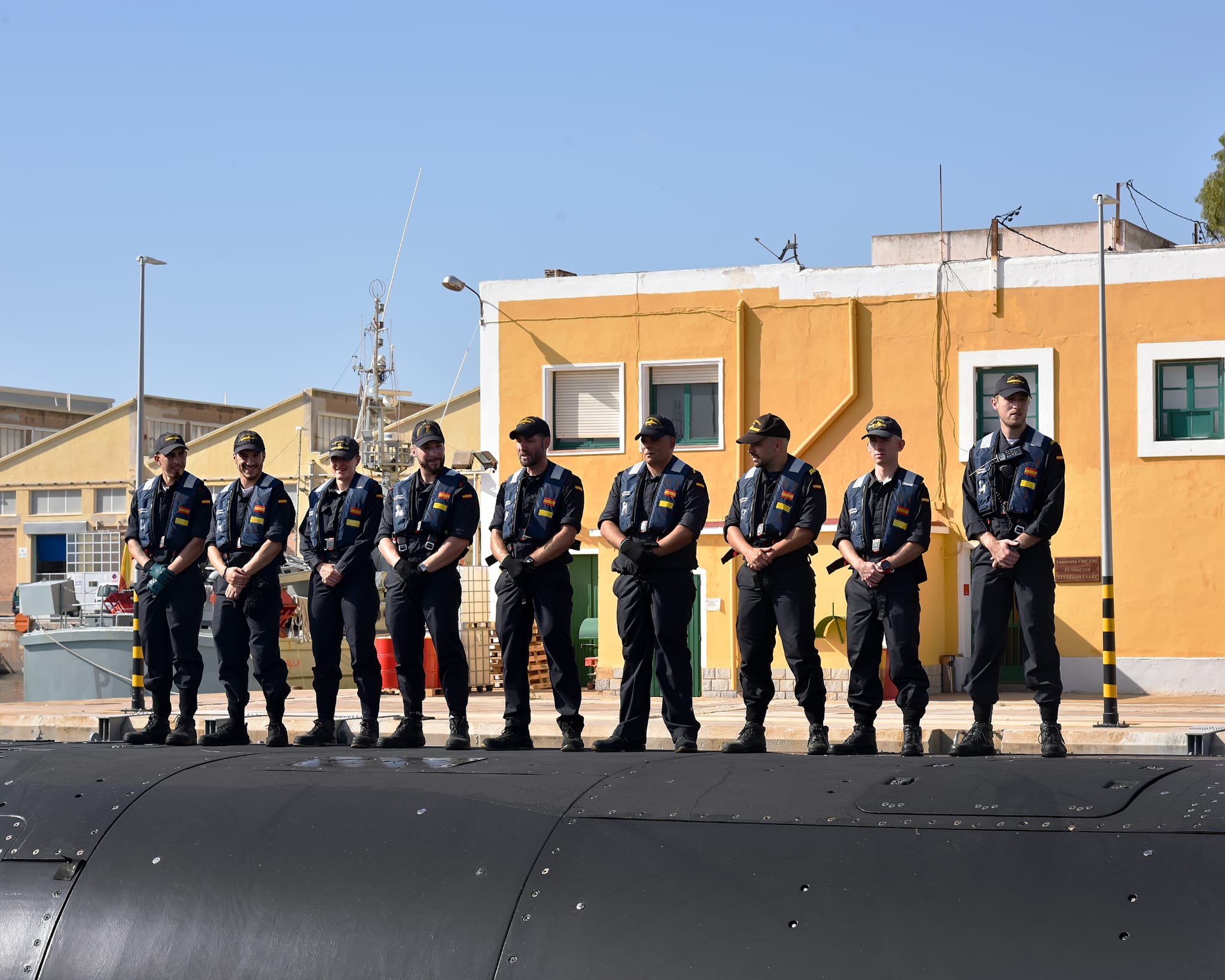
Her departure from the Navy Submarine Fleet in Cartagena was celebrated with a farewell ceremony for the vessel and her crew, presided over by Captain Alfonso Carrasco Santos, commander of the Submarine Fleet (COMSUBMAR). During this military ceremony, COMSUBMAR emphasised ‘his complete confidence in the professionalism, camaraderie and dedication of the entire crew’ to successfully carry out the important mission entrusted to the Isaac Peral.
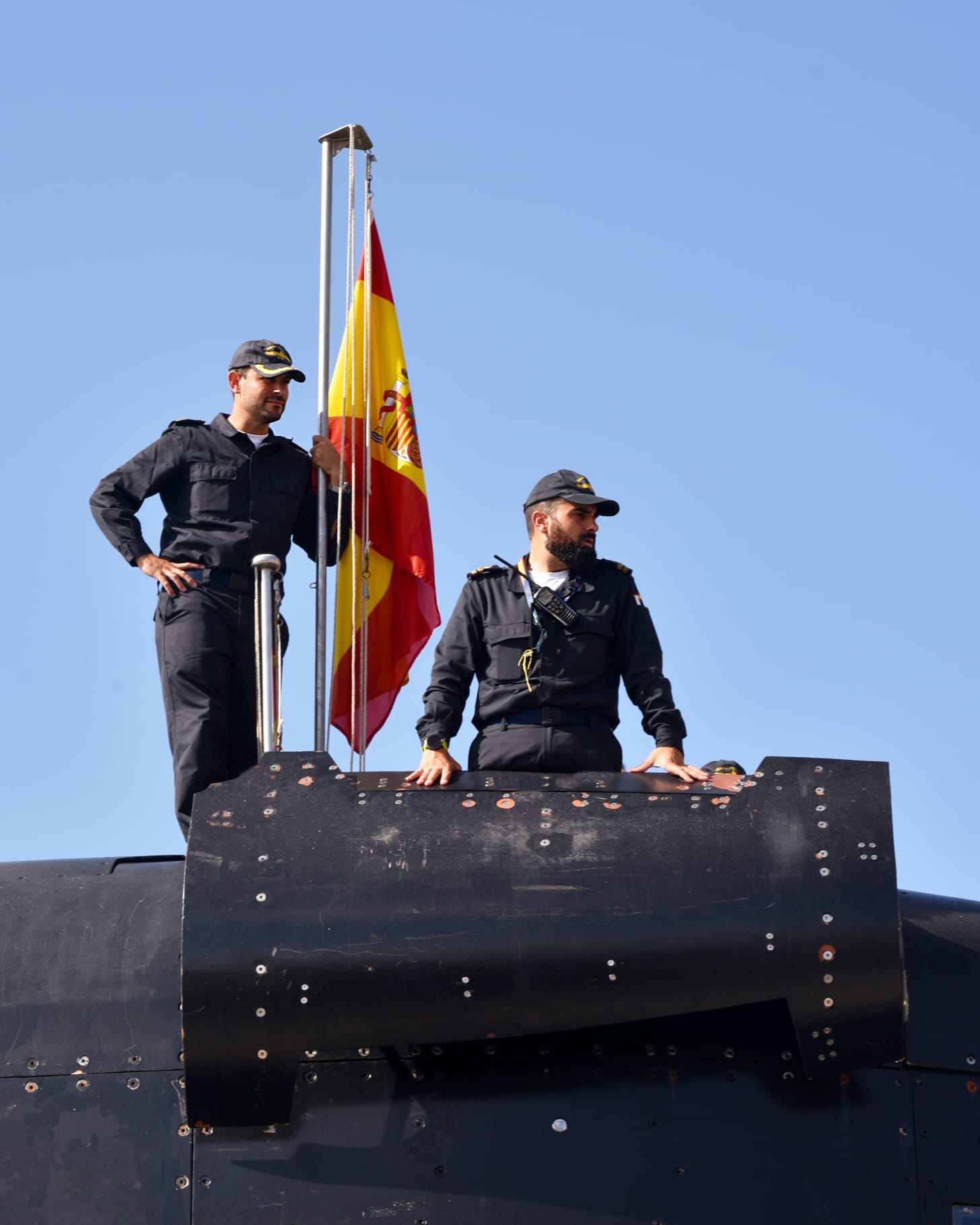
For this mission, the submarine—commanded by Lieutenant Commander Fernando Clavijo Rey-Stolle—has a total crew of 55 military personnel, who are specifically trained to operate the equipment on board with proficiency, as well as to navigate it in order to carry out its operational tasks safely and with guaranteed success.
Since 2017, following the launch of Operation Sea Guardian in late 2016, Spanish Navy vessels have been participating in the operation, demonstrating Spain's solidarity and commitment to the fight against terrorism, as well as ensuring her contribution to security in the face of threats shared with our allies in the interests of international stability.
OPERATION ‘SEA GUARDIAN’
Sea Guardian is a flexible operation carried out by the Atlantic Alliance in the Mediterranean and currently covers a wide range of tasks assigned to Maritime Security Operations (MSO): developing maritime security capabilities, supporting maritime situational awareness and combating maritime terrorism. More specifically, her activities are mainly focused on maritime situational awareness: merchant traffic, lines of communication, fishing areas, illicit activities, as well as promoting the maritime security capabilities of countries in the region.
If necessary, and if agreed by NATO, it can carry out additional tasks such as maritime interdiction operations, defence of freedom of navigation, combating the proliferation of weapons of mass destruction, and protection of critical infrastructure. In this context, each year, various operations are carried out focusing on specific areas of interest in the Mediterranean. These operations use maritime, air, submarine and other assets to gather, develop and maintain an accurate picture of daily activities in different areas of the Mediterranean Sea.
Fotos