

Construction of the Spanish contingent's second helicopter hangar in Kuchyňa is completed
-
This infrastructure represents a significant improvement in the operational and logistical capabilities of the NATO Army Corps Attack Helicopter Unit on the eastern flank
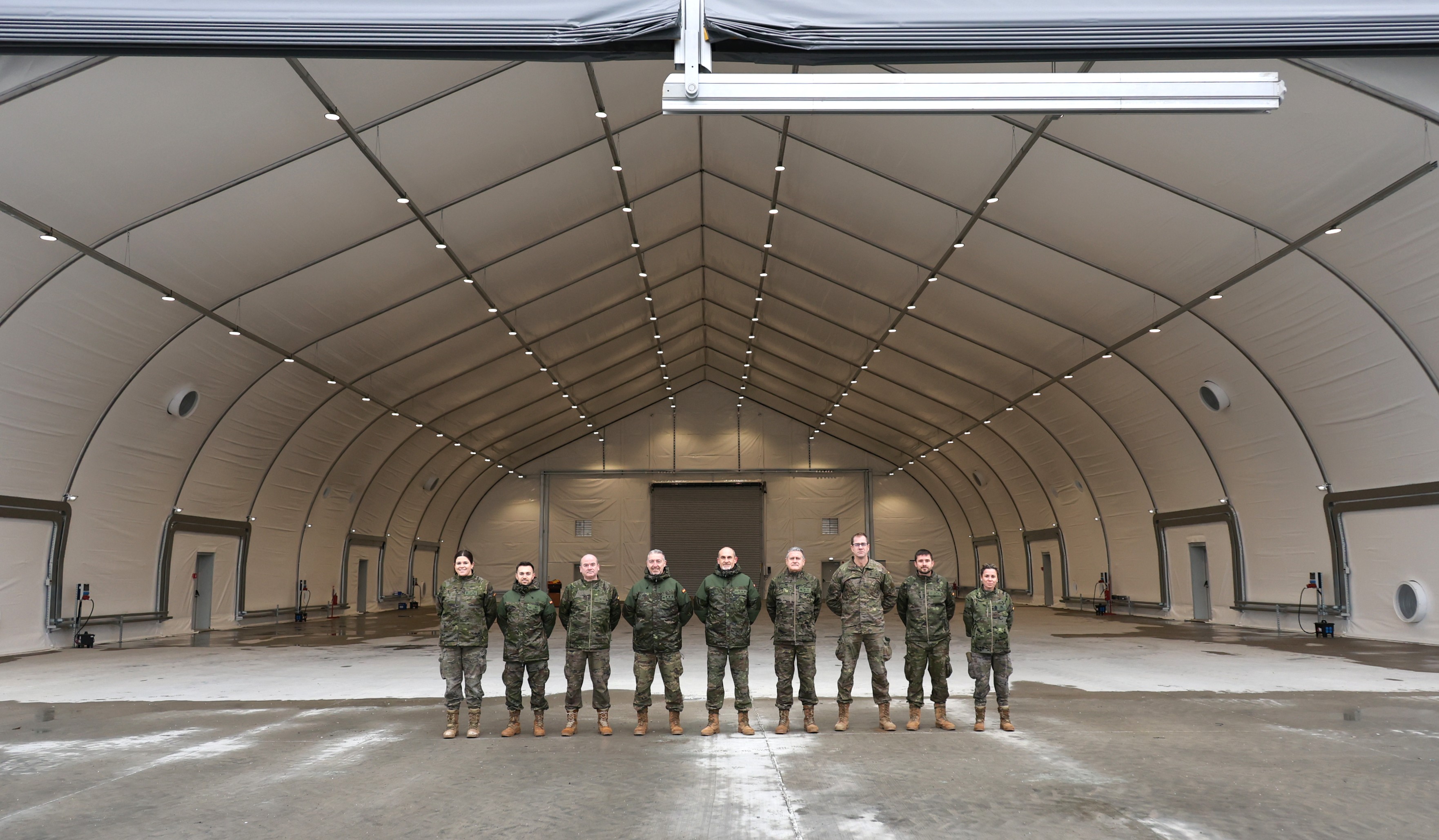
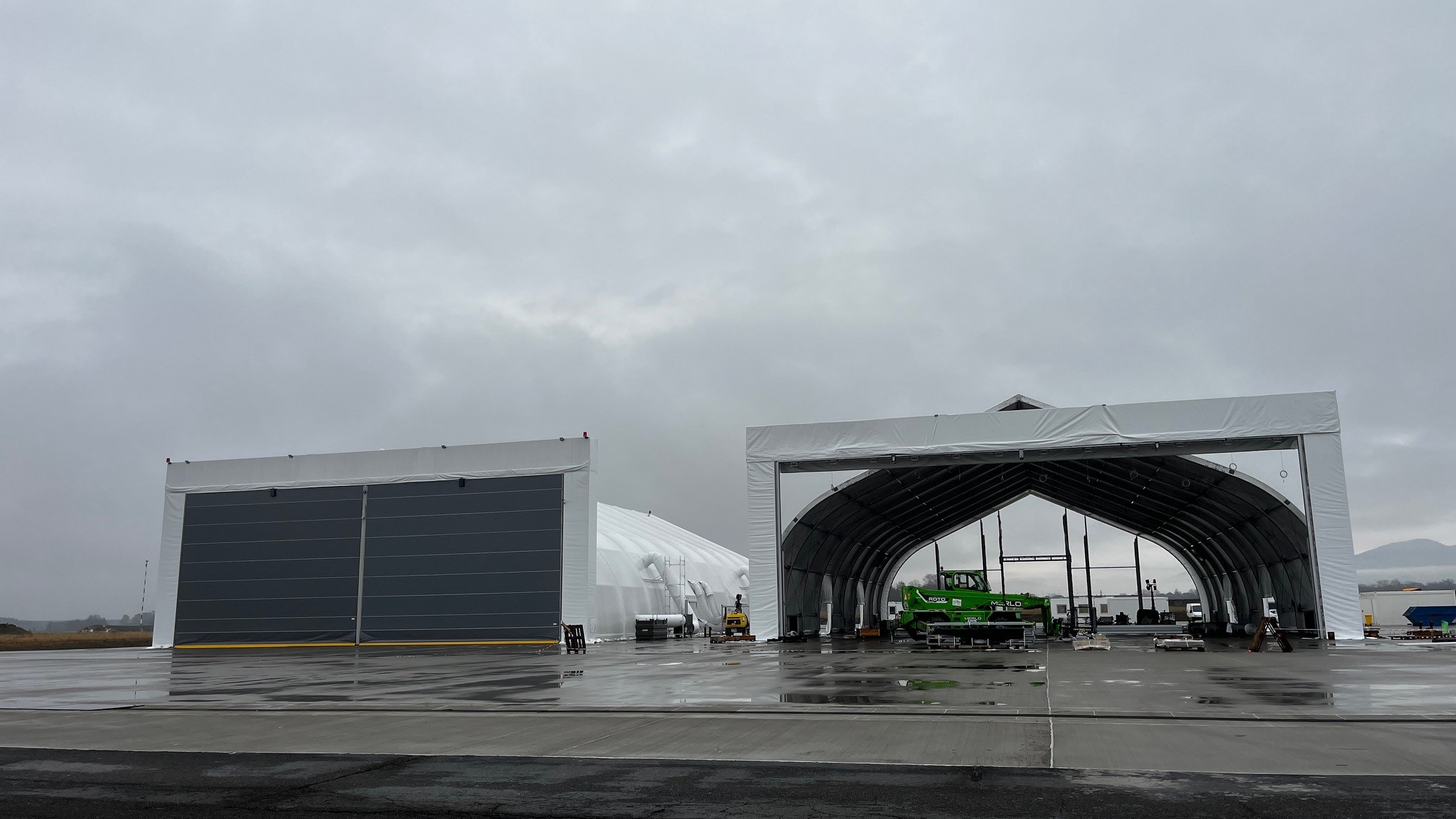
The second hangar for the NATO Army Corps Attack Helicopter Unit has been officially handed over at Malacky Air Base in Kuchyňa, Slovakia.
This represents an increase in operational capacity and an improvement in the maintenance of the helicopters permanently deployed as part of Operation Eastern Flank in Slovakia, of which Spain is the framework nation. Specifically, there are two HA-28 Tiger attack helicopters and one HT-29 NH-90 manoeuvre helicopter.
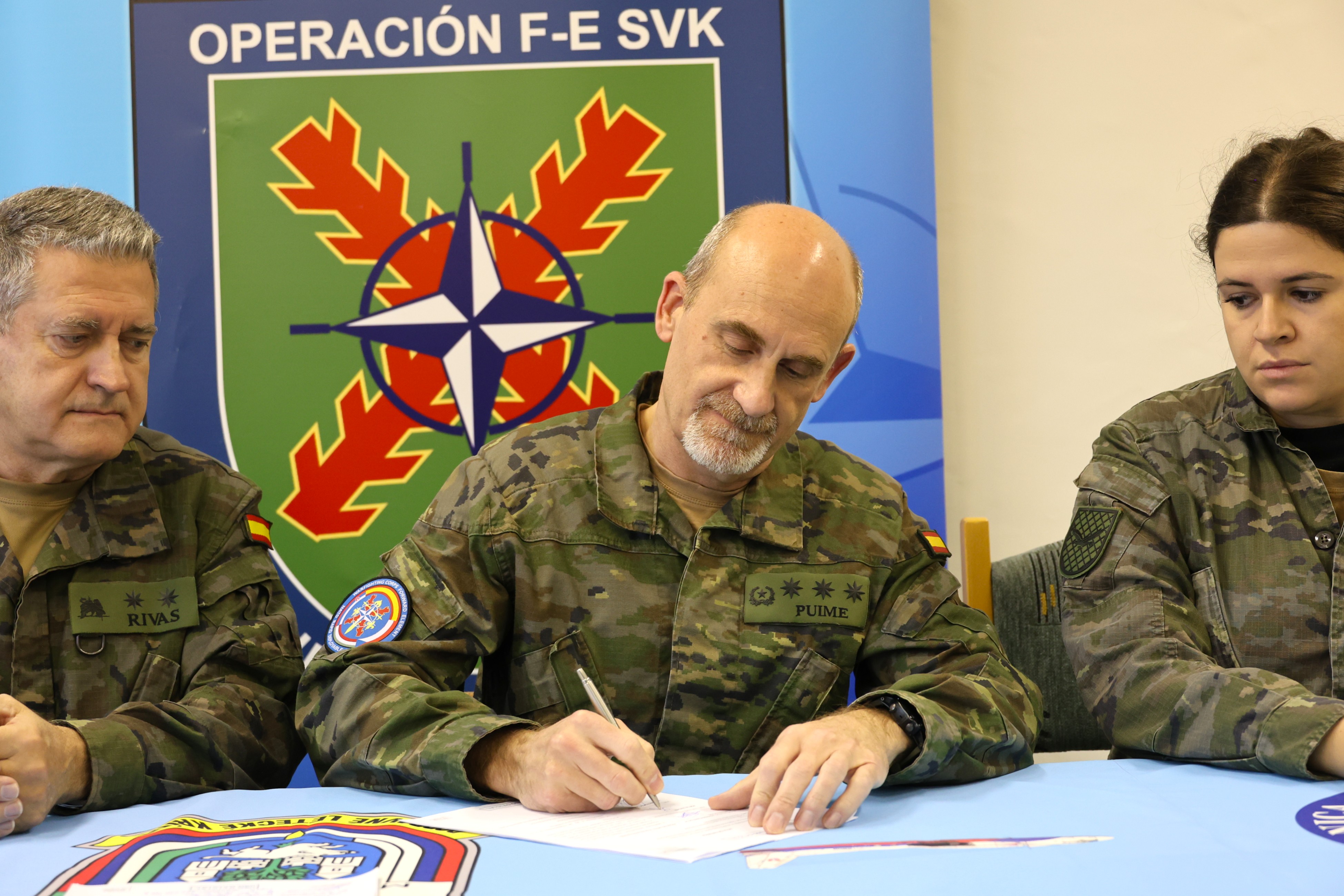
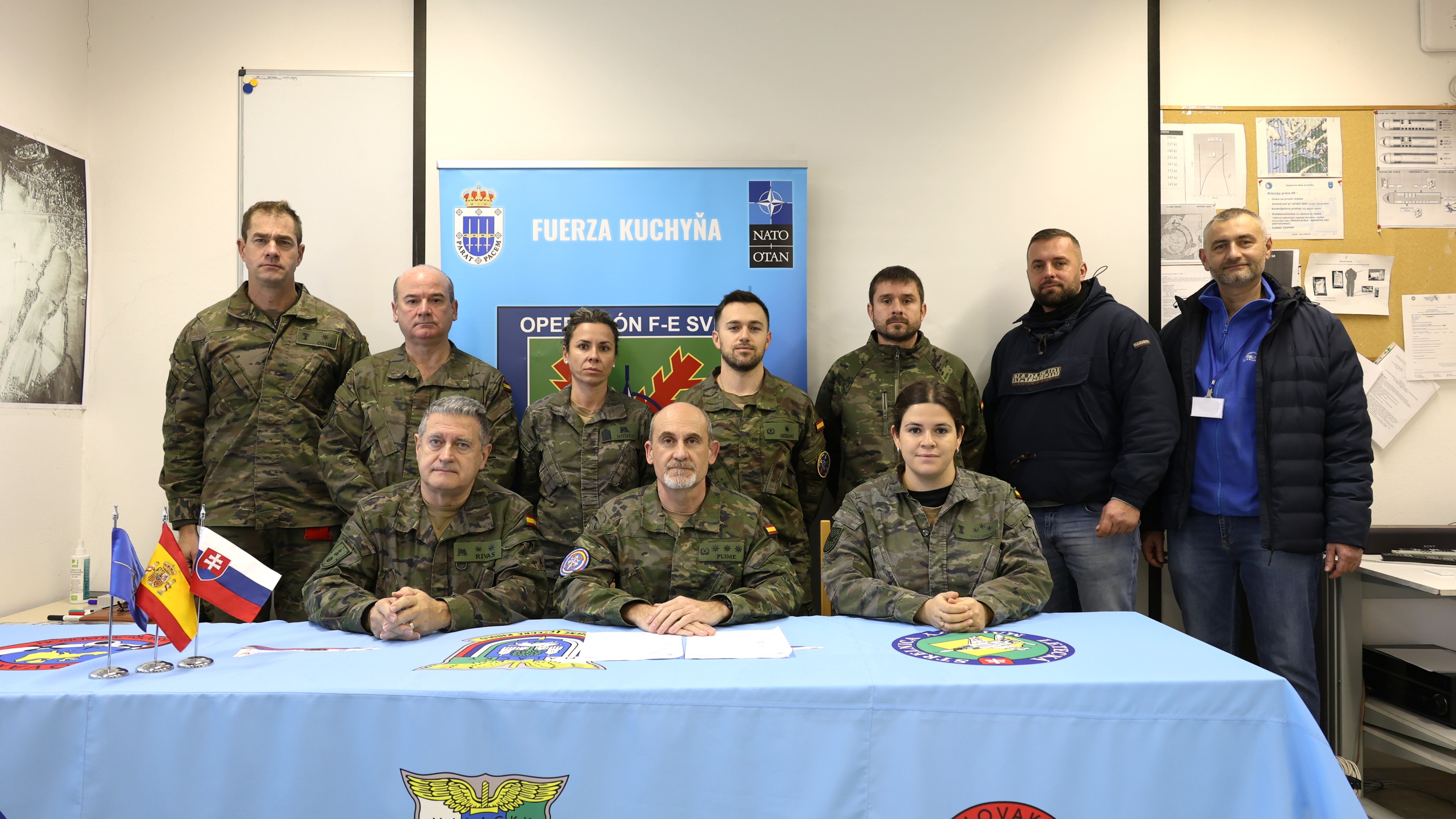
Colonel Juan Antonio Puime, head of the Corps Forward Element (CFE) and the Kuchyňa Force, was responsible for signing the reception of this new Spanish infrastructure in Slovakia. The handover ceremony was attended by military and technical representatives, including Lieutenant Colonel CINET Francisco Rivas Sánchez, representative of the Contracting Body of the Army's Economic Affairs Directorate; Commander Interventor Diego Medrano Riquelme; Lieutenant Colonel Manuel Vilariño Paz, on behalf of the Headquarters of Economic Affairs for Operations; Captain CIPET Ana Díaz Jiménez, contract manager and technical director; Captain CIPET Jaime Andrés Servert, technical advisor to the General Defence Intervention; and Commander CIPET Gregorio Ortiz Quintana, technical advisor to the Army's Operational Logistics Support Centre (CALOG-OP).
Capabilities of the new Spanish helicopter hangar
This new hangar, built in approximately 45 days, is a replica of the first one, to which it is adjacent, and measures around 1,500 m2. Its basic features include lighting, air conditioning, a complete electrical system and fire protection. In addition, it has a motorised door for aircraft, another for vehicles and several pedestrian accesses, as well as equipment, tools and specific technical material for the specialists of the Army Air Mobile Forces (FAMET in Spanish).
With this new infrastructure, the contingent strengthens its logistical capacity and optimises the working conditions of the personnel deployed. In this regard, the region's weather conditions, with intense cold, high humidity and strong winds, affect both aeronautical materials and maintenance equipment. Therefore, the construction of the new hangar responds to this operational requirement and provides strong protection for helicopters against adverse weather, while ensuring a stable environment for their maintenance. In short, this new infrastructure ensures the availability of air resources throughout the year.
Among the advances it brings, the covered and air-conditioned space directly improves the working conditions of technical personnel, who can now perform their tasks in the best and most precise conditions of safety, accuracy and continuity, regardless of the weather outside, thus optimising the operational capacity of the Spanish detachment in Kuchyňa.
Finally, this project is part of an initiative to improve the infrastructure of the Kuchyňa Force, and is intended to strengthen interoperability between allies, increase the capabilities of the deployed force and consolidate Spain's commitment to the security of the Alliance's Eastern Flank.
Corps Forward Element (CFE): Responsibility of Spain
The Corps Forward Element (CFE) is the forward element of NATO's Rapid Deployment Corps Headquarters in Spain (NRDC-ESP) and forms part of the Spanish contingent deployed in Kuchyña. Its tasks include strengthening, through greater situational awareness, coordination with military authorities in its area of responsibility, coordination of joint training activities, Spain's active role in strategic deterrence, operational readiness and, finally, multinational cooperation.
This CFE, together with the helicopter unit, the national support element (NSE) and communications units from the 21st Communications Regiment (Marines, Valencia) and the 1st Communications Regiment (Huesca), make up the Kuchyňa Force. As for the helicopter unit, UHEL SVK V, which is made up of military personnel from the 1st Attack Helicopter Battalion (Almagro, Ciudad Real) and the 3rd Manoeuvre Battalion (Agoncillo, La Rioja), and the Signals Company of the FAMET Headquarters Battalion, is now beginning its deployment.
Military participation in Slovakia, both the CFE in Kuchyňa and the NATO Multinational Brigade in Slovakia, deployed in Lest under Spanish leadership, is a clear demonstration of Spain's firm and constant commitment to collective security within the framework of NATO's Deterrence and Defence Plans (DDA).
Fotos