

Spain is Demonstrating Excellence with its Leadership of the NATO Multinational Brigade in Slovakia
- A multinational brigade, under Spanish command and composed of six allied nations, strengthens NATO's cohesion, interoperability, and response capability in Slovakia
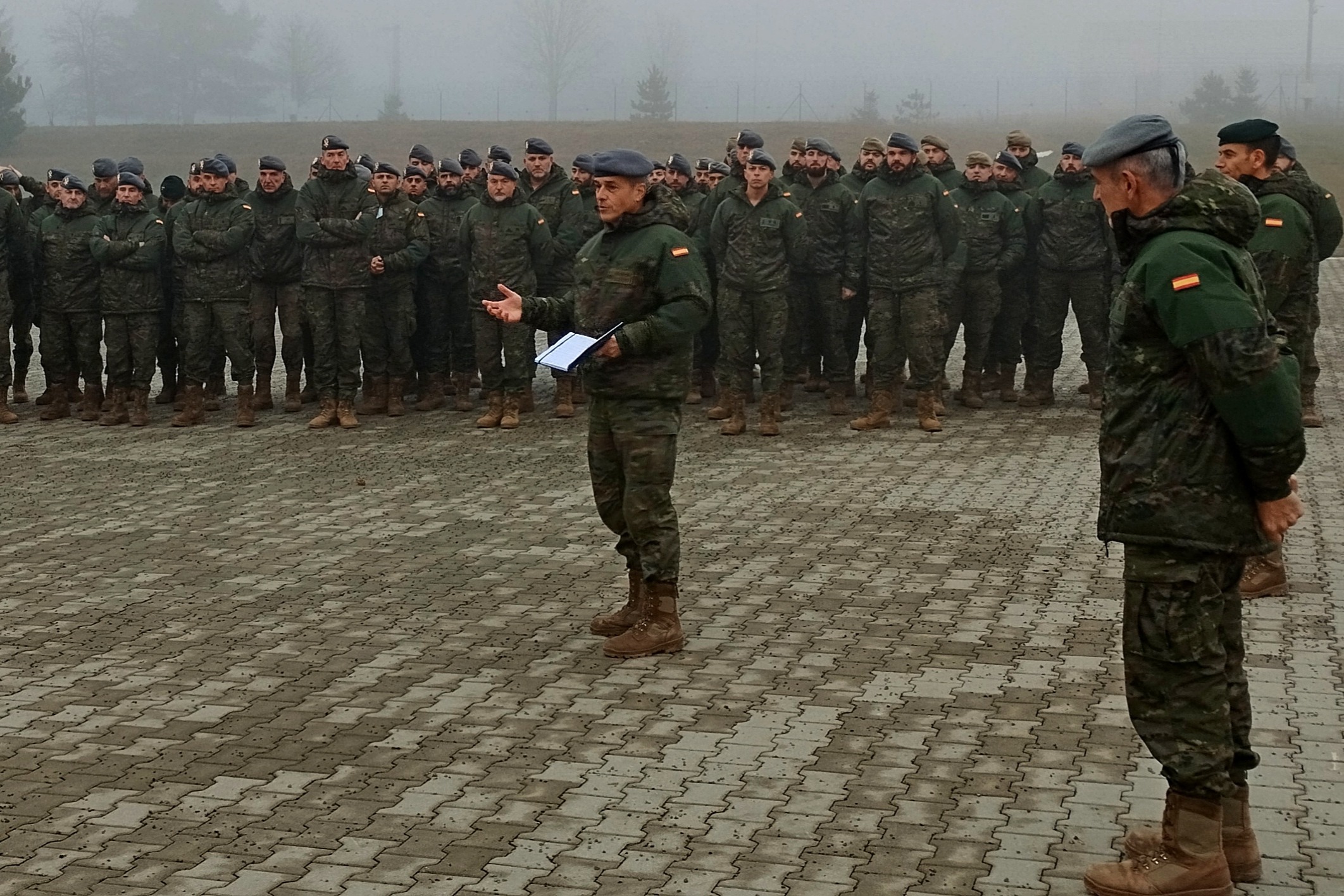
Since July 2024, Spain has been leading a NATO Multinational Brigade in Slovakia, formed by forces from six allied countries: Slovakia, the Czech Republic, Portugal, Romania, Slovenia, and Spain. The mission aims to reinforce the Alliance's deterrence and protection posture on the Eastern flank by integrating combat, support, and sustainment forces under a single multinational command. Spain, as the framework nation, provides 75% of the deployed force, exercises operational leadership of the Brigade, represents the entire force to the host nation, and coordinates the integration of all capabilities according to NATO standards.
In this interview, Colonel Jesús M. Martínez Victoria, commanding officer of the Multinational Brigade Task Force Slovakia, provides a comprehensive overview of the Spanish deployment in Slovakia, the leadership role assumed by Spain's Armed Forces, and the key operational milestones that will define this rotation.
What is Spain's mission in Slovakia within NATO's Eastern Flank Operation?
Our mission is to lead a Multinational Brigade as part of NATO's enhanced deterrence on its Eastern flank. Of the eight brigades deployed along this line, Spain contributes to three of them: Latvia, Romania, and Slovakia, where we act as the framework nation. Thus, Spain leads the operation, contributes the majority of combat and support units and serves as the sole interlocutor with Slovakia for all force requirements. Under the command of a Spanish colonel, which I have the honour of holding during the first half of 2025, contingents from the Czech Republic, Slovenia, Portugal, Romania, Slovakia, and, naturally, Spain, operate.
What is the composition of the Brigade You Lead?
The Multinational Brigade has an advanced element deployed in Slovakia, consisting of nearly 1,200 military personnel, 800 of whom are Spanish. In addition, there are reinforcement units from the contributing countries, primarily Spain and the Czech Republic, which amount to another 1,600 personnel on standby, ready to deploy should the threat level require it.
Our mission is essentially to deter and, if necessary, protect NATO's Eastern flank, in line with Spain's commitments under the North Atlantic Treaty. For this purpose, the Brigade is configured with a defence-oriented focus, equipped with all necessary capabilities to ensure credible deterrence: battle tanks, mechanised vehicles, high-mobility tactical systems, field artillery, anti-aircraft and anti-tank missiles, a robust command and control system, and tactical logistics adapted to this operational environment.
What does your daily routine involve?
Two essential activities. On the one hand, we train in various types of terrain, open areas, urban zones, forests, and other environments, while ensuring integration and interoperability between the six nations. On the other hand, we maintain our equipment fully operational through a continuous supply and maintenance program, in close coordination with the Spanish Army from home territory. The level of availability required means we must undergo rigorous combat preparation and ensure the maximum operability of the assigned material resources.
What are the next challenges facing the MN BDE TF Slovakia Mission for NATO and Spain?
In the short term, the most immediate challenge is the CERTEX exercise, where NATO will evaluate the readiness of the Multinational Tactical Group deployed permanently to operate effectively. Next, we will participate in the Slovak national exercise Slovak Shield, supporting the host country's territorial defence plan. Finally, in June, we will conduct Operation Strong Lineage 25, which will involve the actual deployment of most of the Multinational Brigade's capabilities that are on alert in the national territories of the contributing nations, primarily from the Czech Republic, Spain, Turkey, and Slovakia. This will be a highly demanding test, overseen by NATO evaluators, which will determine if we are ready to fully assume the protection mission assigned. To tackle it, we are especially focused on command and control, multinational interoperability, procedures, and the integration of logistical capabilities.
As NATO host nation in Slovakia, what responsibilities do we assume and how is our relationship with the Slovak authorities?
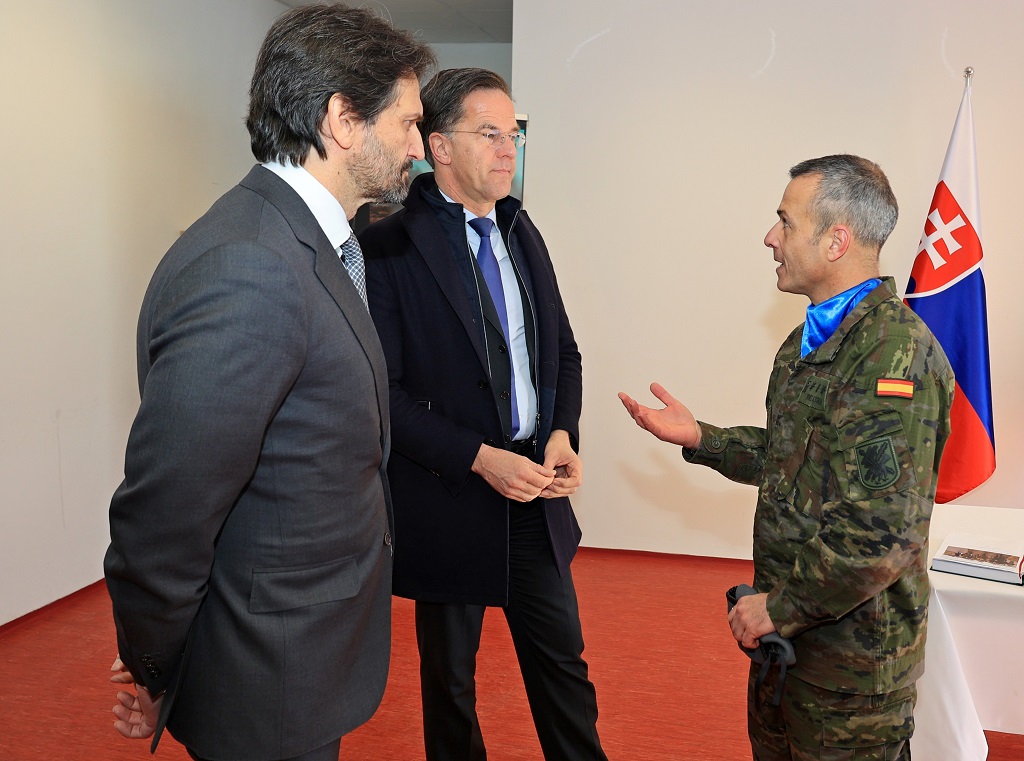
As the framework nation, Spain assumes the responsibility of ensuring the living and operational conditions for the entire force. This role, new for our Armed Forces, requires close coordination with the Slovak civil and military authorities. Our relationship with them is excellent, based on mutual respect and trust, as well as the effectiveness of our daily management of the challenges we face together. This capacity for leadership and management is what truly strengthens our image as a reliable nation within NATO and enhances our standing as a serious and committed ally.
Fotos