

The Commander of the Dedalo Group: “Our ships and crews are superb ambassadors for the ‘Spain’ brand”
- The frigates ‘Navarra’ and ‘Cristóbal Colón’ are taking part in surveillance and deterrence activities both nationally and as part of three NATO operations: Sea Guardian, Noble Shield and Neptune Strike
The frigates ‘Navarra’ and ‘Cristóbal Colón’ are sailing in the eastern Atlantic Ocean and the Mediterranean Sea as part of Spain’s international commitments, reinforcing its presence, surveillance and deterrence in maritime areas of national interest.
They are currently part of NATO Standing Naval Group 2 (SNMG-2), carrying out operations that strengthen interoperability with allied navies, including those of Italy and Greece. In addition, they will take part in the ‘Neptune Strike 26.4’ (NEST 26.4) exercise, during which they will enhance their readiness to operate jointly in a variety of naval scenarios.
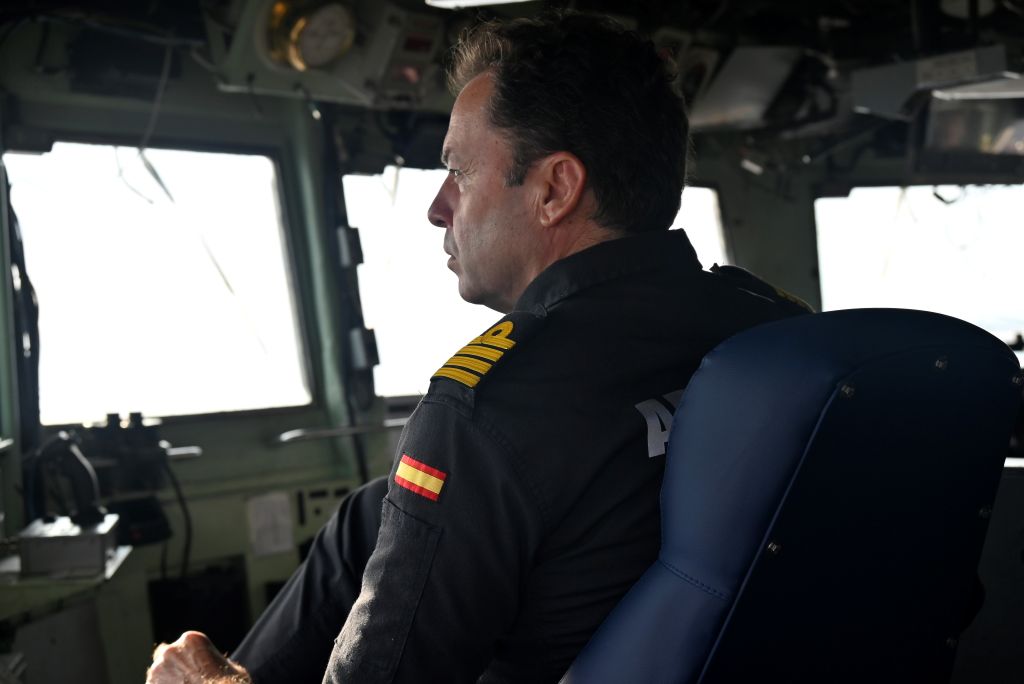
On board the frigate ‘Navarra’ and in command of this naval group is the Commander of the Navy’s 41st Escort Squadron, Captain Rafael Mira Calvo. The 41st Escort Squadron is an elite unit of the Navy’s Combat Force, comprising six frigates, Defence Staff and more than 1,300 men and women. Captain Mira Calvo reflects on Spain’s leadership during this deployment: ‘Spain has one of the best navies in the world, so its contribution to NATO is always highly valuable. We have highly capable frigates and weapon systems, but far more important than that – and our greatest asset – is the professionalism, training and human qualities of our crews, who are held in very high regard by our allies
From your perspective as a commander, what is the main challenge of commanding several frigates during a deployment of this nature?
The fact of participating simultaneously or consecutively in one national operation and three NATO operations – Sea Guardian, Noble Shield and Neptune Strike – each with different tasks and different lines of command, means that the main challenge is the need to coordinate the frigates’ activities very effectively so that they can carry out each of the missions assigned to them in accordance with their capabilities.
In an operation such as the one we are currently conducting, my Defence Staff is my primary source of support and advice. Their work is essential in enabling me to make the right decisions regarding the planning, coordination, command and control of the various operations we carry out at sea, as well as the defence diplomacy and support for the national defence industry that we will undertake in port.
This deployment is somewhat complex due to the various missions and operations they will be carrying out, both at home and abroad. How does this play out in day-to-day life on board?
At sea, every day is a busy one for the crews. Sometimes, simply sailing in adverse weather conditions is a challenge in itself. Added to this are all the tasks arising from ongoing operations, as well as the continuous training we undertake during quieter periods.
A warship at sea – and a frigate in particular – never stops. The pace, intensity and level of alert remain high on board twenty-four hours a day, regardless of external factors such as the weather. Add to this the fact that our duties vary considerably depending on the different operations we are involved in at any given time, and this makes sailing even more demanding.
Furthermore, whilst at sea, they will not be operating alone; they will carry out activities alongside other allied naval units. How does working and training alongside ships from other allied navies benefit the Spanish crews?
Indeed, during the deployment we will have the opportunity to work at sea with units from seven different countries. Being able to operate and train alongside our allies undoubtedly adds extra value to this operation
Our integration into the Standing Naval Maritime Group (SNMG) enables us to contribute to NATO’s deterrence and defence activities as part of the Alliance’s forces that are ready to act. In the case of the ‘Neptune Strike 26.4’ exercise, our frigates will be able to test their capabilities in the defence of aircraft-carrier strike groups and in long-range offensive operations. Meanwhile, the ‘Mare Aperto’ exercise organised by the Italian Navy — in which more than 20 ships, 3 submarines and around 30 military aLa presencia naval también tiene una dimensión de cooperación y diplomacia de defensa. ¿Qué papel desempeñan las escalas y actividades con las Marinas de países aliados?
The naval presence also has an aspect relating to defence cooperation and diplomacy. What role do port calls and activities with the navies of allied countries play?
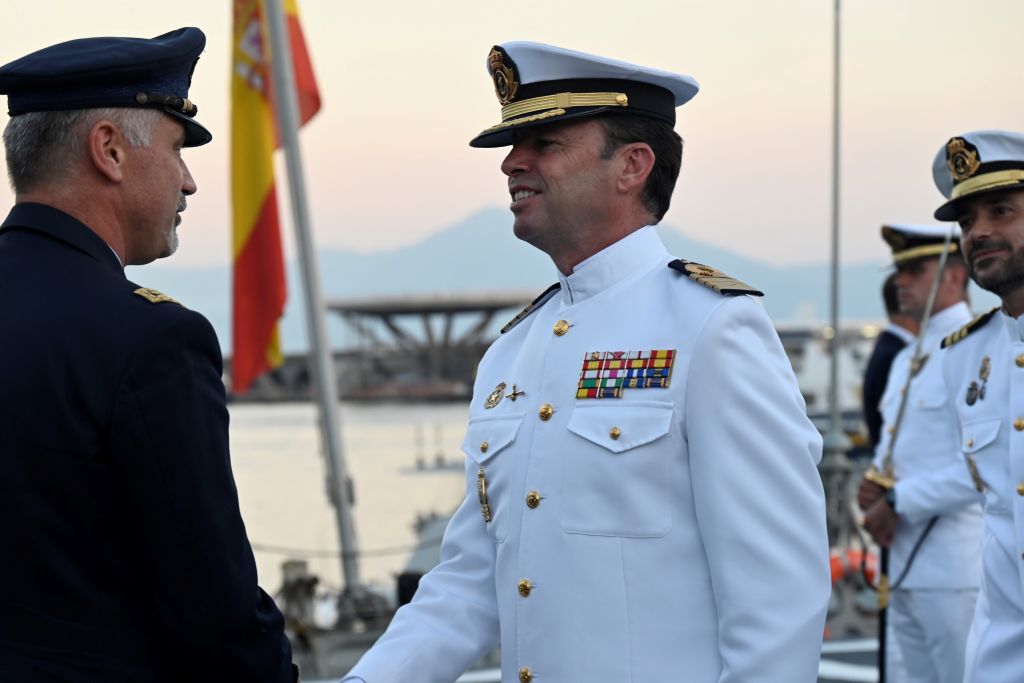
Port calls are a key tool of defence diplomacy and, as such, an important part of the deployment. They enable us to represent Spain, showcase our capabilities, strengthen ties of friendship with our allies, and project the image and commitment of our Armed Forces and our nation abroad.
During this deployment, we are calling at the ports of Naples (Italy) and Split (Croatia). In the former, in addition to carrying out important defence diplomacy work, we took the opportunity to strengthen the Navy’s engagement with and visibility amongst NATO allies, as this city is home to one of the Alliance’s Joint Force Command headquarters (JFC Naples). In Croatia, the focus will be on supporting the defence industry, promoting the international profile of Spain’s naval capabilities.
Our ships and their crews are superb ambassadors for the ‘Spain’ brand.
What does Spain contribute to the NATO naval group that is particularly significant for the force as a whole?
Spain has one of the best navies in the world, which is why its contribution to NATO is always extremely valuable. We have highly capable frigates and weapons systems, but far more important than that – and our greatest asset – is the professionalism, training and personal qualities of our crews, who are held in very high regard by our allies.
Deployments of this kind are essential for demonstrating Spain’s commitment to our NATO allies, providing capabilities and forces that undoubtedly contribute to this vital task of deterrence and defence. It must be borne in mind that our security is not built solely within our borders, but begins in regions somewhat further afield, where instability arises, and which are in fact the source of certain threats to our national interests.
Part of the mission is linked to Operation Sea Guardian. How important is it to understand the maritime environment?
Knowledge of the maritime environment is essential. In order to operate safely in a maritime area, we need analysed and assessed information that gives us a comprehensive picture of the situation in a particular zone. In this way, we can anticipate threats and make the right decisions. In short, it forms the basis for understanding what is happening in a particular part of the sea and for taking effective action.
One of the main objectives of Operation Sea Guardian is precisely that: to contribute to our understanding of the maritime environment in an area of great interest to Spain, namely the Mediterranean Sea. That is why our contribution to and commitment to this operation are so significant.
In addition, Operation Sea Guardian can also carry out a wide range of tasks to contribute to maritime security, including counter-terrorism, building regional maritime security capabilities, ensuring freedom of navigation, carrying out maritime interdiction operations and contributing to the protection of critical infrastructure. The frigates ‘Navarra’ and ‘Cristóbal Colón’ are equipped to carry out all these types of missions.
Finally, what lessons do you hope to have learnt by the end of this deployment? What do you hope the crews will take away with them when they return to Spain?
No matter how many years you may have spent serving on board ships, the sea, the ships and their crews always have new lessons in store for you.
During this voyage, I hope to see the progress our allies have made in new technologies and their capabilities in tackling new threats, such as unmanned systems. This is a challenge for all the world’s navies, and developments in this area are happening very rapidly.
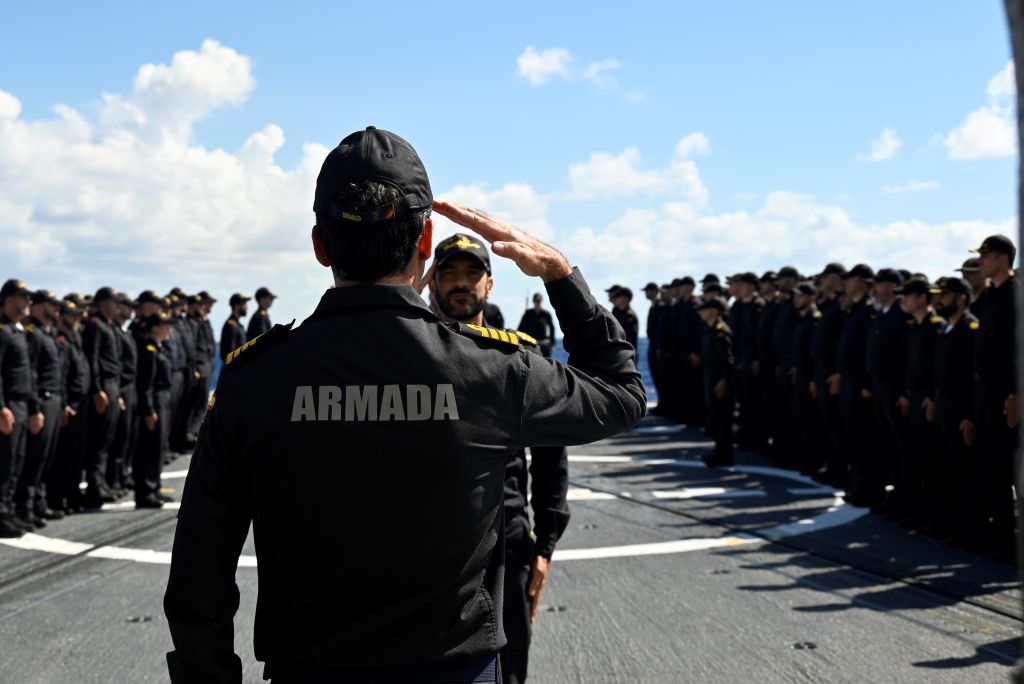
As for the crews, I hope they take away the experience of working in a multinational environment alongside many naval units from different countries, and the satisfaction of having been able to represent Spain before our allies, demonstrating their high standard.
Fotos