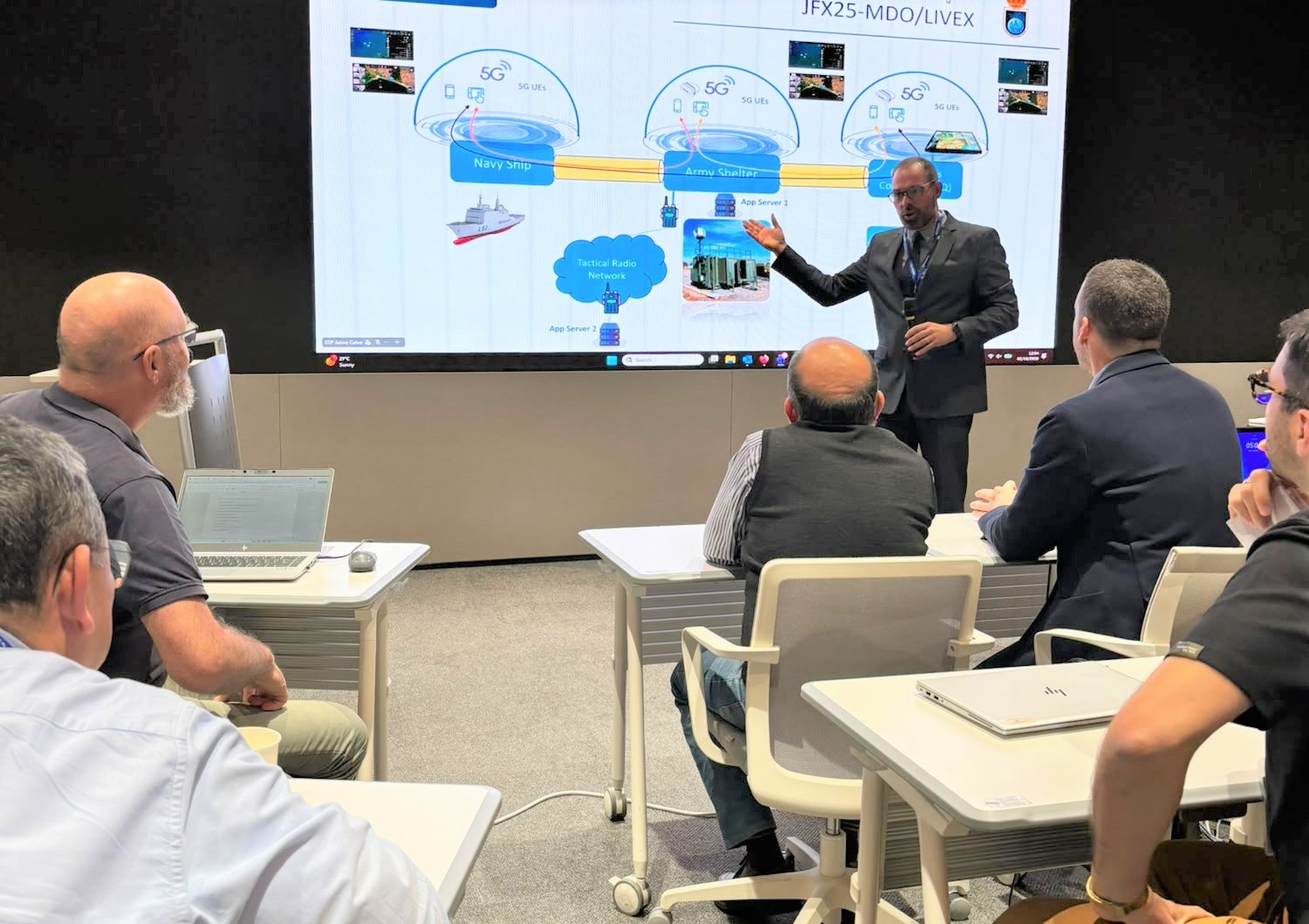


The Joint Cyberspace Command is taking part in the 9th plenary meeting of the NATO Wireless Communications Standards Project
The meeting showcased progress on 5G/xG networks with allied countries and saw the start of preparations for the new terms the use of mobile phones in defence
The Joint Cyberspace Command (MCCE) took part in the ninth plenary meeting of NATO’s IST-220 working group in Seoul, as part of the NATO Wireless Communications Standards Project (NWCSP). This initiative, spearheaded by the NATO Organisation for Science and Technology, aims to adapt the latest generation of commercial mobile technology for use in the military operations of allied nations.
The event brought together around a hundred attendees, including representatives from the ministries and armed forces of allied nations, experts from the technology sector specialising in mobile networks and telecommunications, and researchers from the academic world. This public-private partnership is essential for transferring technological advances from the civilian market to the military sector.
The Spanish Armed Forces were represented by Engineer Commander Jaime Calvo, in his capacity as the national representative for the NWCSP project. During his presentation, he provided a detailed update on the projects, proof-of-concept trials and developments involving 5G technology currently being carried out within the Spanish Armed Forces.
The meeting enabled the guidelines to be drawn up for the forthcoming second edition of STANAG 5665, the military standard governing the use of mobile communications in the defence sector. The main objective is to establish common technical rules that will enable the mobile, satellite and command networks of the various allied countries to connect and interact with one another without compatibility barriers on the battlefield.
Among the key topics discussed were the roll-out of private 5G networks for specific military applications, communications via satellites and non-terrestrial networks, the use of advanced wireless radio links, and the integration of sensors into the network itself.
Furthermore, particular emphasis has been placed on strengthening the cybersecurity and resilience of these infrastructures against potential interference or enemy attacks.
Spain’s presence has not been limited to the institutional sphere; it has also included representatives from industry and international programmes. Staff from the company INDRA took part in the sessions, alongside Spanish specialists attached to the European Commission’s IRIS² satellite communications programme and international technology firms.
Fotos