

The Joint Cyberspace Command analyses the strategic challenges of cyber defence at the ‘LISA 2026 Conference’
-
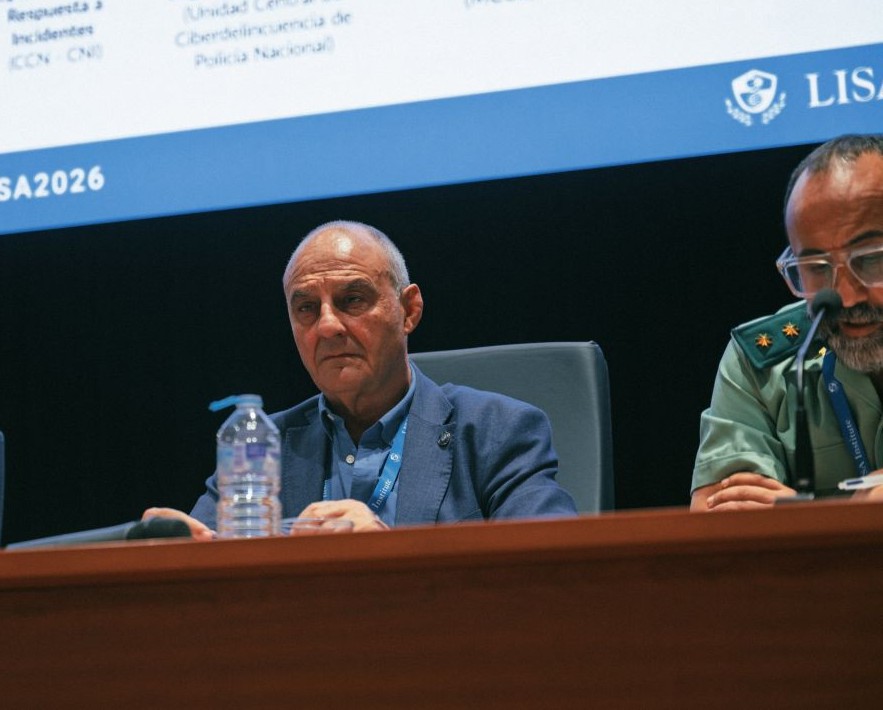
Enrique Pérez de Tena, an adviser at the MCCE’s Office of Institutional Relations, took part in the round-table discussion ‘Cybersecurity, cyber intelligence and cyber defence: lessons learnt’
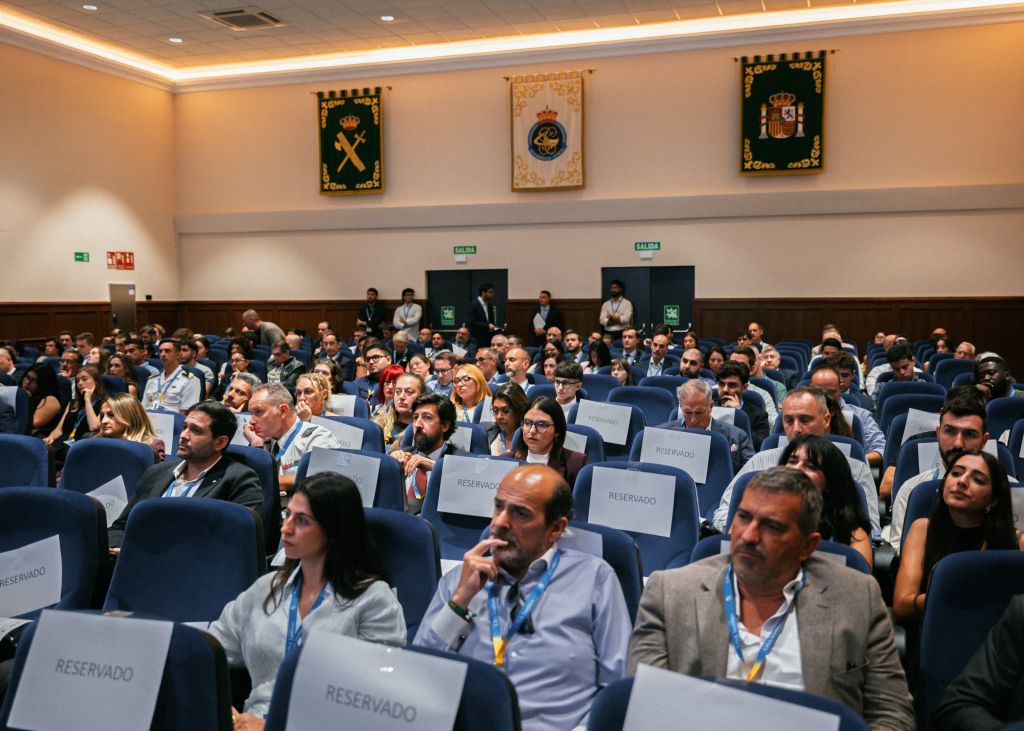
The Joint Cyberspace Command (MCCE) took part in the opening session of the LISA 2026 Conference: Cybersecurity, Intelligence and Defence, organised by the LISA Institute in collaboration with the Civil Guard University Centre (CUGC) at the ‘Tomás Alvira’ Auditorium in Madrid.
The MCCE’s Institutional Relations Adviser, retired Commander Enrique Pérez de Tena, took part in the round-table discussion entitled ‘Cybersecurity, cyber intelligence and cyber defence: lessons learnt’. With Daniel Villegas, Director-General of the LISA Institute, acting as moderator, the event also featured senior officers and executives from the public and private sectors, including Enrique Miranda, CISO at Ferrovial Energía; Superintendent Juan Carlos Sancho Domínguez, Head of the National Police’s Central Cyber Security Brigade; Lieutenant Colonel Alberto Rodao Martín, head of the Cybercrime Department at the Civil Guard’s UCO, and a representative from CCN-CERT.
Cyberspace as a weapon and the requirement for governance in AI
During the debate, Pérez de Tena emphasised the cross-cutting nature of cyberspace within modern military operations. In this regard, he explained that cyberspace not only constitutes the fifth operational domain of the Armed Forces, but must also be understood as ‘a weapon in its own right and a cross-cutting enabler for all other military capabilities in the fulfilment of the mission’.
With regard to the use of disruptive technologies, the MCCE representative addressed directly the impact and methodological requirements of using artificial intelligence in the operational sphere of defence. In this regard, Pérez de Tena emphasised that ‘artificial intelligence requires high-quality data to be able to provide correct answers; it requires a layer of governance to monitor what it does and why it gives that particular response’.
In this regard, he explained that within the Armed Forces, AI is being used “as just another tool within the systems, through specific algorithms designed for particular functions”, and emphasised that the technology always requires an institutional framework for control and traceability in decision-making.
Active recruitment and attracting technical talent
During the round-table discussion, which focused on the exchange of real-world and institutional experiences, Pérez de Tena addressed the distinctive value of military cyber defence. In this regard, he emphasised that the Command’s mission goes beyond conventional cyber security, as it incorporates the capacity to respond and neutralise threats when deemed necessary from an operational perspective: “We are the only state organisation with the legal authority to launch attacks,” the MCCE representative noted, highlighting the Command’s capabilities within the framework of active defence.
He also emphasised the key challenge of attracting and retaining specialist talent within the Armed Forces. “We are looking for imaginative individuals, capable of anticipating what the next cyberattack will look like and how to defend ourselves against it,” explained Pérez de Tena, whilst warning that the threat is constant and ever-changing: “The worst cyberattack is the one that will happen tomorrow and that someone is devising today,” he cautioned. He therefore concluded that cyber defence requires diverse, multidisciplinary professionals with strong logical thinking skills and ingenuity to respond to the changing environments of cyberspace.
Fotos