

More than 1,800 service personnel from the Air and Space Force, the Army and the Navy took part in the ‘Eagle Eye 26-03’ exercise
September 25, 2026- As part of the Presence, Surveillance and Deterrence Operations, aerial surveillance missions have been carried out to ensure and strengthen the surveillance of airspace under national sovereignty and of national interest
The third ‘Eagle Eye’ exercise of 2026, led by the Air Operations Command (MOA) and under the operational control of the Operations Command (MOPS), has come to an end. At Málaga Air Base and in the waters of the Alborán Sea, between 21 and 25 September, air, land and naval assets carried out defensive air missions in response to incursions and movements by unidentified aircraft and drones, in order to ensure and reinforce the surveillance of airspace under national sovereignty and of national interest.
This operation—part of the Presence, Surveillance and Deterrence Operations (OPVD)—has brought together assets from the Air and Space Force, the Army and the Navy deployed within the National Air Defence System, maximising the efficiency of the participating assets and demonstrating perfect synchronisation in terms of air defence amongst the participating weapon systems.
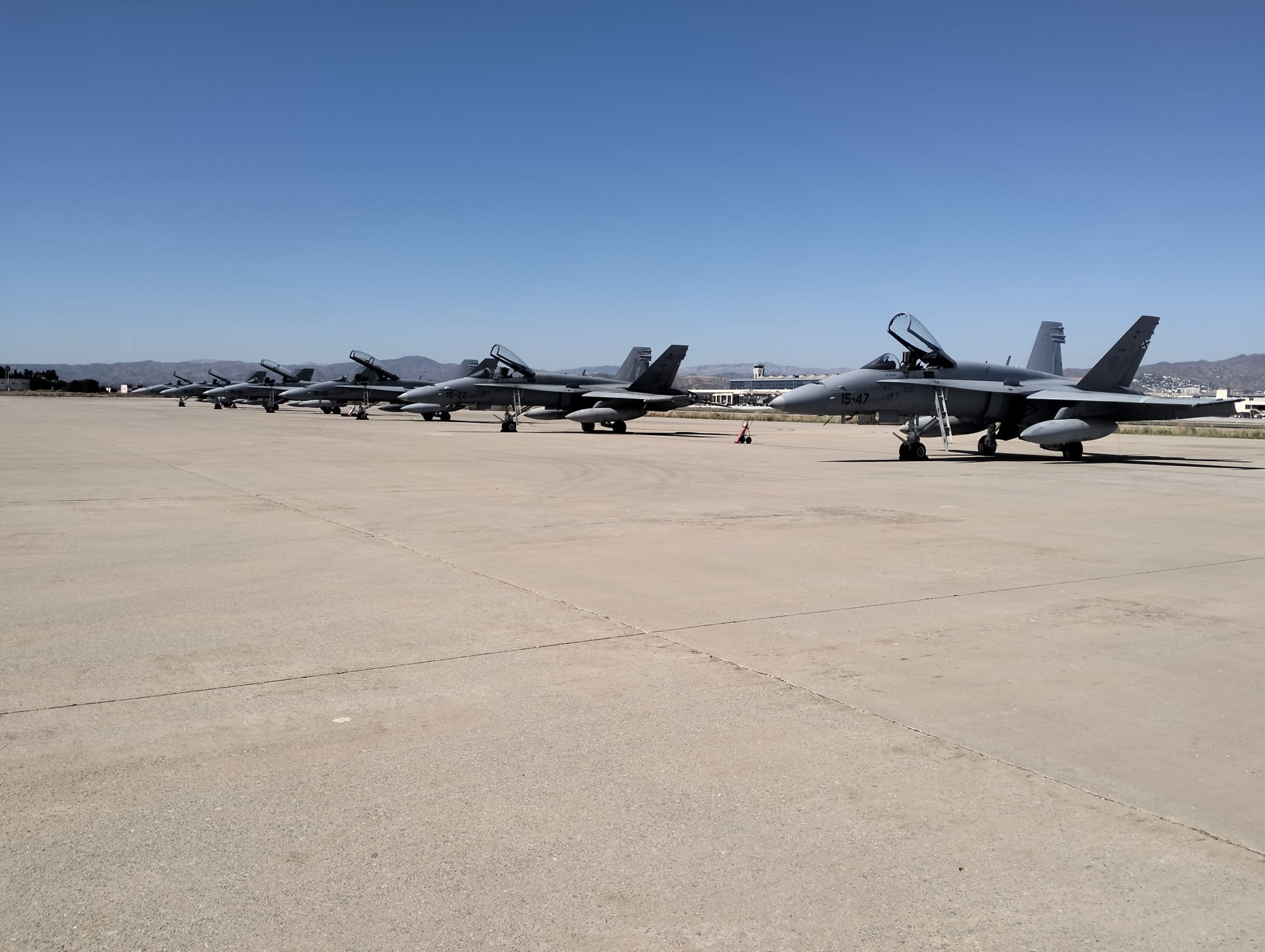
In this edition, six F-18 aircraft from the 15th Wing (Zaragoza Air Base) of the Air and Space Force, the Navy’s frigate “Méndez Núñez” (F-104), and the Army’s “Cartagho” Air Defence Unit (UDAA) were deployed, amongst other assets.
More than 1,800 military personnel have demonstrated their high level of preparedness by contributing to the security and defence of the country’s airspace, 24 hours a day, 365 days a year.
The conclusion of this exercise once again demonstrates the Armed Forces’ ability to operate in an integrated manner towards a common objective — the defence of national airspace —, thereby strengthening the coordination, interoperability and effectiveness of the National Air Defence System. The ‘Eagle Eye 26-03’ exercise has enhanced the training of all participating assets, whilst demonstrating perfect synchronisation in terms of air defence amongst the participating weapon systems of the Air and Space Force, the Army and the Navy, showcasing their capacity for integration into the Air Defence System (SDA).
Joint participation in ‘Eagle Eye 26-3’
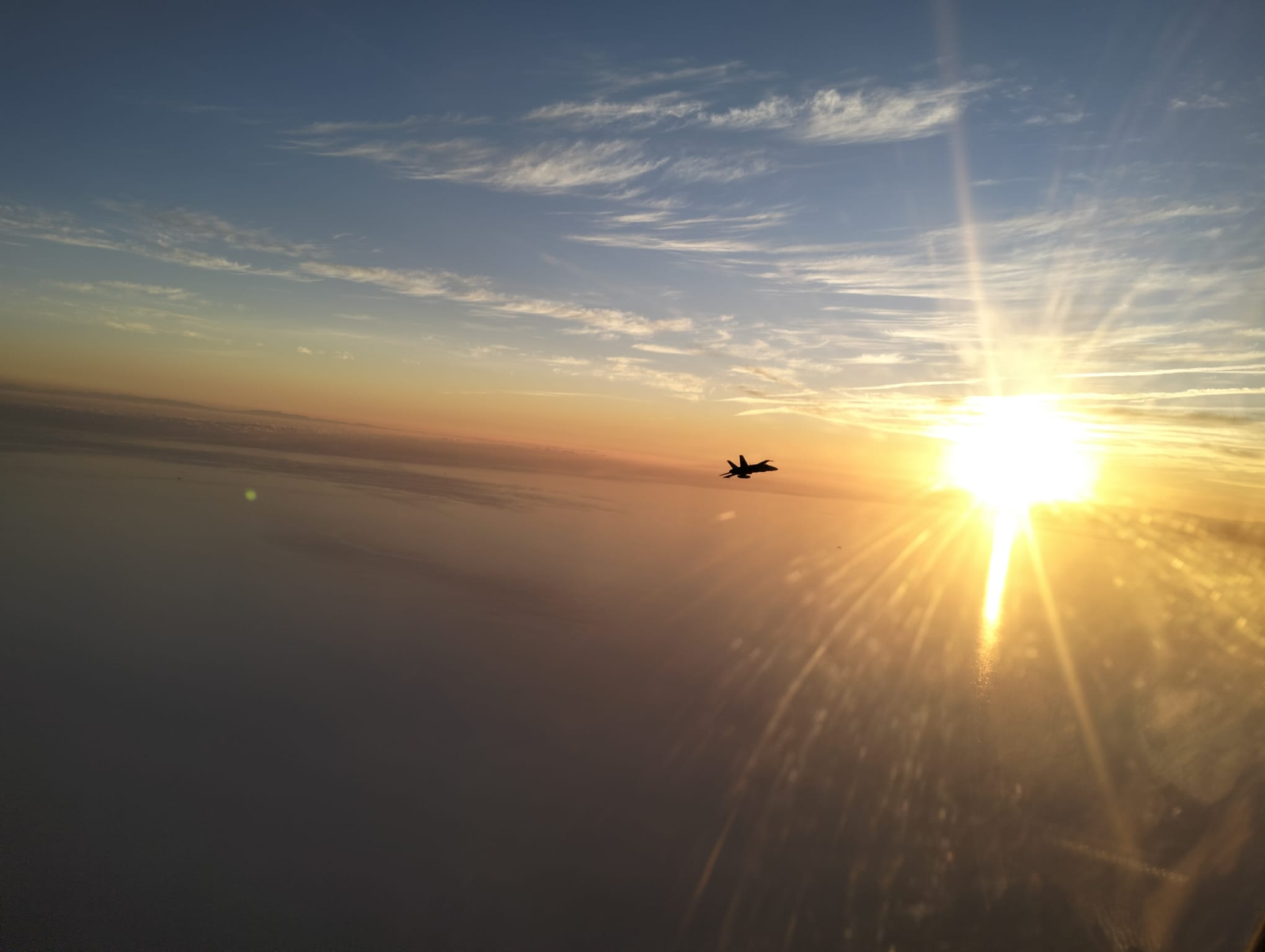
On behalf of the Air and Space Force, F-18 fighter-bombers carried out a Quick Reaction Alert (QRA) mission. During the activation, the pilots performed air-to-air combat manoeuvres and interception missions, demonstrating their ability to respond rapidly to potential threats. Exercises involving the escort and protection of strategic assets were also carried out.
The pilots have remained on duty the 24 hours, constantly ready to take to the air as quickly as possible should they be called upon. In total, they have carried out more than 25 departures on QRA missions, clocking up more than 35 hours of flight time on air defence missions.
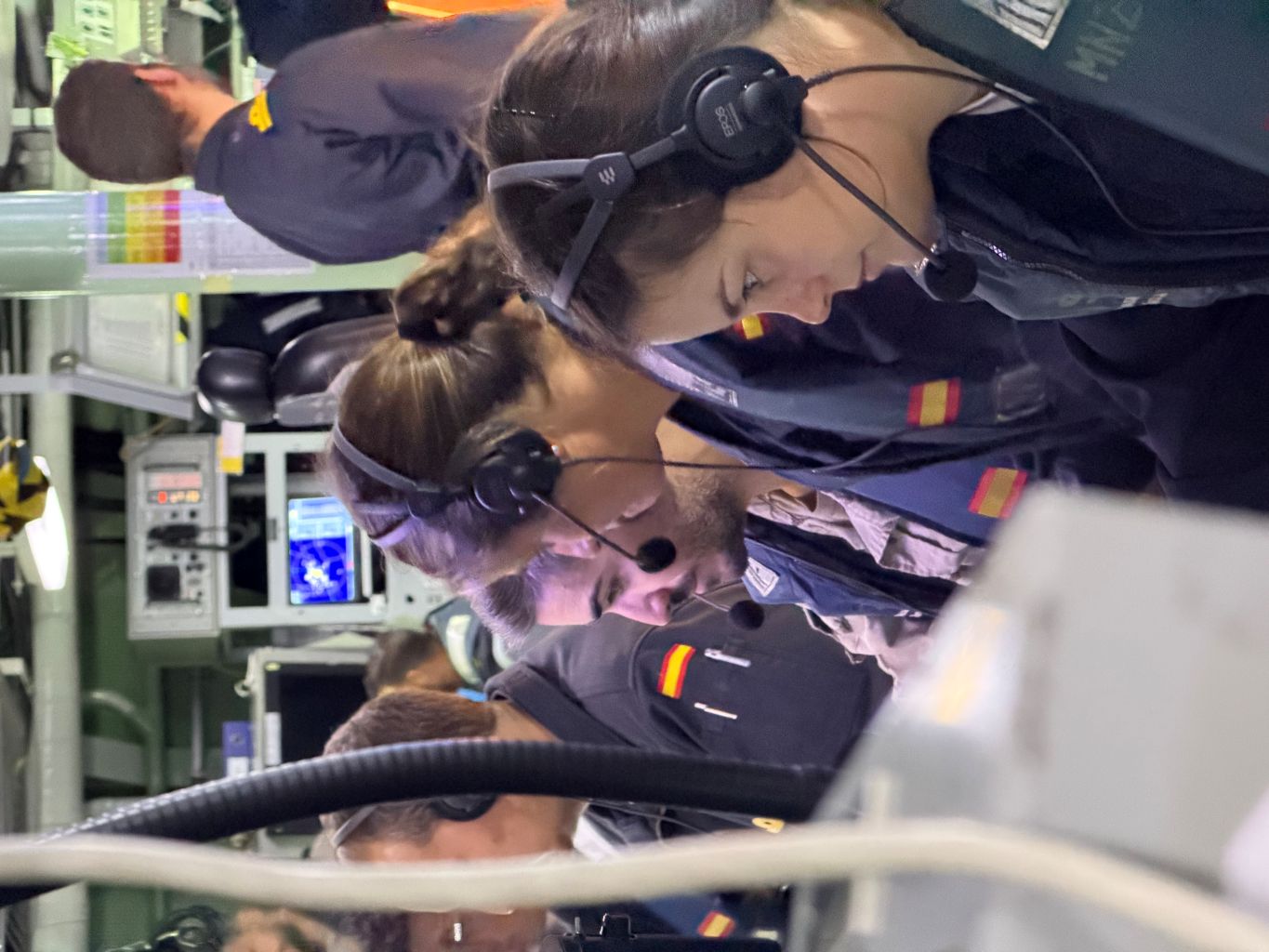
From the Air Operations Centre (AOC), tactical command and control have been exercised for surveillance, air policing and air defence operations, delegated where necessary to the control units forming part of the Air Defence System. For its part, the Command and Control Centre Group (GRUCEMAC) has provided, via data links, a comprehensive overview of the situation in the airspace under surveillance, identifying flight paths and relaying the tactical actions decided by the Air Battle Commander based at the AOC.
The work carried out by these control centres has optimised the performance of the various aircraft involved in the operation, thanks to the precise support provided by the Air Surveillance Squadrons (EVA) and the Seville Operational Air Traffic Control Squadron (ECAO-Sevilla).
As for the Army, the ‘Carthago’ Anti-Aircraft Artillery Unit (UDAA) has been deployed in the vicinity of EVA 9, Motril (the coast and the port) and Torrenueva Costa. Formed under the Anti-Aircraft Artillery Command (MAAA) and led by the 2nd/73rd Anti-Aircraft Artillery Group (GAAA) from Cartagena (Murcia), the UDAA has demonstrated a high level of preparedness and readiness to ensure the security and defence of airspace of national interest.
On behalf of the Navy, the frigate “Mendez Núñez” (F-104) has contributed to the surveillance and air defence of national territory in the waters of the Alboran Sea. The various systems and equipment on board, notably the AEGIS Combat System and the SPY-1D radar, have enabled both the early detection of aerial targets and the ability to counter any threats that may arise. The frigate’s contribution has enhanced training and tested the integration of air, naval and land assets in highly complex scenarios.
Fotos