

The Joint Cyberspace Command is taking part in the Círculo Foundation’s conference entitled ‘Post-quantum cryptography: we cannot wait’
-
The MCCE’s second-in-command discusses the challenges of the transition to quantum-resistant encryption standards and the protection of defence information systems
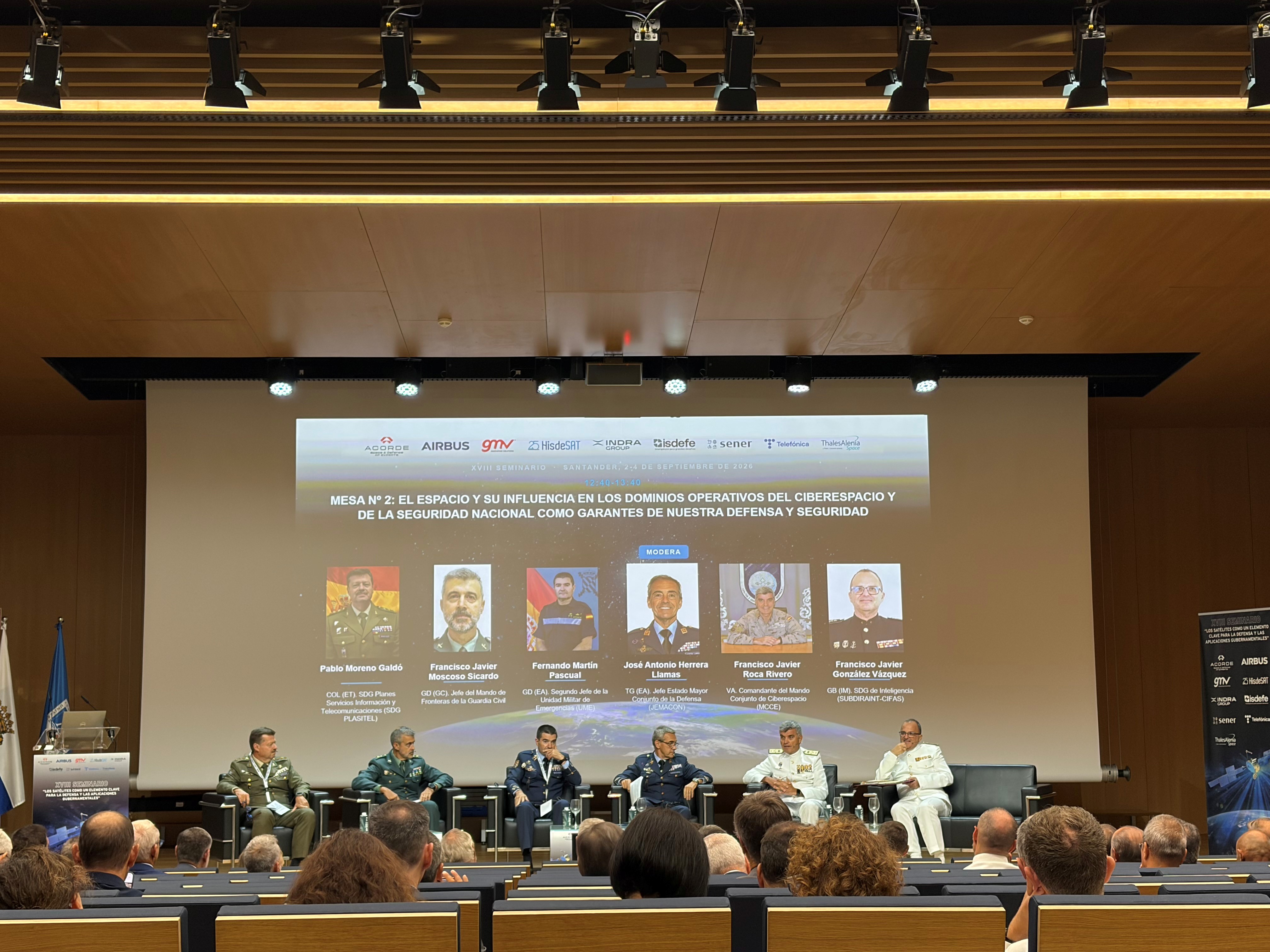
The Joint Cyberspace Command (MCCE) was represented at the professional conference ‘Post-quantum cryptography: we cannot wait’, organised by the Círculo Foundation for Defence and Security Technologies. The forum brought together officials from the Ministry of Defence, the Armed Forces, the National Cryptology Centre (CCN), the academic sector and key players from the technology industry to address the need to accelerate the transition to secure algorithms in the face of the inevitable advance of quantum computing.
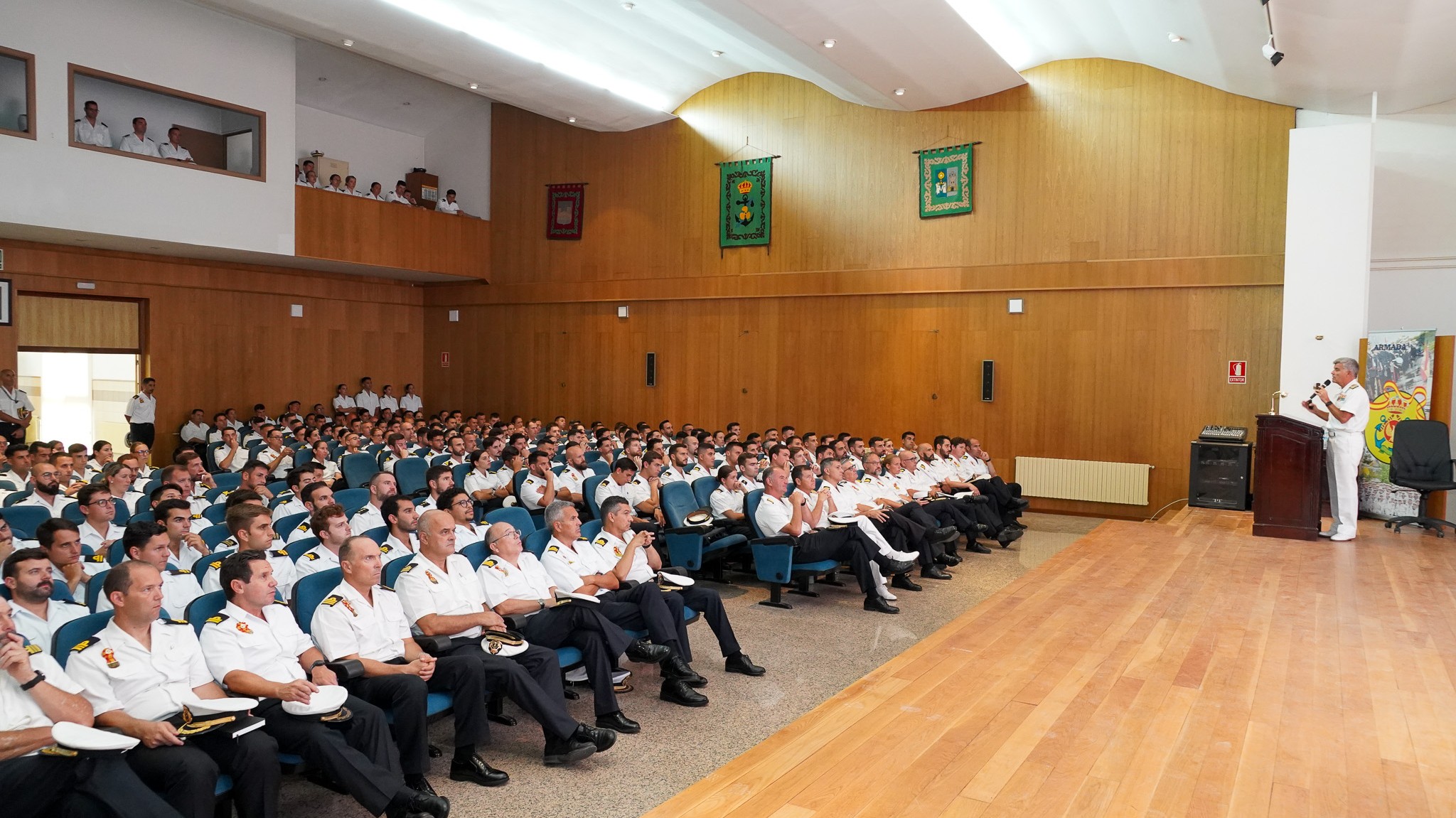
The MCCE’s second-in-command, Major General Federico Juste, spoke on behalf of the MCCE to outline the impact that the development of quantum technology has on the confidentiality, integrity and availability of communications and military command and control networks.
During his speech, the second-in-command emphasised that cryptology is an invisible yet indispensable part of the Armed Forces’ operations. He also pointed out that the security landscape has changed dramatically in the face of the certainty of imminent quantum disruption: “Enemies are already intercepting and storing sensitive information that they cannot currently decipher, whilst awaiting what is known as ‘Q-Day’,” warned the general, stressing the urgency of taking proactive action and referring to the future time when computers will be powerful enough to break current encryption systems.
Furthermore, he emphasised that the MCCE’s direct reporting to the Chief of the Defence (JEMAD), combined with close collaboration and alignment with the recommendations of the National Cryptology Centre (CCN), enables the Armed Forces to save valuable time and streamline their adaptation plan. The Command has already completed the initial phase of taking stock of all its cryptographic equipment and is currently analysing which systems are suitable for the post-quantum era and which will require immediate adaptation or replacement, reaffirming that, in the face of this threat, firm leadership and close inter-institutional and international cooperation are essential.
In the second part of his presentation, the general addressed the dual nature of AI in the cyber domain, describing it as a genuine risk multiplier, but also as a booster of defensive capabilities. He explained how AI has revolutionised the timescale of cyberattacks, compressing processes that previously took weeks or months into a matter of seconds, by “moving from human speed to machine speed”.
As well as pointing out that AI could bring forward the arrival of Q-Day and expose vulnerabilities in new post-quantum programmes, he has warned that the AI models themselves, which handle sensitive data, will require specific cryptographic protection. However, he emphasised that the MCCE actively employs this technology in both defensive and offensive contexts to monitor traffic in real time, detect flaws before they are exploited by hostile actors, and integrate artificial intelligence with cryptological intelligence to ensure operational resilience.
The programme featured a number of round-table discussions and expert panels focusing on the analysis of the post-quantum landscape from operational, industrial and regulatory perspectives. The MCCE’s participation reaffirms Spanish cyber defence’s ongoing commitment to cutting-edge technology, anticipating emerging threats and consolidating the Armed Forces’ digital sovereignty.
Fotos