

Change of command on the ship ‘Castilla’ during ‘Atlantic Deployment 26’
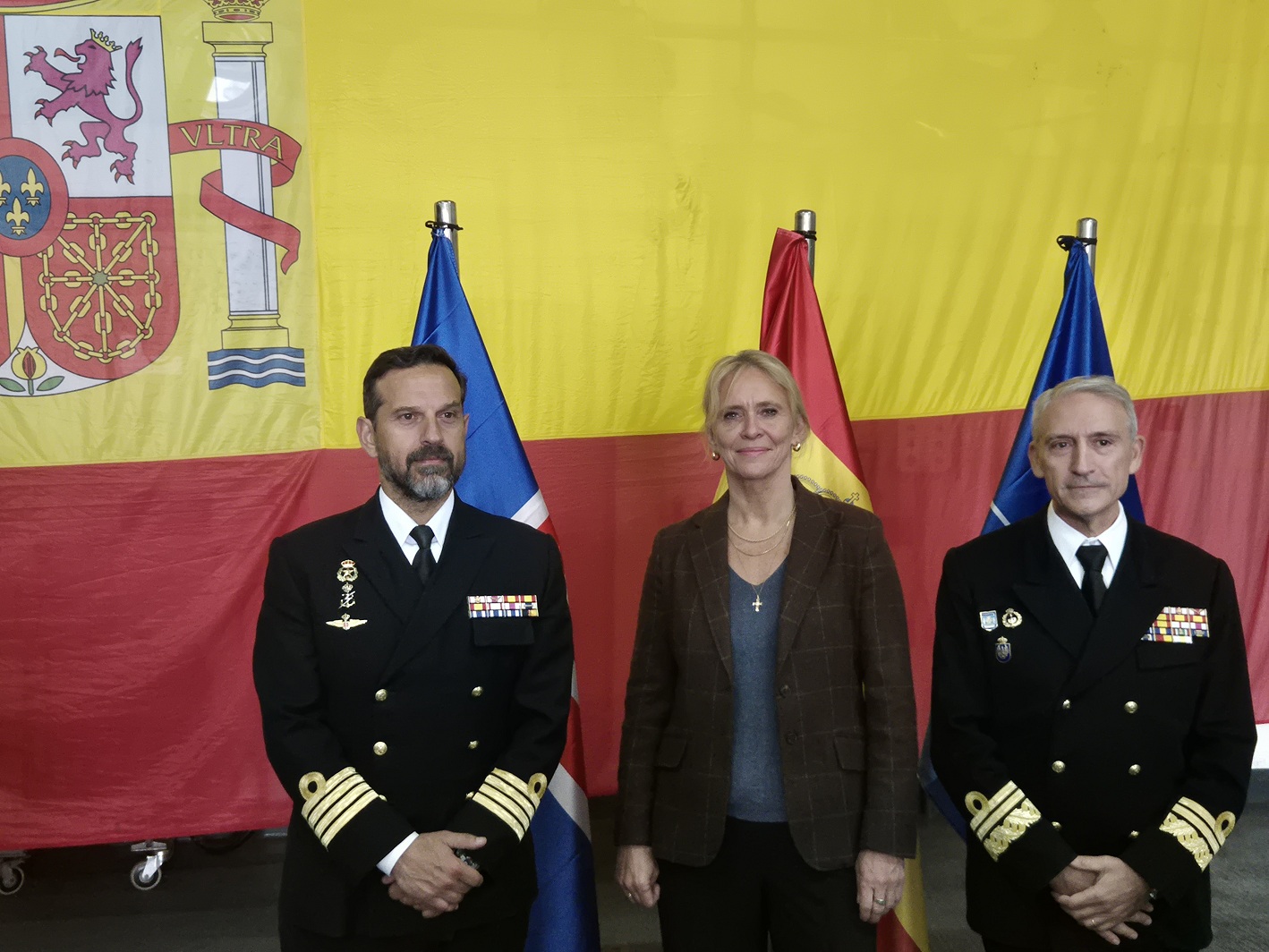
Captain David Díaz-Caneja Greciano hands over the command baton to Commander Manuel Romero Nieto at a ceremony held on the high seas, whilst the ship is sailing towards the Rota Naval Base
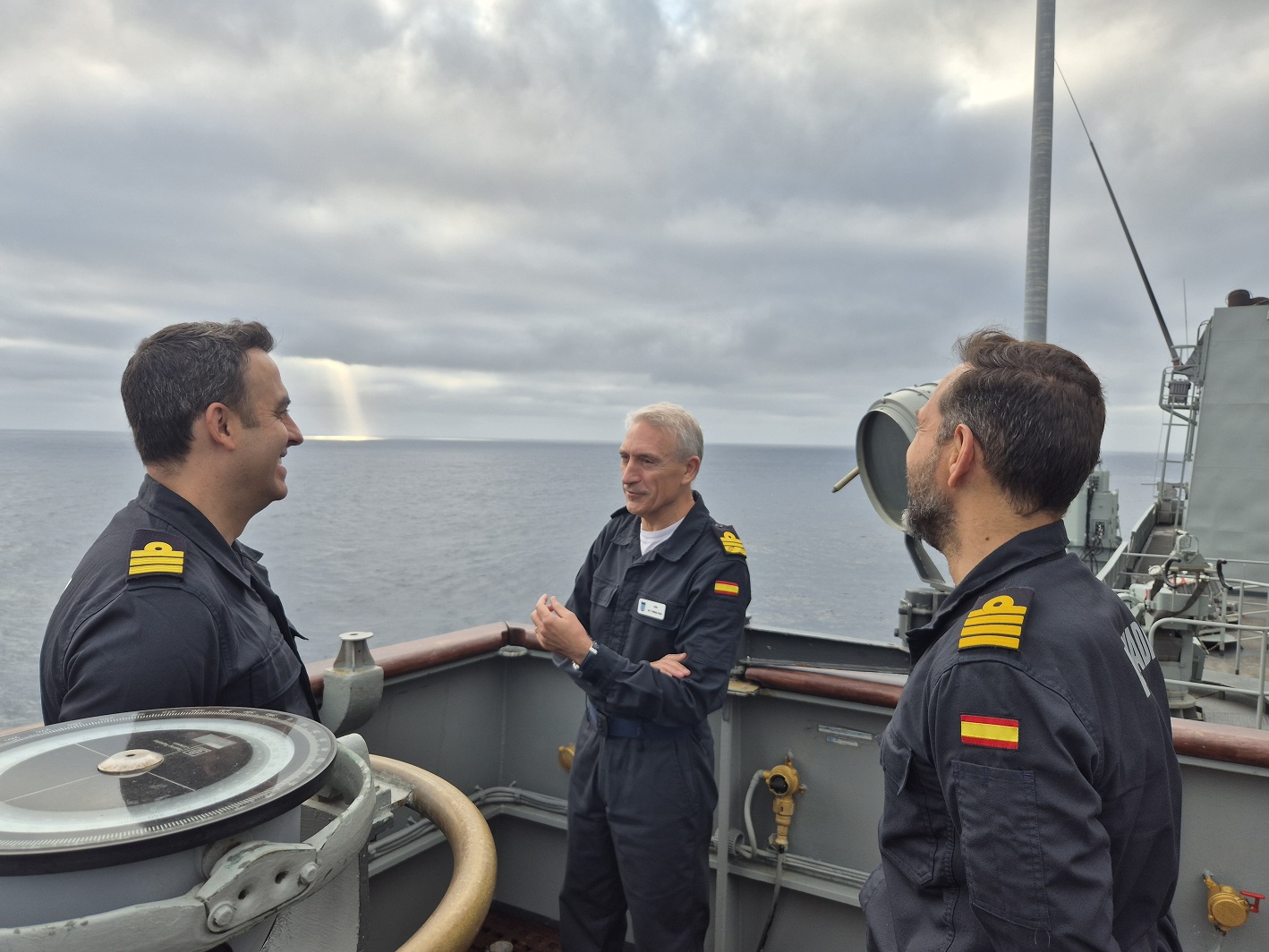
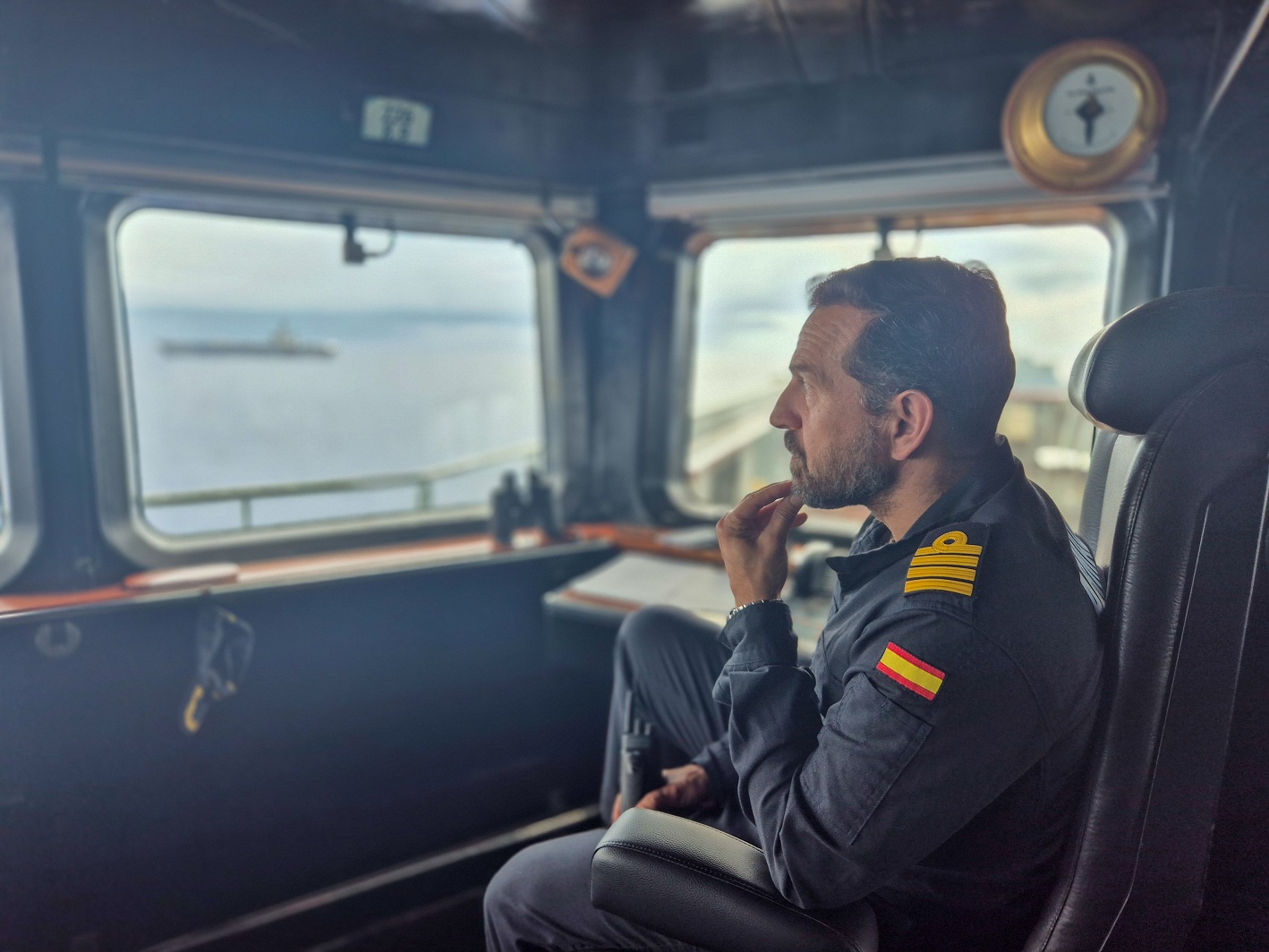
The amphibious assault ship ‘Castilla’ has carried out a change of command, two days before returning to base and after more than two months serving as the flagship of the ‘Atlantic Deployment 26’ Expeditionary Strike Group. Thus, Captain David Díaz-Caneja Greciano, after two years at the helm of this Royal Navy vessel, has handed over command to Commander Manuel Romero Nieto.
“During this period, we have taken part in many activities around the world, demonstrating the capabilities of the ‘Castilla’ in each one, always with a combat mindset. From the eastern Mediterranean, when we transported the Marine Corps unit due to be deployed to Romania, to the North Atlantic during ‘Atlantic Deployment 26’, via the Baltic during ‘Steadfast Dart 26’ and in the waters off the Canary Islands during SINKEX-25. We have called at many ports and our conduct has always been exemplary as representatives of the Navy and of Spain in Alexandroupoli, Algeciras, La Coruña, Cádiz, Málaga, Ferrol, Alicante, Cartagena, Ceuta, Lisbon, Las Palmas, Tenerife, Kiel, Stavanger, Bruges, Norfolk, New York, Halifax and Reykjavík,” says the outgoing commander.
Captain Díaz-Caneja also emphasised that “carrying out the duties of a command ship during the period in which, firstly, the Commander of the Spanish Maritime Forces Headquarters (COMSPMARFOR) served as the Maritime Component Commander (MCC) of the Allied Reaction Force (ARF) and subsequently as CTF Atlantic, has been a challenge that the entire crew has embraced from day one. The demand to be ready to set sail within five days has not given rise to even the slightest complaint; quite the opposite, in fact. The ‘Castilla’ has always been in a position to fulfil our commitment, with all the effort that entails”.
The outgoing commander has thanked the Navy “for granting me this incredible experience, and the crew of the amphibious assault ship for their constant readiness, dedication, professionalism, skill and good humour. If there is one thing that sets the ‘Castilla’ apart, it is its crew. The camaraderie, professionalism and hard work of all the amphibious units that make up the Fleet’s Amphibious and Projection Group (GRUPFLOT), the ‘Galicia’, the ‘Juan Carlos I’ and the Beach Landing Group and its Defence Staff have made it a pleasure to work side by side on so many activities over the past two years.”
For the incoming commander, taking command of the ‘Castilla’ is “a source of pride and joy, and, at the same time, a real challenge. I am very aware of the challenge this entails, not only because of the international situation, but also because of the enormous challenges facing the Armed Forces in general and the Navy in particular. The commissioning of new vessels, the complexity of maintenance, the high level of operational activity, personnel management and the need to adapt ever more rapidly to a world that is changing at a dizzying pace. But these challenging times are also times of opportunity, of emerging stronger, and I am convinced that with enthusiasm, hard work and commitment we will fulfil all the missions assigned to us”.
Commander Romero was previously posted to GRUPFLOT and the Maritime High Readiness Headquarters (CGMAD), and he says he is very much looking forward to seeing the new developments that have been introduced. “The means and methods of operation may have changed, or at the very least we are at a stage where we are envisioning how we want them to be, particularly given the increasingly common use of autonomous systems and, why not, AI as a tool for data processing and decision-making,” he emphasises.
Its objectives for the next two years are to carry out all assigned missions effectively, to maintain and/or improve the ship’s state of readiness, and to ensure that the crew take pride in belonging to this unit, which plays such an important role within the Fleet’s structure.
‘Atlantic Deployment 26’
Under the command of the Vice-Admiral, Commander of the High Readiness Maritime Headquarters (CGMAD) and of the Spanish Maritime Forces Headquarters (SPMARFOR), aboard the amphibious assault ship ‘Castilla’, ‘Atlantic Deployment 26’ comprises the strategic projection vessel ‘Juan Carlos I’, with the Commander of the Fleet Projection Group, the Deputy Commander of the Tercio Armada and the Commander of the Beach Naval Group on board; the frigate ‘Blas de Lezo’, which is carrying the Commander of the 31st Surface Squadron; the frigate ‘Reina Sofía’ and the Combat Supply Ship ‘Patiño’.
Furthermore, the Landing Force of this Expeditionary Strike Group, which set sail from Spain on 29 May and is due to return on 31 July, comprises a Reinforced Marine Landing Battalion, alongside a detachment of Italian Marines and Army personnel providing capabilities in electronic warfare, tactical surveillance, unmanned aerial systems, and fire support acquisition and control. As regards air assets, the Navy’s AV-8B ‘Harrier’ aircraft, SH-60 ‘Seahawk’ helicopters and H135 ‘Nival’ helicopters are taking part. In total, five ships, some 2,500 personnel, 75 vehicles, 10 aircraft and 12 amphibious craft are taking part, demonstrating the capability, commitment, interoperability and readiness of the Spanish Armed Forces and the men and women who serve in them.
Fotos