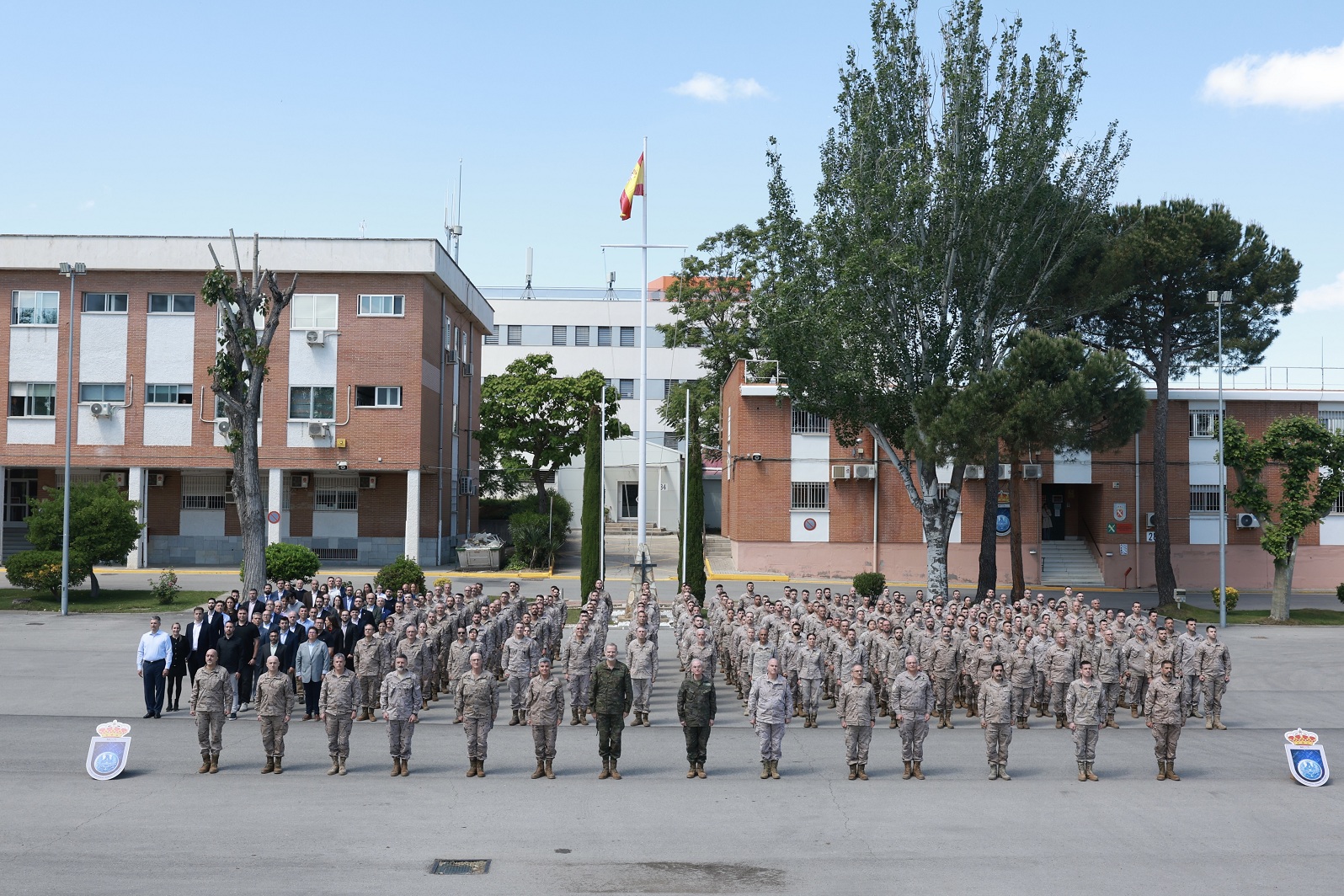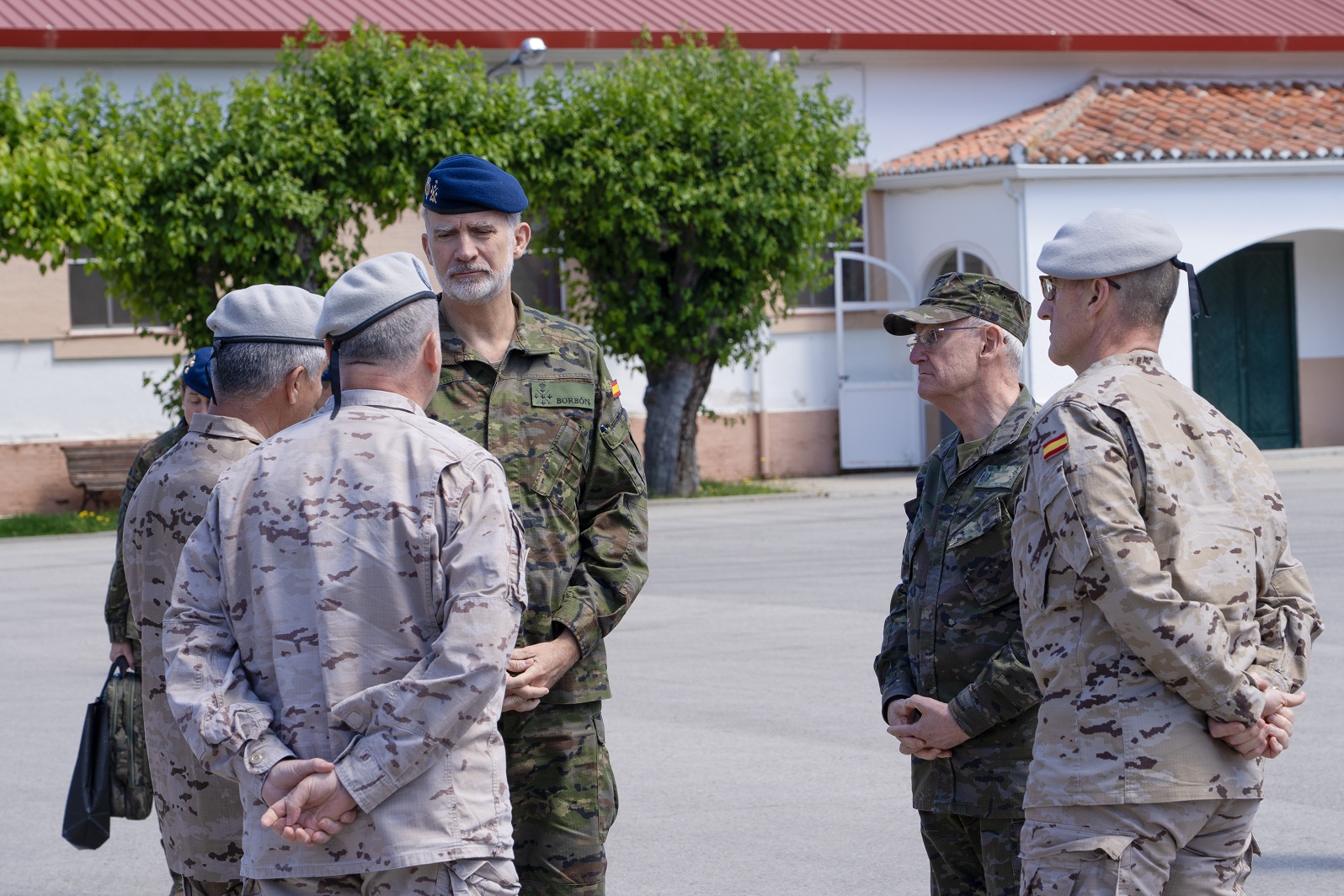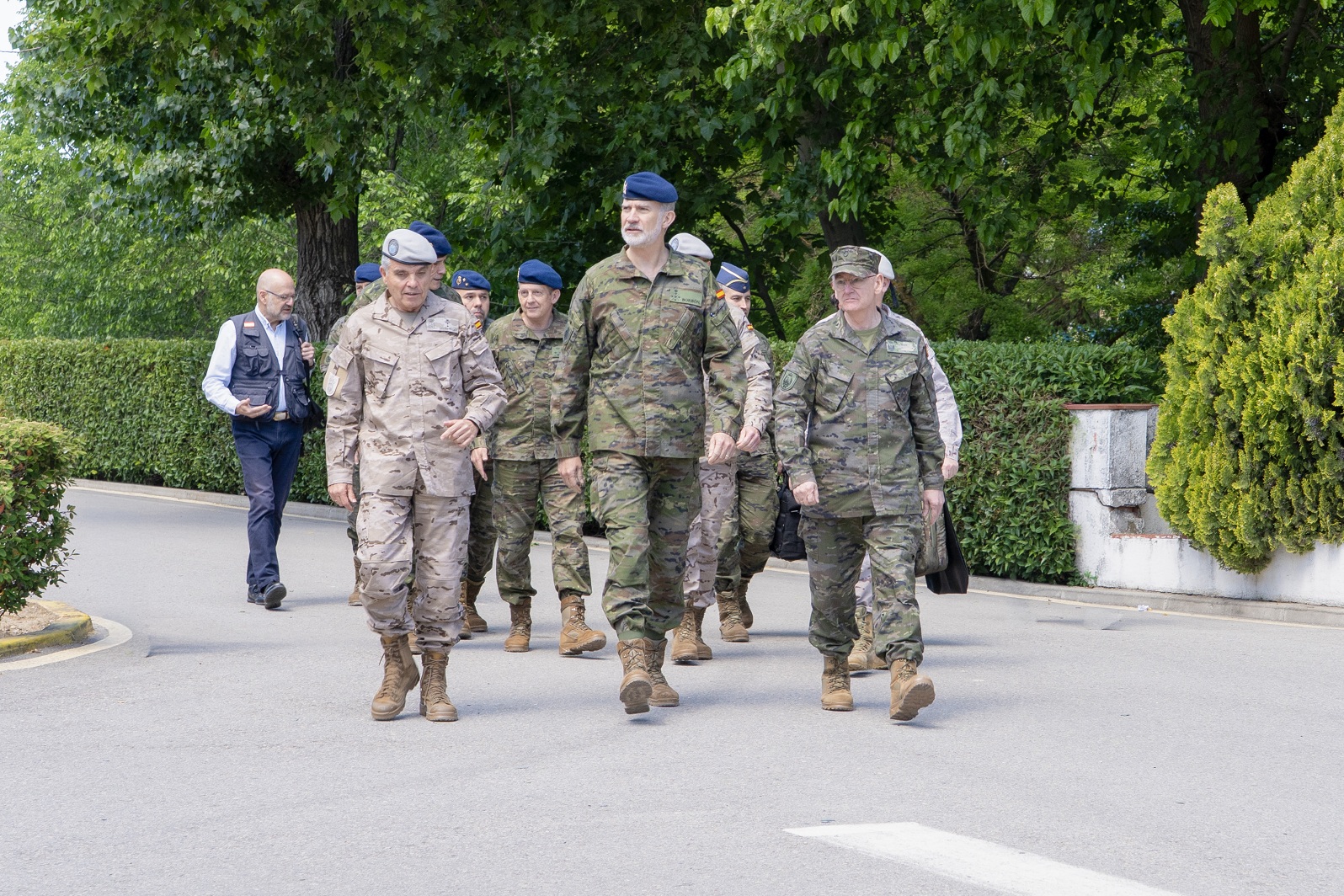


His Majesty King Felipe VI visits the headquarters of the Joint Cyber Command to learn about its strategic expansion plans
- Felipe VI was briefed on the project to triple the Command’s operational capacity and on the development of the new combat system for the defence of the fifth domain
His Majesty King Felipe VI today paid an official visit to the headquarters of the Joint Cyber Command (MCCE) at Retamares Base. During the visit, he gained first-hand insight into the unit’s expansion plans and the cutting-edge technologies that position Spain as an international leader in the protection of the fifth domain in military operations.
On his arrival, His Majesty was received by the Chief of Defence (JEMAD), Admiral Teodoro E. López Calderón, alongside the Commander of the Operations Command and Retamares Base, Lieutenant General José Antonio Agüero, and the Commander of the MCCE, Vice-Admiral Javier Roca.
The visit began with a briefing by the Commander of the MCCE, who emphasised that in the protection of cyberspace ‘the most important thing is people and their values’.
This was followed by a simulation of the response to a cyberattack on critical infrastructure and an analysis of the operational challenges posed by artificial intelligence.
A rapidly expanding strategic pillar
During his visit to Retamares, the King was briefed on the work carried out at the MCCE to ensure the Armed Forces’ freedom of action and to defend the rights and freedoms of all citizens in cyberspace. As part of the expansion process currently underway, the organisation plans to triple its operational capacity by 2030, reaching a strength of 1,500 personnel.
This development is underpinned by an ambitious transformation of its infrastructure at the Retamares Base, which will include a new 24-hour Command Centre (CyOC) and the ESP-DEF CERT complex, designed to house the 1,000 specialists of the Cyber Operations Force, our ‘grey berets’.
Cutting-edge technology is the driving force behind this unit, notably the development of the Cyberspace Combat System (SCOMCE), a comprehensive national sovereignty platform that will serve as the primary combat system in this domain. Furthermore, the MCCE leads innovation through its Artificial Intelligence Reference Centre (CRIA) and a 5G cyber-defence centre, the only one of its kind in the world.
These capabilities are complemented by the management of tactical data links (DLMC-ESP), ensuring full and secure interoperability between the platforms (main battle tanks, frigates, fighter aircraft, etc.) of the three services.
International leadership and operational commitment
On the international stage, Spain reaffirms its leadership after being designated by NATO as the host nation for the NATO Cyber Range (NCCR). This advanced simulation platform positions the country as a global leader in cyber training, enabling the execution of large-scale exercises such as Cyber Coalition.
Fotos