

The Joint Cyber Command is taking part in the 2nd Defence Industry Summit
- Vice-Admiral Javier Roca took part in the panel discussion entitled “Cyber defence and cyberspace in the new strategic environment”
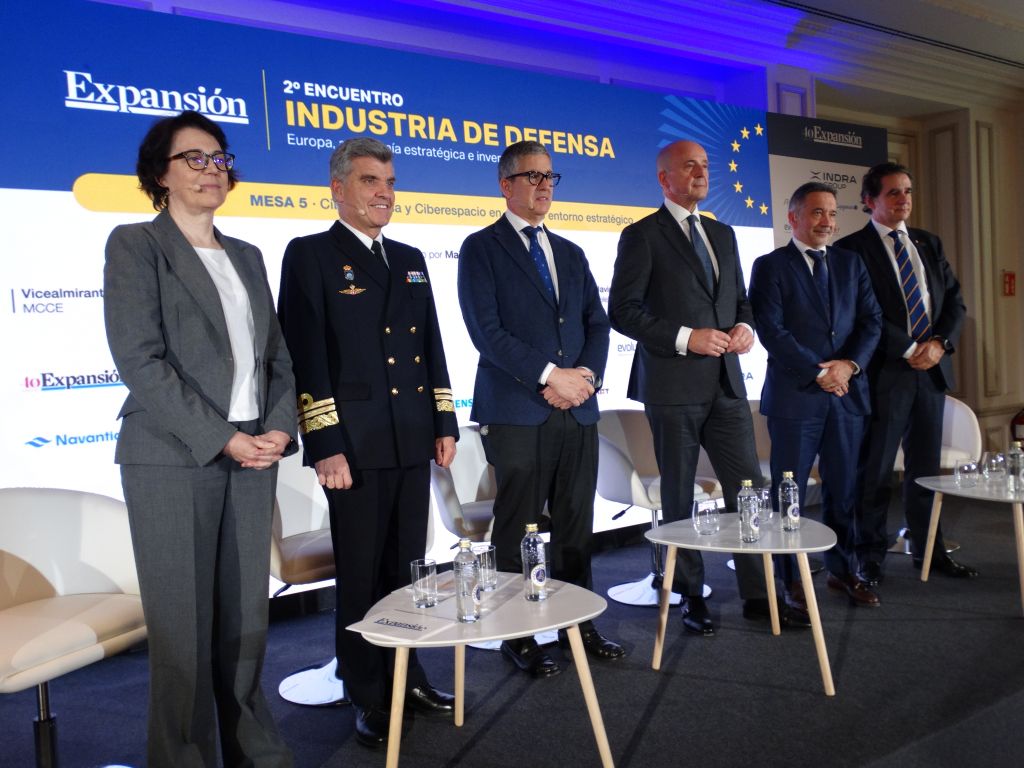
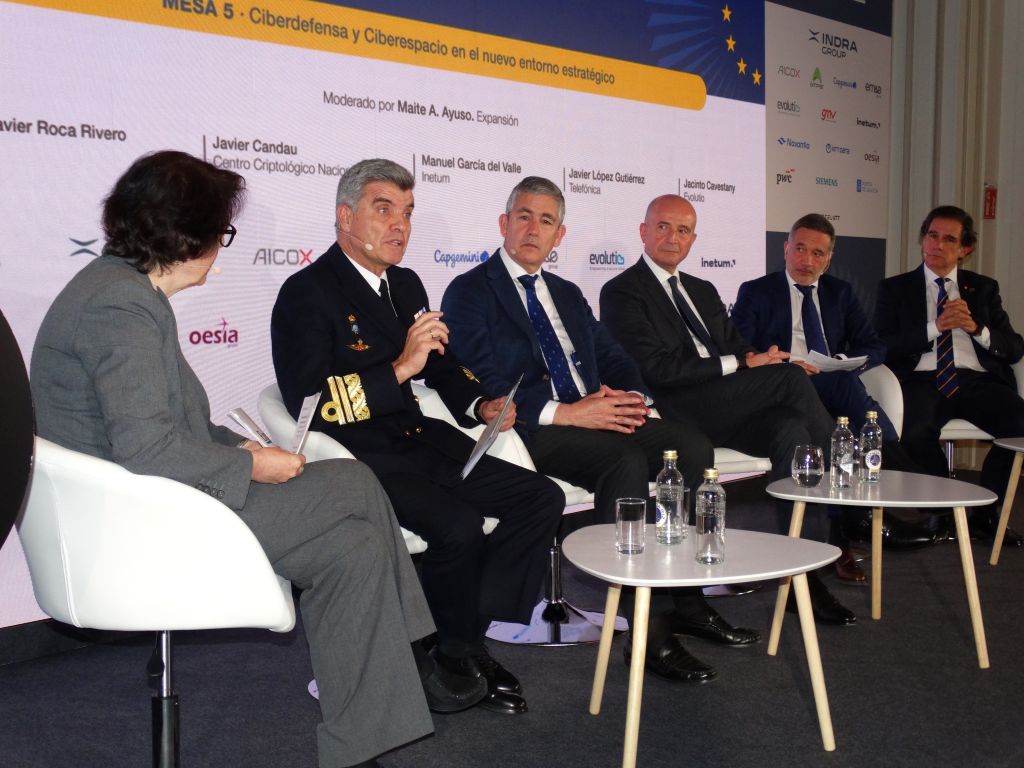
The commander of the Joint Cyber Command (MCCE), Vice-Admiral Javier Roca, took part in the panel discussion entitled “Cyberdefence and cyberspace in the new strategic environment” at the 2nd Defence Industry Summit organised by the newspaper *Expansión* in Madrid, under the heading “Europe, strategic autonomy and investment”.
In his speech, the Vice-Admiral emphasised the importance of protecting the fifth domain of operations: “Spain depends on cyberspace for its day-to-day activities, not just the Armed Forces; because it is present in everything that has connected systems and, consequently, places the heart of a country on the front line of combat”.
In this effort, he highlighted the crucial role of human beings. “The more technology and artificial intelligence we have, the more important people and their values will be.” “Cyberspace is the nervous system of the digital society, and whoever does not control it does not control their life,” he asserted. For this reason, he has committed to “investing in training and raising awareness” about cybersecurity.
On the subject of cyber defence, the head of the MCCE emphasised that in “cyberspace we are always in a state of constant conflict”, a situation he described as “hot peace”. In this scenario, Spain “possesses offensive capabilities and deterrent capacity” to confront “totalitarian states that carry out acts of hostility against their adversaries on a daily basis”. These offensive capabilities, the Vice-Admiral clarified, “we have not deployed, but we train for them in exercises so that we can use them when ordered to do so”.
The Vice-Admiral exchanged views with Javier Candau, Deputy Director General of the National Cryptology Centre; Manuel García del Valle, CEO of Inetum in Iberia & Latam; Javier López Gutiérrez, Director of the Defence Division at Telefónica España; and Jacinto Cavestany, CEO of Evolutio. They all agreed on the need to strengthen the potential and autonomy of Spain and Europe as a whole in the field of cyber defence.
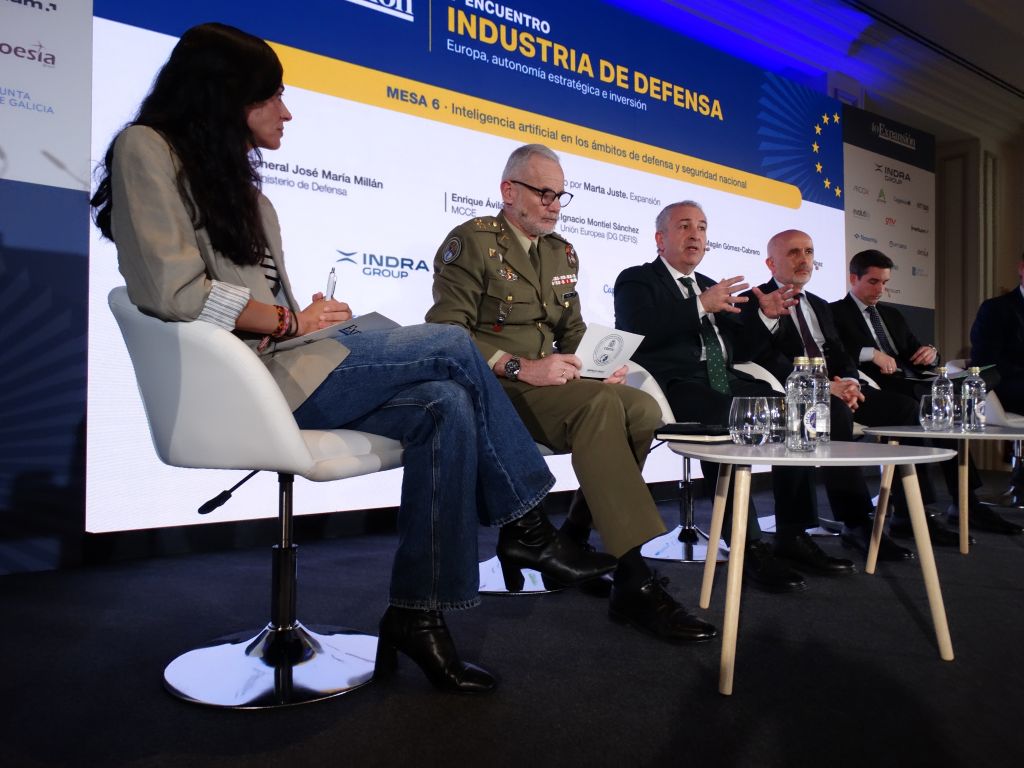
The MCCE’s participation in the conference was rounded off by a presentation from Enrique Ávila, director of the Defence Staff’s Artificial Intelligence Reference Centre (CRIA), at the round-table discussion ‘Artificial Intelligence in the fields of defence and national security’.
For Ávila, people are also a crucial element when it comes to training AI and applying it to the industrial environment. “We don’t need more engineers, but people who know how to get things done,” he argued, citing vocational training specialisations as a way to train the necessary profiles.
Fotos