

Land and maritime units of the Allied Reaction Force take part in the Exercise Quadriga
- Following their participation in Steadfast Dart 26, the aim is to validate interoperability capabilities, enhance cohesion and refine high-intensity combat procedures
Land and maritime units of the NATO Allied Reaction Force (ARF) have integrated into Exercise Quadriga following their participation in Steadfast Dart 26, which took place last week in Germany.
Specifically, the ARF Maritime Component Command has commenced the naval exercise Northern Quadriga, while Spanish personnel integrated into the ARF Land Component Command are taking part in Quadriga 26. The objective is to validate interoperability, enhance cohesion within multinational units, and refine high-intensity combat procedures relevant to the European operational environment.
Approximately 1,500 personnel from the Spanish Armed Forces, under the operational control of the Spanish Joint Operations Command, have joined counterparts from 13 Allied nations to enhance NATO’s readiness and ability to rapidly and decisively respond to any threat. In this edition of Steadfast Dart 26, Spain was a major contributor, leading the Special Operations Component Command (SOCC) for the second consecutive year, as well as the Maritime Component Command (MCC), while also providing a significant land force contribution to the Land Component Command (LCC).
Land, maritime, air and special operations assets were integrated in time and space to achieve strategic deterrence effects, in this case in Germany, thereby enhancing Allied interoperability and readiness.
In this context, Steadfast Dart 26 tested both the speed of activation and the effectiveness of command and control, multi-domain coordination and interoperability across all ARF components.
Maritime Component Command (MCC)
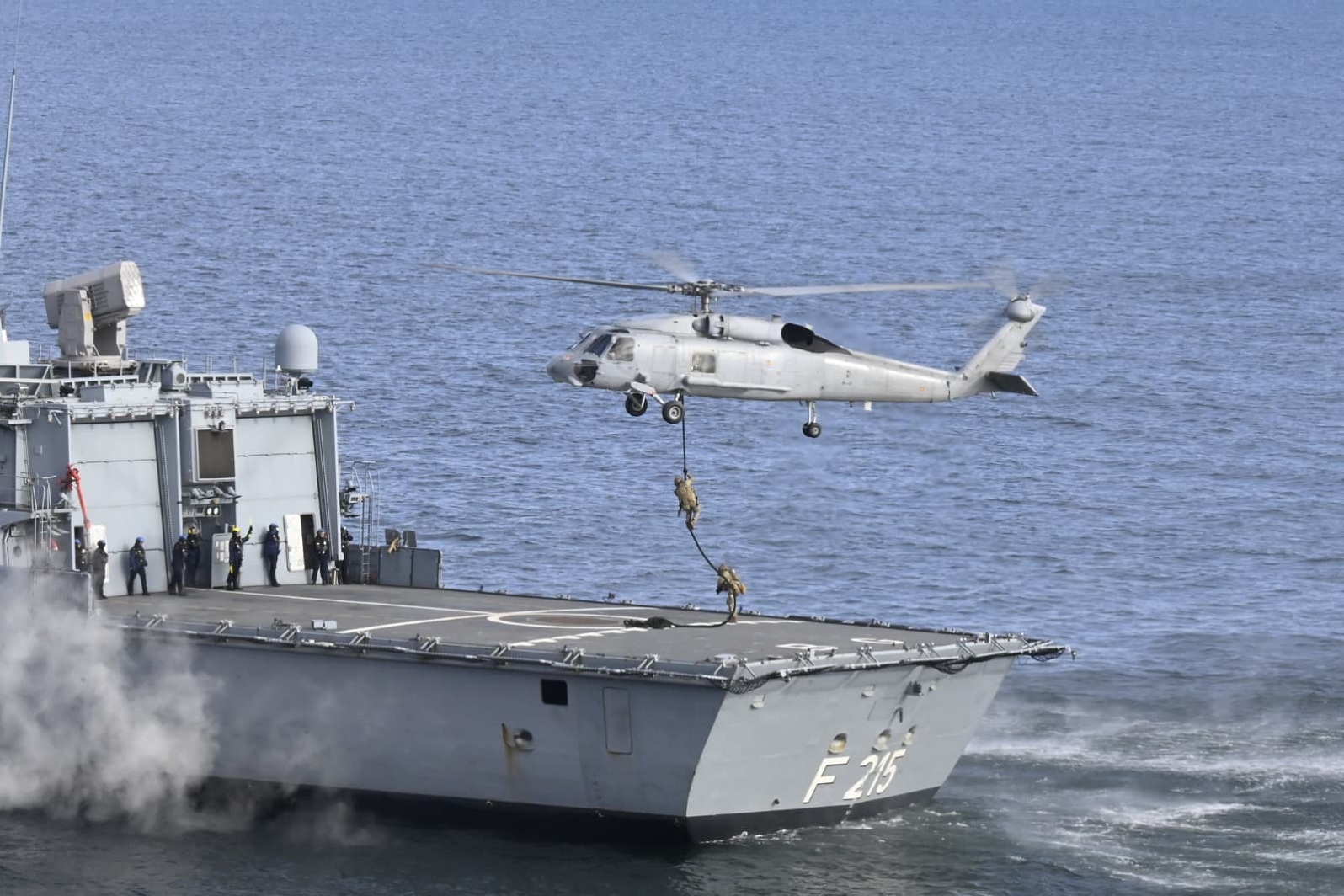
The Spanish Navy, with the Spanish Maritime Forces Headquarters (SPMARFOR) embarked on the amphibious assault ship Castilla, commanded all maritime units, integrating frigates, amphibious forces, maritime patrol aircraft, helicopters and unmanned systems, while maintaining close coordination with other Allied commands. Spain is one of only six Allies able to provide this capability within NATO, thereby consolidating its commitment to collective defence, Allied interoperability and security on the Alliance’s Northern Flank.
As Commander José Pérez Nuñez, head of operations for SPMARFOR, explains "in the Steadfast Dart 26 exercise, a task force composed of Turkish and Spanish units has been deployed, reinforced by NATO's permanent escort and mine countermeasures groups. Germany, Turkey, France, Poland, Spain and the Netherlands contributed units, bringing the total number of ships at sea to 15."
Personnel from Greece, the United States, Sweden, Portugal and Latvia also participated, which implies a significant coordination challenge at all levels. "There have been around 2,600 sailors, 750 of them Spanish. With all this force, Steadfast Dart has projected the Alliance's naval power in a demanding scenario and contributed to credible deterrence against conventional, hybrid or emerging threats," explains the Commander.
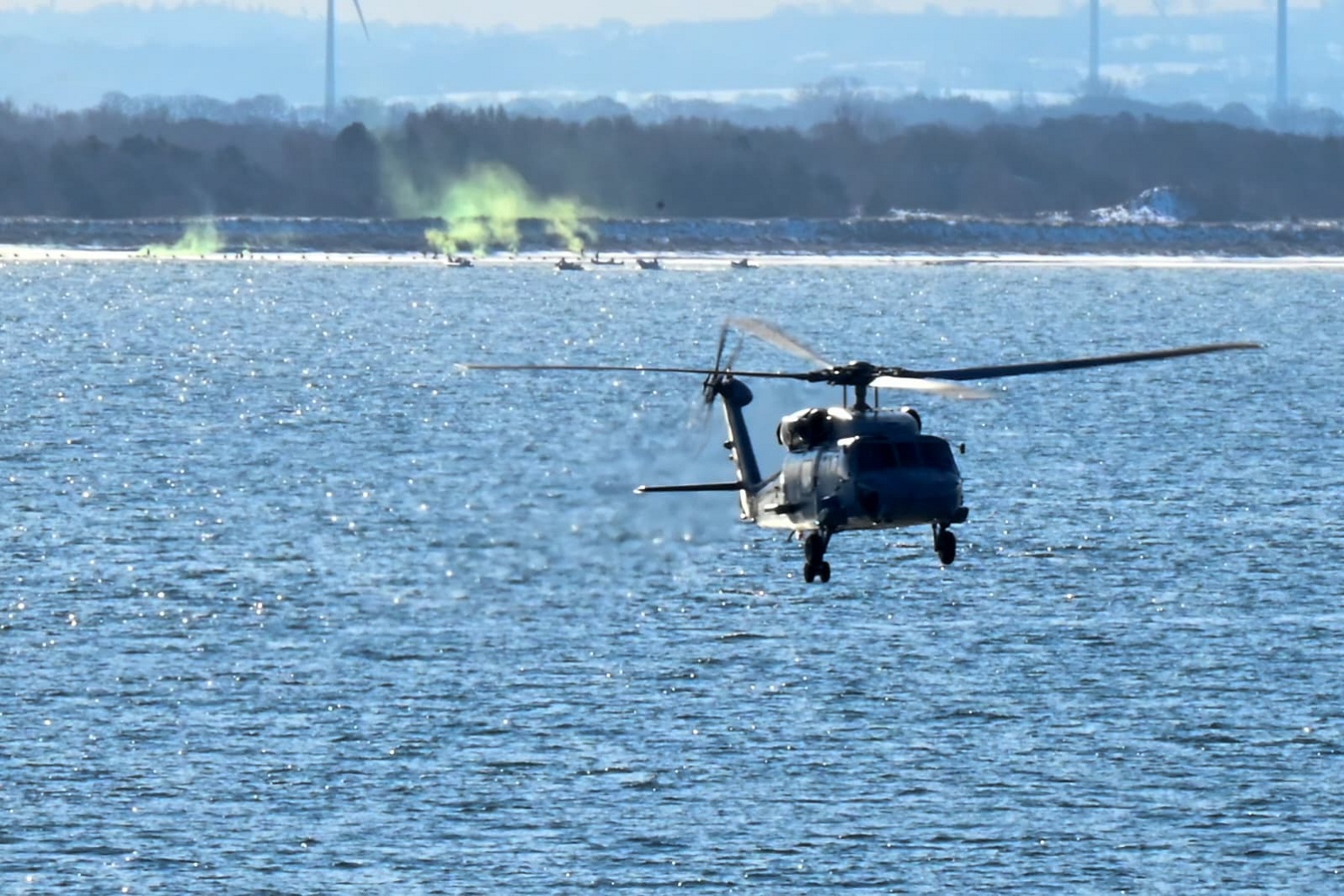
The maritime milestone of the exercise consisted of an amphibious demonstration and boarding with opposition carried out by Maritime Component Command personnel alongside maritime special operations teams. These operational activities demonstrated the ARF's rapid deployment, multi-domain coordination, and effectiveness, underscoring its role as a credible instrument of deterrence and collective defence.
Land Component Command (LCC)
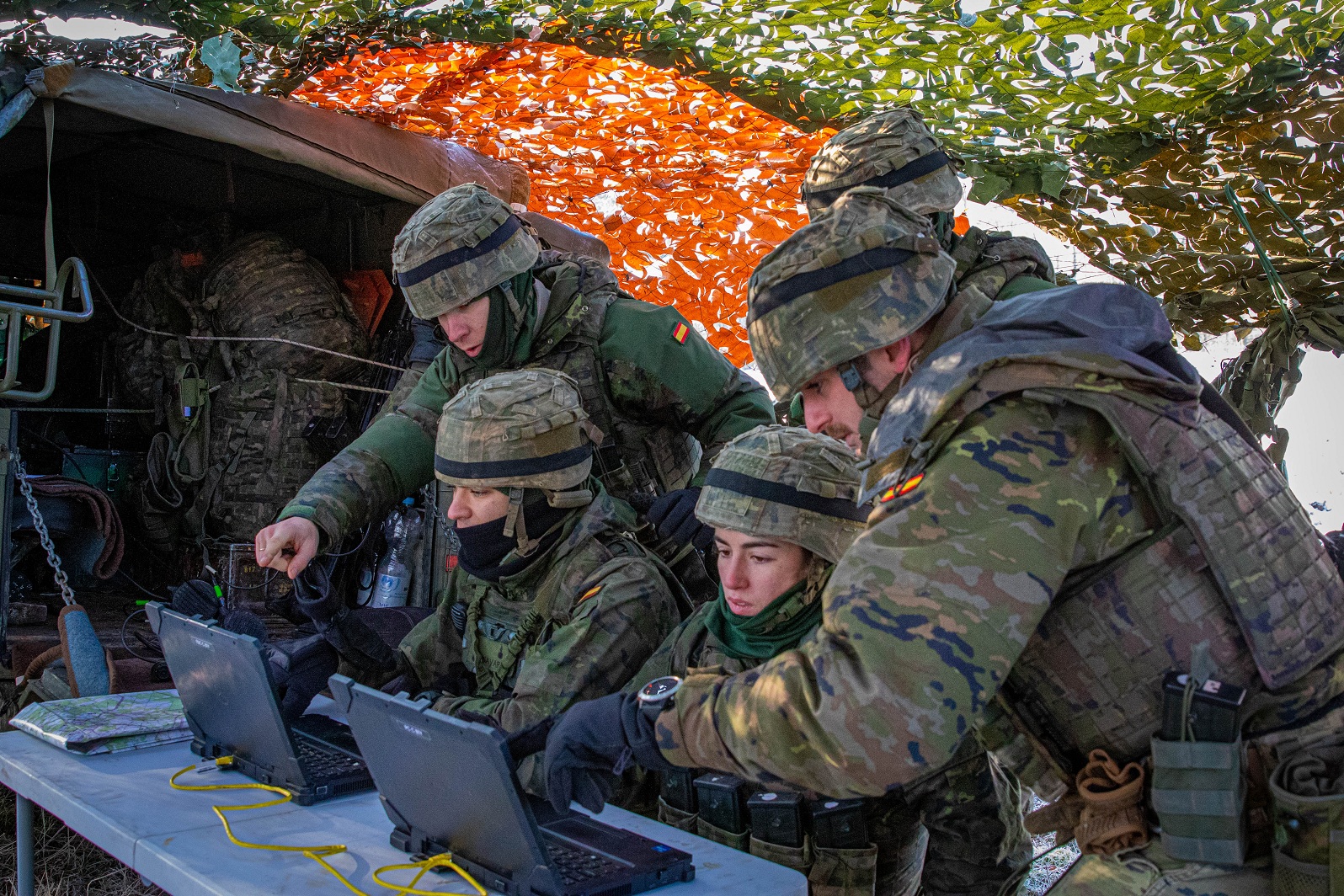
The ‘Lauria’ Tactical Group, built around the 2nd Battalion of the Almogávares VI Parachute Brigade (BRIPAC) of the Spanish Army, integrated into a Multinational Brigade alongside Italian and Turkish land units within the ARF Land Component Command. This integration enabled the use of common NATO command and control procedures, communications and operational planning, as well as the conduct of combined operations in high-intensity combat scenarios. In addition, BRIPAC demonstrated its leadership as a multinational Initial Entry Force, as previously shown for the first time outside Spain during Exercise Swift Response 25 in Latvia.
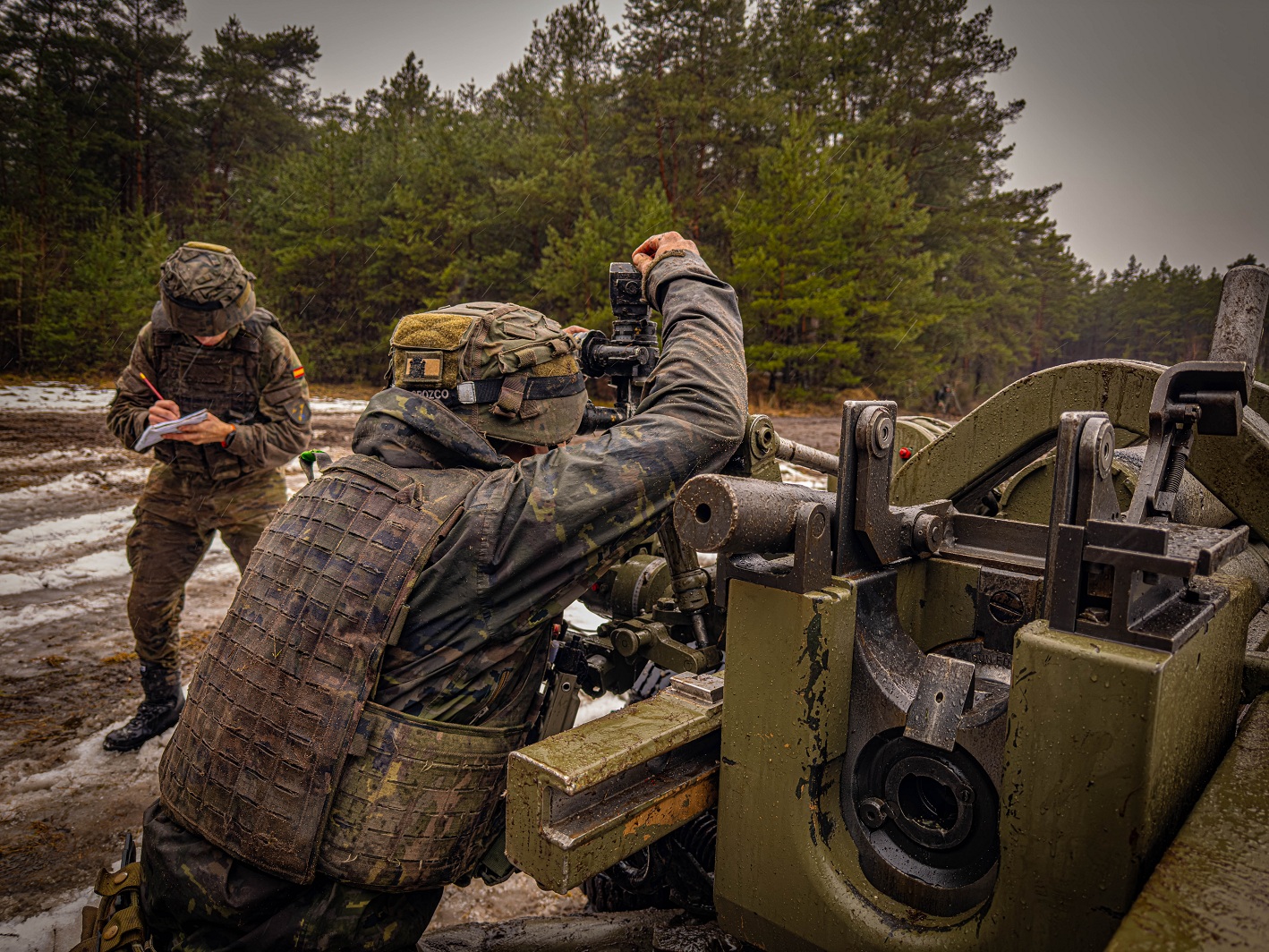
Among Spanish land capabilities, the Light Gun howitzer Artillery Battery stood out, executing numerous fire missions under extremely adverse weather conditions and coordinating indirect fire support with multinational forward observers. “The ultimate goal has been achieved with the effective support of the firepower in conjunction with the other activities of the ARF units. This has demonstrated our interoperability” said Captain Francisco Javier Peñas, head of the Battery.
As Captain Jorge Sánchez, head of the sapper company, points out, ‘we have successfully integrated with the Italian sapper battalion. We have demonstrated that our support is essential to the success of the manoeuvre, as it allows the Tactical Group to cross and clear obstacles (mobility), channel and pin down the enemy (counter-mobility), and fortify our own positions (protection)’.
Fotos