

Spain and Turkey lead amphibious operations during Exercise Steadfast Dart 26 in the Baltic Sea
An amphibious landing demonstration and a non-cooperative boarding mark the maritime highlight of Exercise Steadfast Dart 26 on the German coast
The Allied Reaction Force Maritime Component Command (ARF MCC), composed of 15 ships from six nations, together with elements of the Special Operations Component Command (SOCC), led by Spain, conducted a complex demonstration of maritime capabilities at the Putlos military training area.
The amphibious demonstration, the main maritime highlight of Exercise Steadfast Dart 26, showcased the high level of readiness and the wide range of capabilities of the Allied Reaction Force (ARF). Through the projection of combat power from sea to land the ARF demonstrated credible deterrence and the ability to quickly and decisively respond whenever and wherever required.
In addition, a Special Operations Maritime Task Unit (SOMTU), from the Special Operations Component Command, conducted a Maritime Interdiction Operation, demonstrating the ARF Maritime Component Command’s capability to intercept and control vessels operating outside the law at sea, thereby reinforcing international law.
Through the integration of air, maritime and special operations capabilities under a unified command structure, the Allied Reaction Force demonstrated its ability to conduct coordinated multi-domain operations, constituting a credible and fully available instrument in support of NATO’s deterrence and collective defence.
Amphibious landing
The amphibious phase began with the launch of a Bayraktar TB-3 unmanned aerial vehicle (UAV) from TCG Anadolu, the flagship of the Turkish Navy and a sister ship of the Spanish LHD Juan Carlos I. The launch aimed to provide real-time intelligence, surveillance and reconnaissance over the objective area. Simulated hostile targets detected by the UAV were subsequently neutralised by German Eurofighter 2000 aircraft.
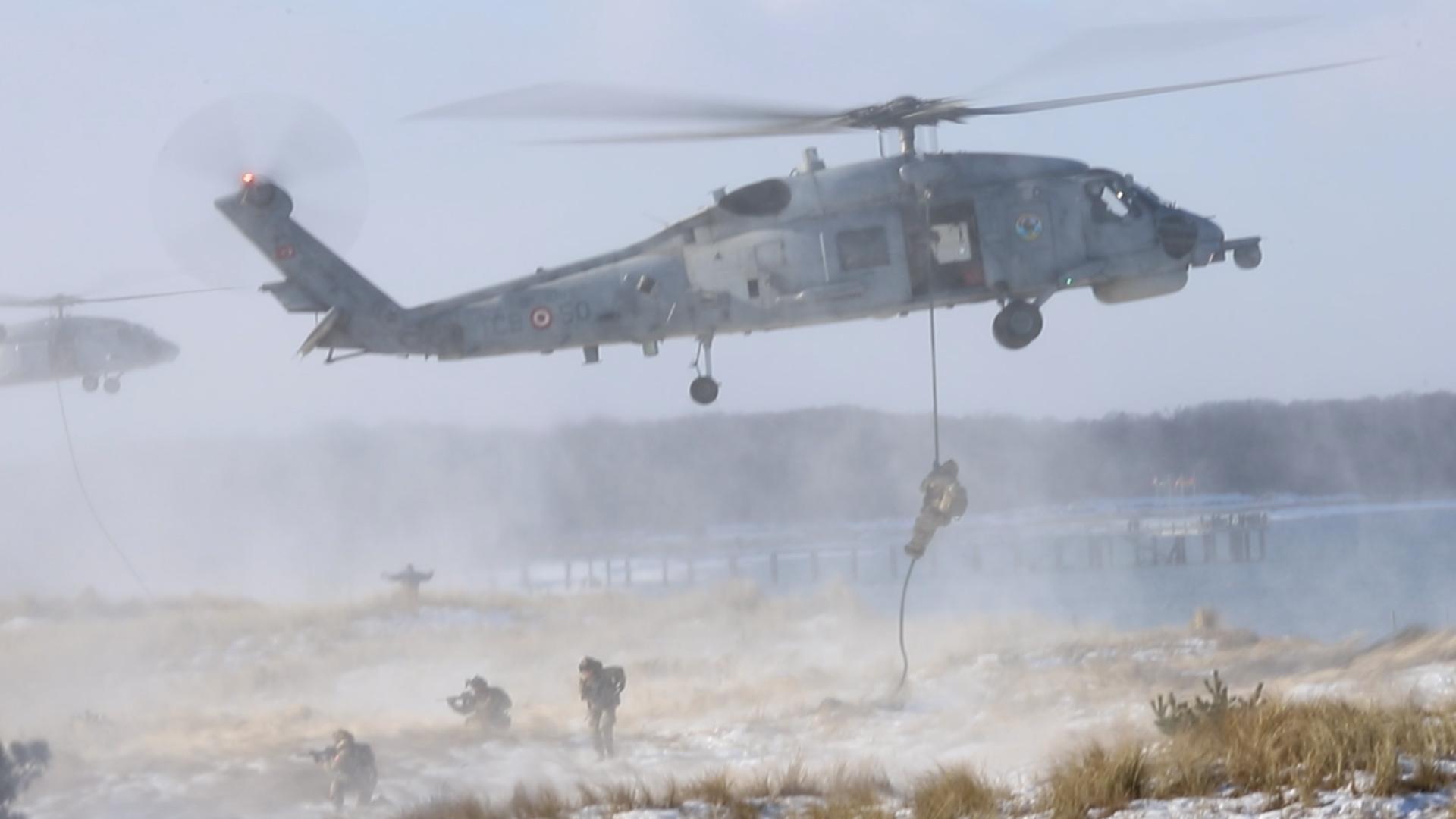
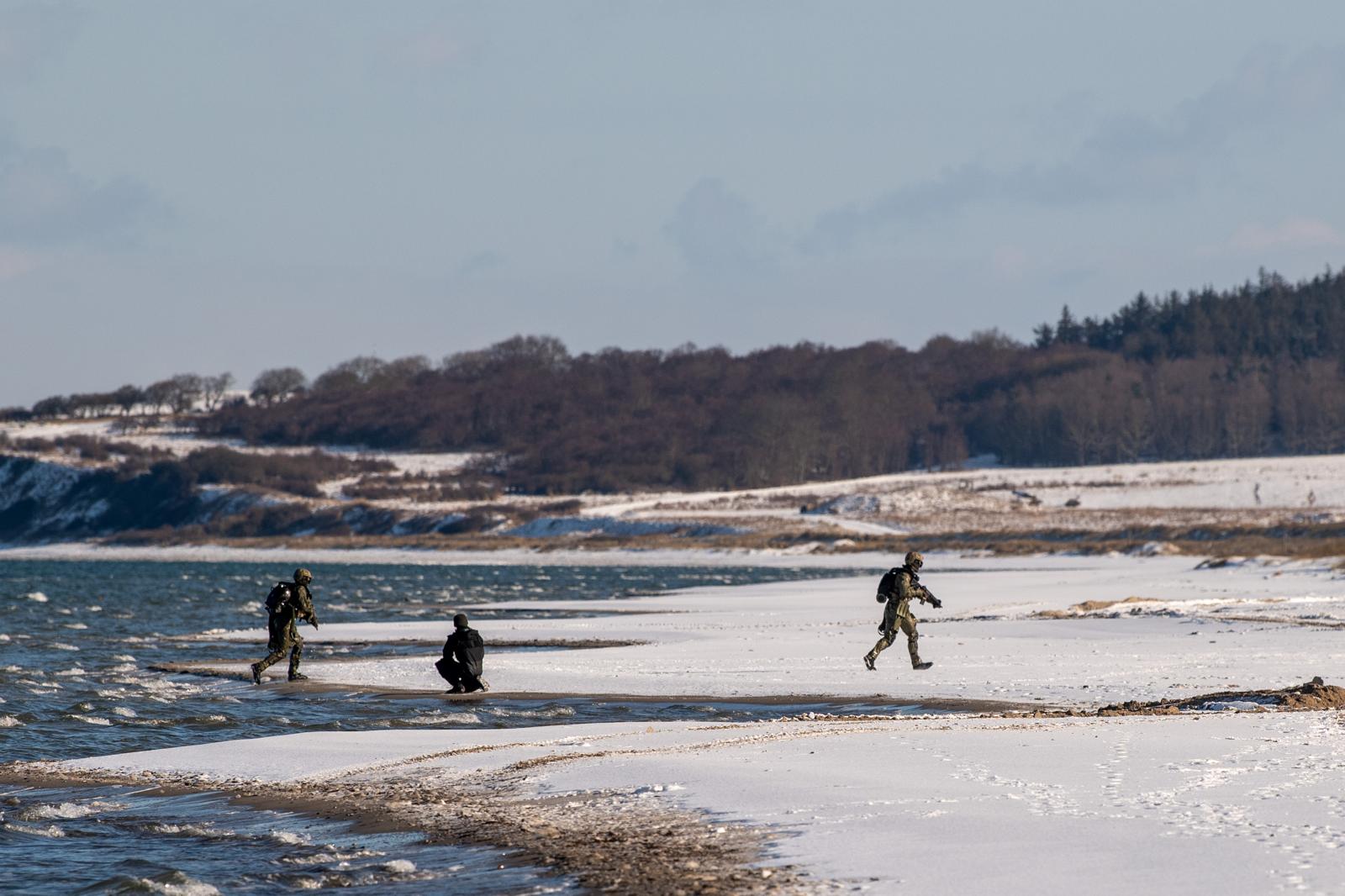
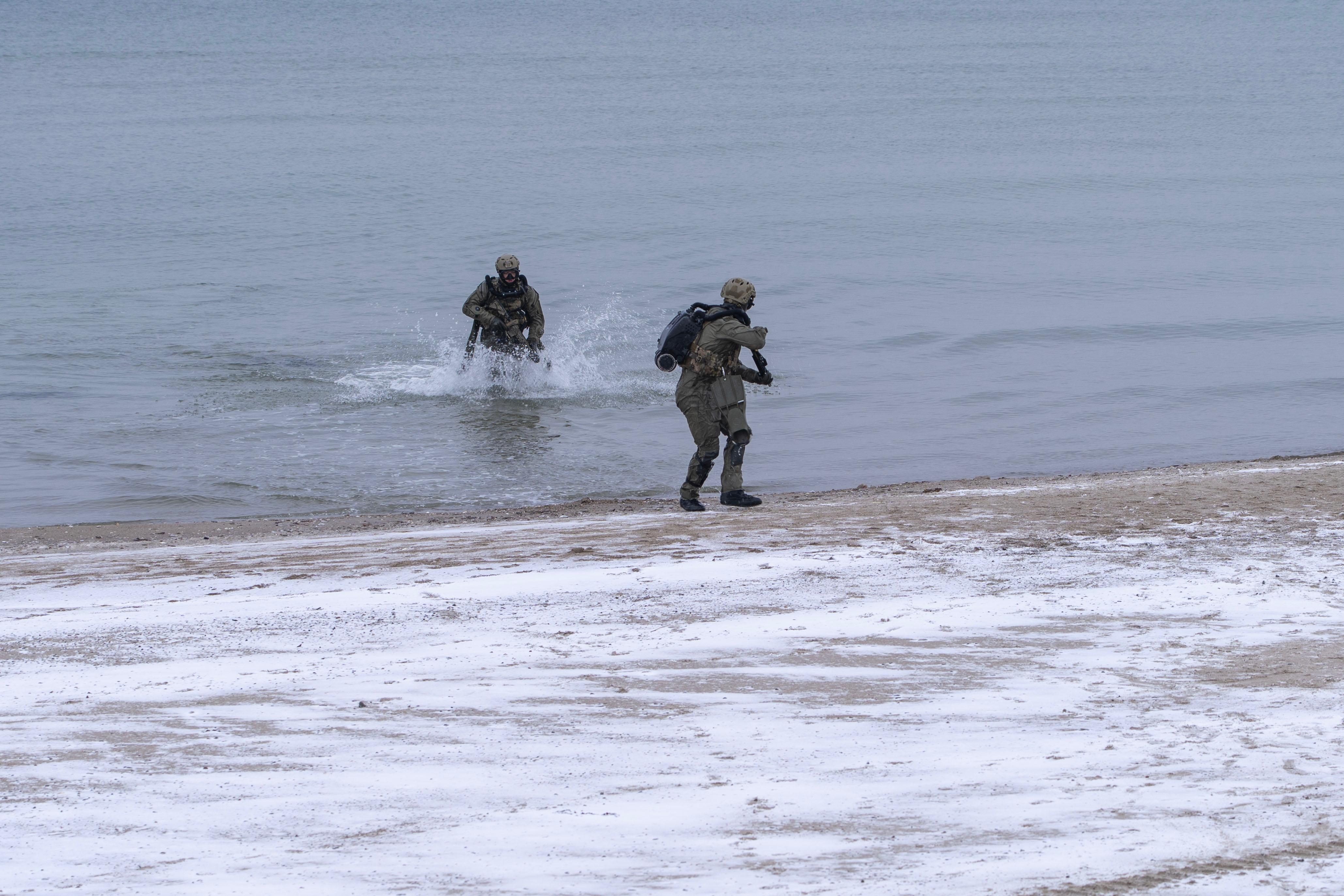
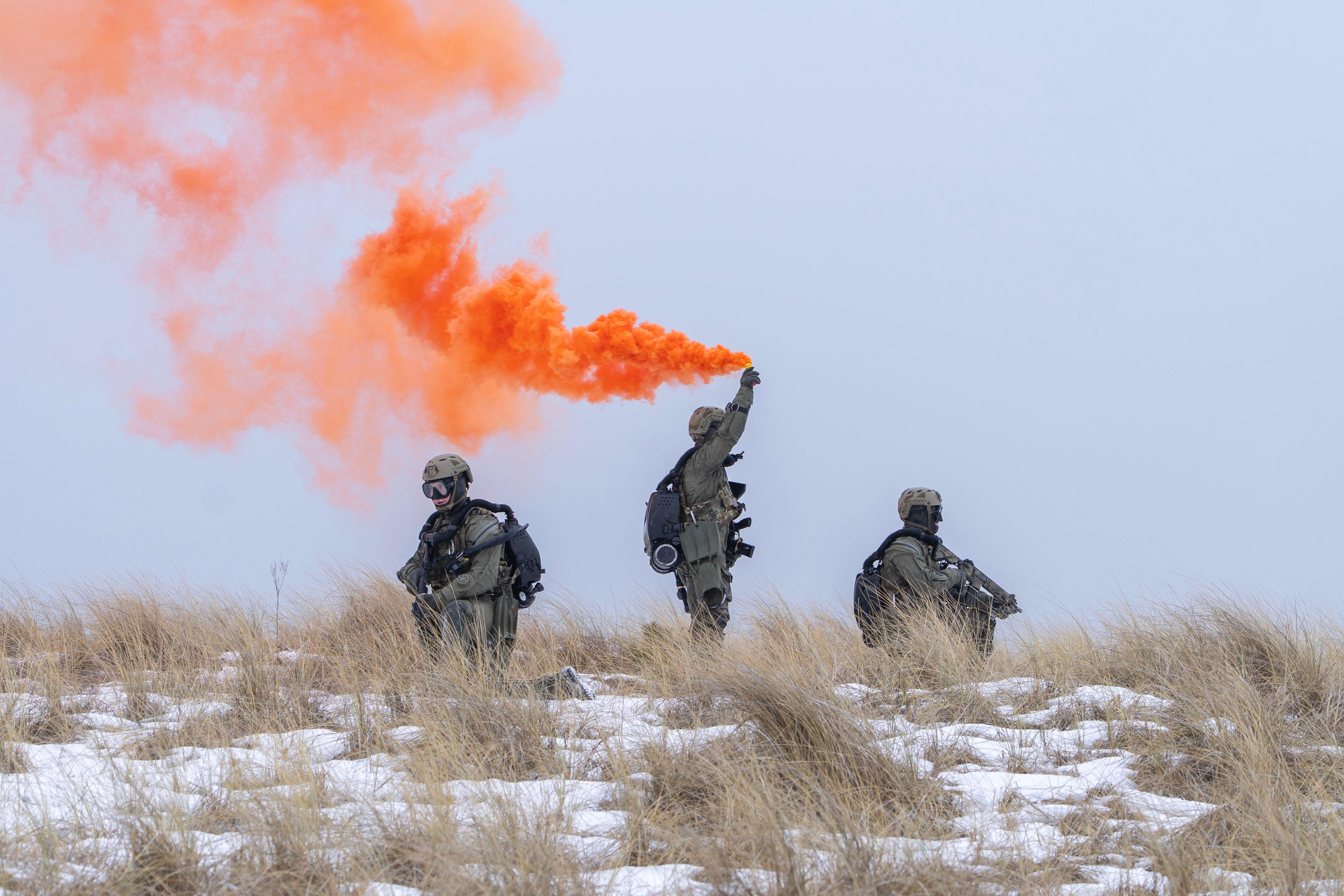
Subsequently, the Spanish Special Operations Component Command conducted an underwater insertion to neutralise simulated explosive threats along the shoreline. This was followed by the insertion of Turkish maritime component personnel and members of the Spanish Special Operations Component Command via fast-rope from helicopters to secure key positions and prepare the objective area for the main landing, while Turkish attack helicopters provided close air support.
The main landing force acted with speed and coordination. Turkish marines approached the beach in high-speed craft, followed by ZAHA amphibious assault vehicles, providing protected mobility and firepower during the advance. Simultaneously, landing craft conducted an additional manoeuvre that reinforced the beachhead and expanded the operational footprint.
This complex action demonstrated the integration of target acquisition and precision strike capabilities, underlining the ARF’s capability not only to deploy rapidly, but also to effectively recover its forces once objectives had been secured.
Maritime interdiction operation
Following the amphibious phase, a Special Operations Maritime Task Unit (SOMTU), from the Special Operations Component Command, conducted a Maritime Interdiction Operation on board the LPD Castilla, with the German frigate FGS Brandenburg acting as the target vessel.
The SOMTU boarding team was inserted by helicopter to rapidly secure Castilla and establish control over its critical areas. Once the ship was secured, the forces carried out inspection procedures, demonstrating the capability to conduct a non-cooperative boarding, search the cargo, collect evidence and, if required, divert the vessel to an allied port for further action.
This operational activity demonstrated the ARF’s capability to intercept and control vessels operating outside the law at sea, thereby reinforcing international law.
Spanish leadership in ARF 25
Embarked on board Castilla, the Spanish Maritime Force Headquarters (SPMARFOR) is currently exercising the role of Allied Reaction Force Maritime Component Command. Under its operational authority are two escort groups, one led by the commander of the 31st Surface Squadron (COMANDES 31) on board the Spanish frigate Cristóbal Colón; a combat logistics force group; an amphibious task group; and a mine countermeasures group.
In addition, the frigate Almirante Juan de Borbón, the auxiliary oiler replenishment ship AOR Patiño, the French frigate Commandant Blaison, and the German frigates FGS Brandenburg and FGS Sachsen were incorporated. These units are currently integrated into NATO Standing Naval Group One (SNMG1), commanded by Spanish Rear Admiral Joaquín Ruiz Escagedo. Also integrated were units from NATO Standing Mine Countermeasures Group One (SNMCMG1): the Polish ORP Czernicki, the German FGS Fulda and the Dutch HNLMS Schiedam.
For the second year in a row, Spain leads the Special Operations Component Command (SOCC). Under the command of Major General Ángel Ramón Herrezuelo Pérez, Spanish special operations units from the Army, the Navy and the Air and Space Force, together with supporting units, form a Special Operations Land Task Group (SOLTG); a Special Operations Maritime Task Group (SOMTG), with a Special Operations Air-Land Integration (SOALI) in each of them; a helicopter unit; as well as the logistic and command and control assets required for a deployment of this nature.
Fotos