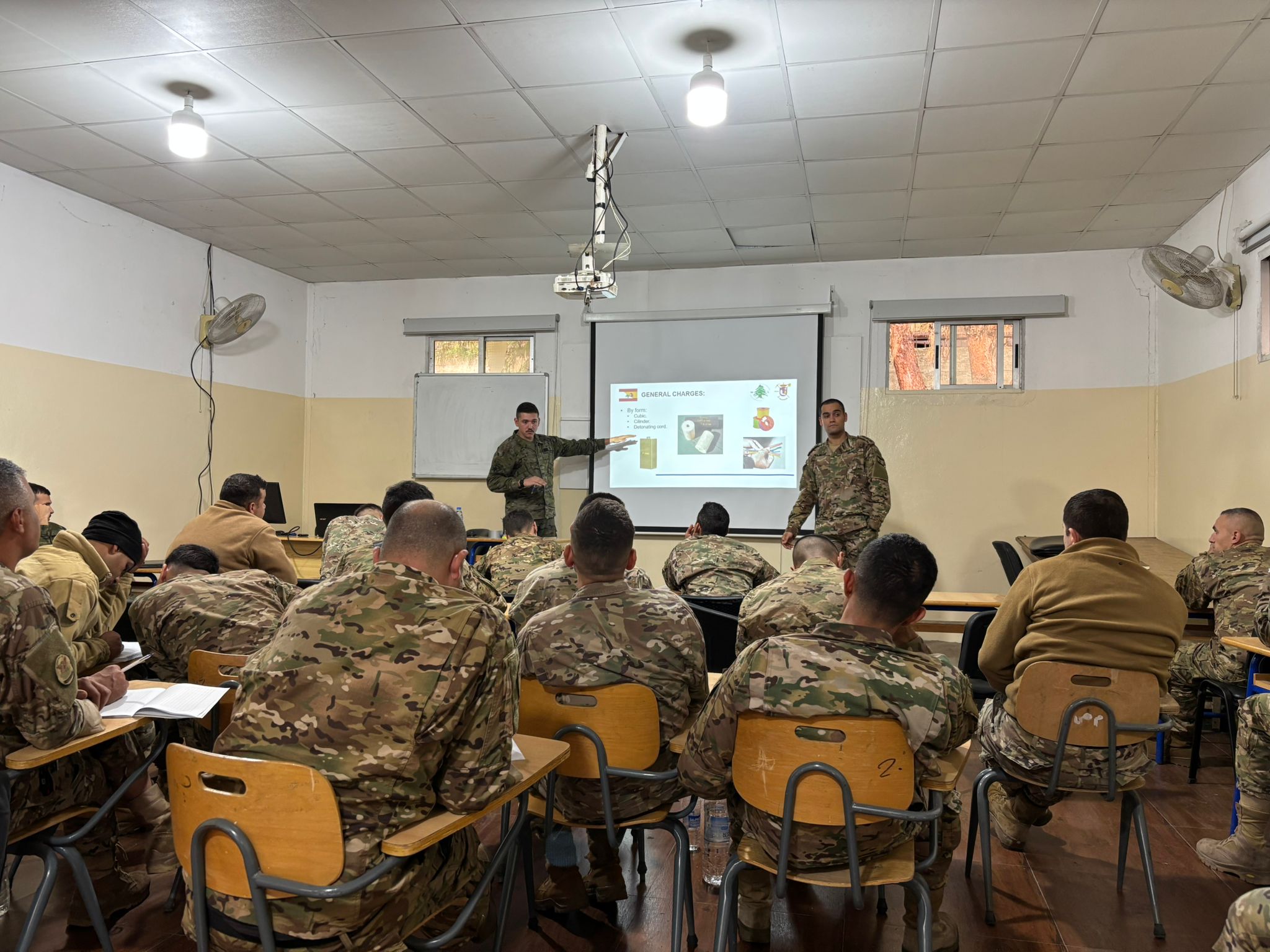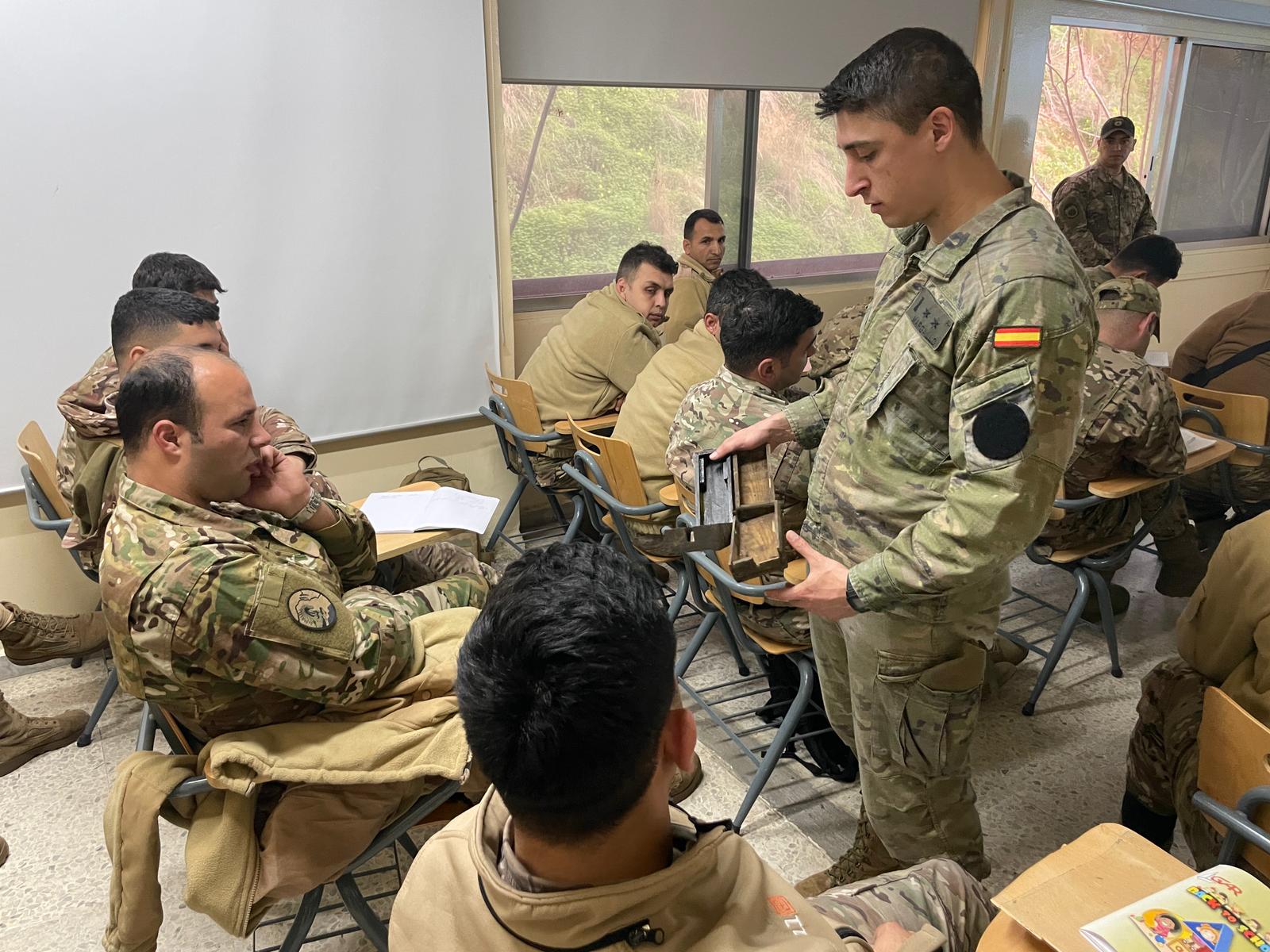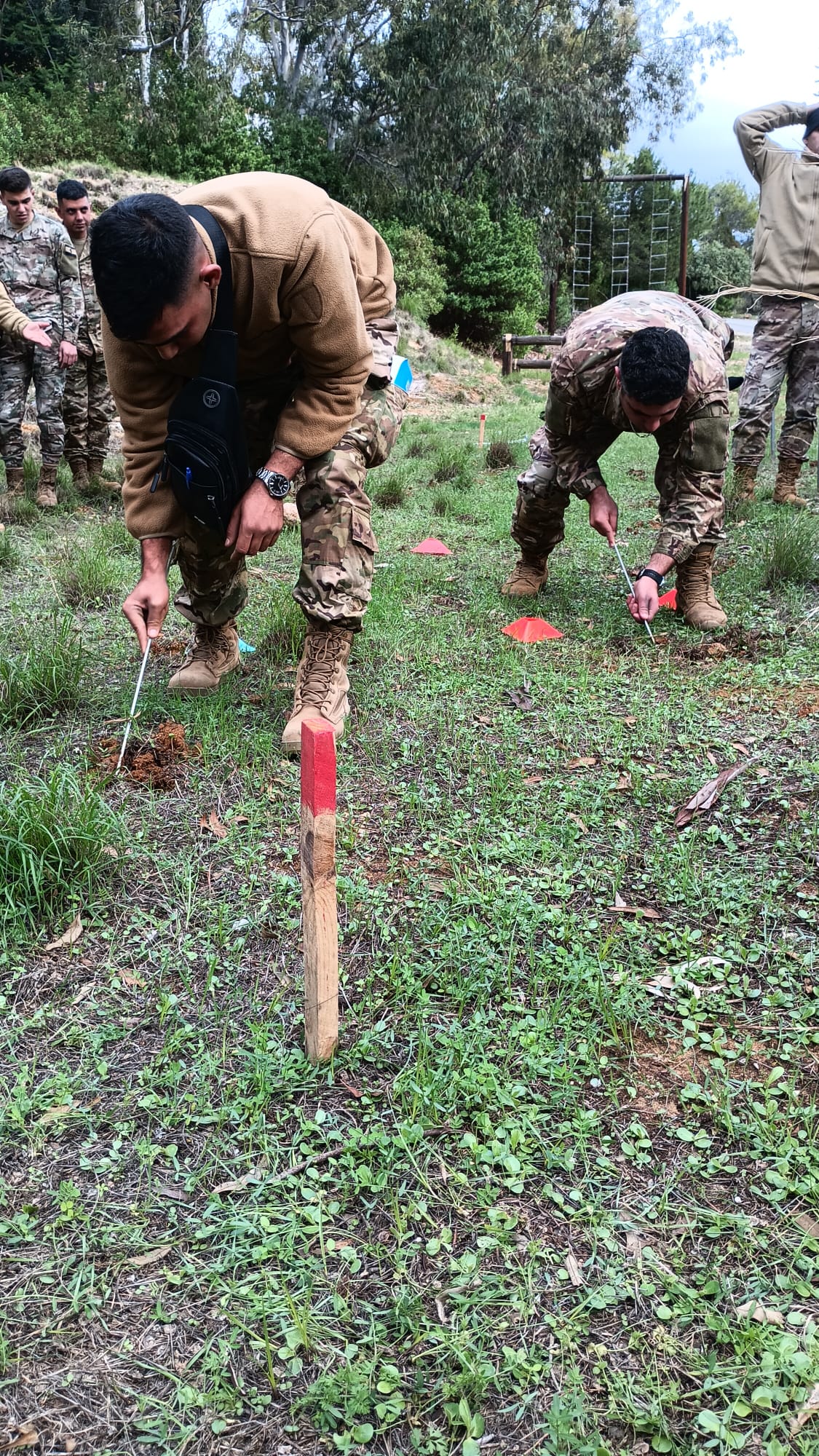


Spanish military personnel deliver the second edition of the Advanced Engineer Course
- 23 members of the Lebanese Armed Forces will receive specialised training to counter explosive threats in the field
Spanish military personnel assigned to the Mobile Training Team (MTT) are delivering the second edition of the Advanced Engineer Course at the Beirut Engineer Regiment base.
23 students from 20 different Lebanese units will receive four weeks of specialised training in key areas required to address explosive threats.
The course is designed to provide Lebanese military personnel with the knowledge and tools needed to counter mines, manage unexploded ordnance (UXO) and recognise improvised explosive devices (IED). Through this training, participants acquire capabilities in detection, investigation, identification and advisory procedures related to these threats, thereby enhancing their operational autonomy.
Beyond the strictly technical dimension, initiatives of this kind also help to strengthen cooperation ties between Spain and Lebanon, consolidating a relationship based on mutual trust and a shared commitment to regional stability.
The Spanish Mobile Training Team is composed of five officers and non-commissioned officers from the Engineer Regiment No. 1, based in Burgos. The implementation of this second edition, together with the strong interest shown by the Lebanese Armed Forces (LAF), reinforces the expectation that this course will become a permanent training activity for Lebanese military personnel. At the same time, due to the high level of satisfaction achieved in deployments to date, work is underway to develop new training proposals for other combat areas.
Training within the framework of the Military Technical Committee for Lebanon
The Advanced Engineer Course is conducted within the framework of the Military Technical Committee for Lebanon (MTC4L), an international initiative established in March 2024 with the aim of coordinating the efforts of various countries, including Spain, to strengthen the capabilities of the Lebanese Armed Forces.
The ultimate goal of this committee is to support the enhancement of LAF capabilities, thereby contributing to progress in the implementation of United Nations Security Council Resolution 1701.
Through this cooperation mechanism, first priority needs are identified and then support actions are promoted in the areas of training, equipment and capability development, contributing to the institutional strengthening of the Lebanese Armed Forces and to the stability of the country.
Fotos