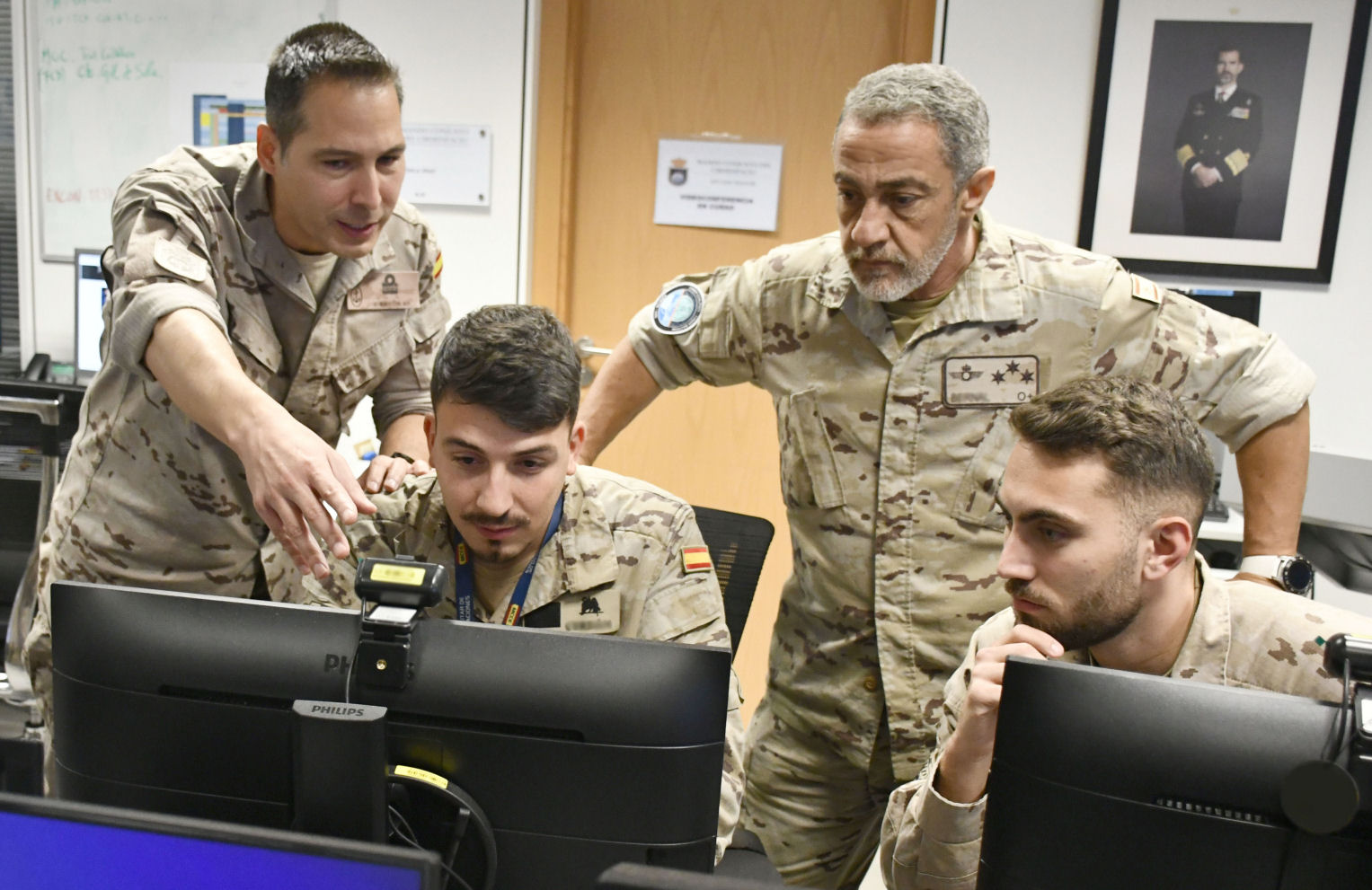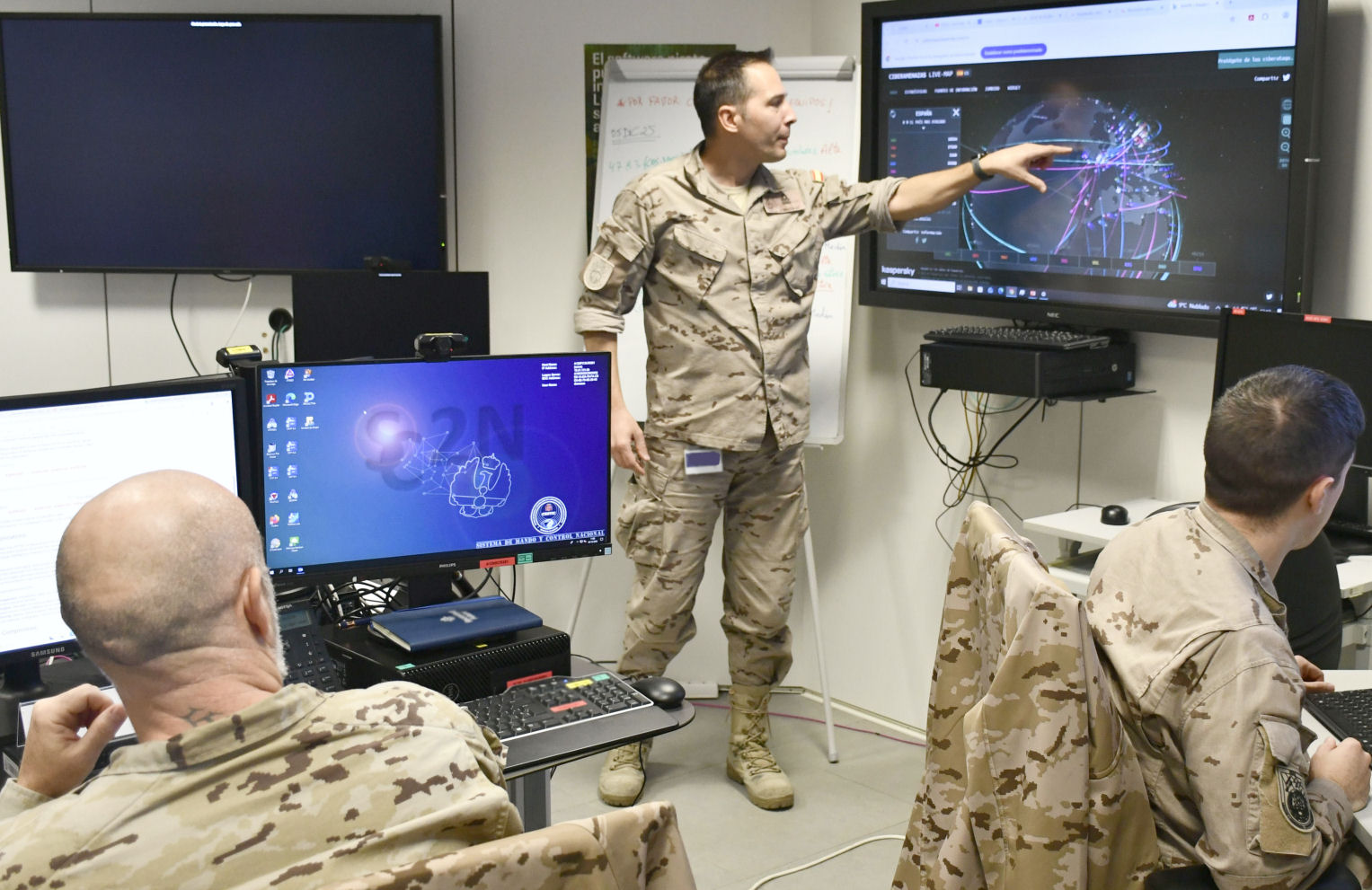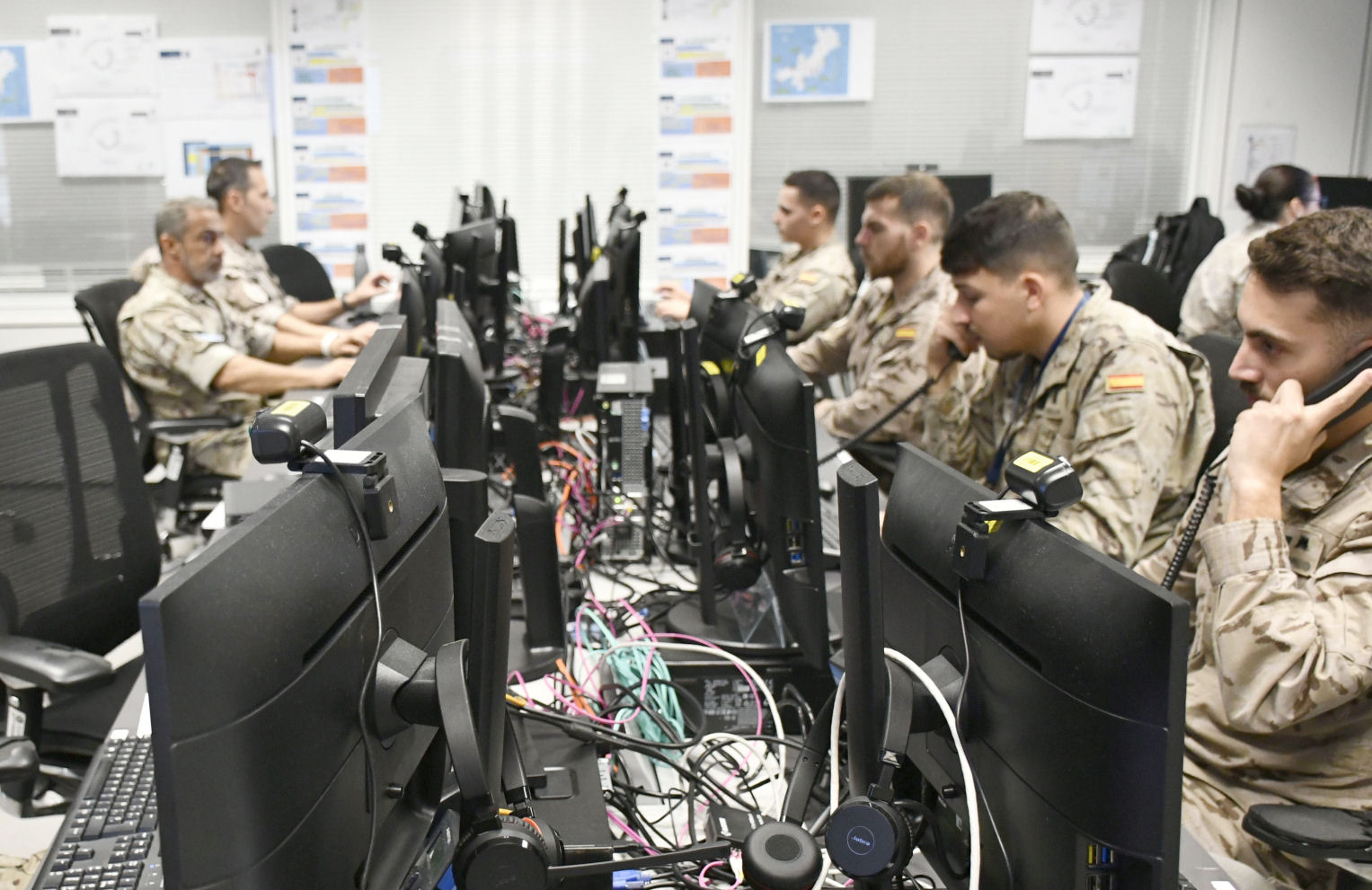


The MCCE represents Spain in Cyber Coalition 2025
- It consists of a strategic, operational, tactical and technical exercise that represents the greatest effort in cyber defence
The Joint Cyber Command (MCCE in Spanish) has participated in the NATO Cyber Coalition exercise, the most important annual strategic, operational, tactical and technical exercise for collaborative cyber defence at Alliance level.
In this edition, realistic and challenging scenarios were created, designed to provide training in real-life situations. Participants faced simulations of cyberattacks on critical infrastructure, power plants, data centres, healthcare systems and other targets determined by NATO. Participants had to defend themselves against a total of seven highly complex challenges relating to national infrastructure.
In Spain, there were 81 participants (54 from the MCCE, 8 from the Air and Space Force, 1 from the Army and 8 from the Navy). Globally, more than 1,300 “cyber defenders” from 29 NATO countries participated, in addition to 14 other invited countries, which took part in various modalities.
Cyber Coalition is a particularly important exercise involving NATO member states, as well as allies, international partners and observers from the European Union.
All of them came together in this exercise with the aim of putting their own tactics, techniques and procedures into practice to test their effectiveness and adapt them for greater efficiency, while comparing countries and increasing something as necessary as joint learning.
The exercise is organised by NATO's Cooperative Cyber Defence Centre of Excellence (CCDCOE), located in Tallinn, Estonia.
In addition, as a parallel exercise to that proposed by NATO, the national exercise “Ciber Bastión” is being organised, which takes advantage of the scenario proposed by “Cyber Coalition” to train operational capabilities and interoperability between the armies, the Navy and the MCCE.
Ciber Bastión consists of a specific cyber defence exercise that aims to train units in resolving incidents of a fundamentally technical nature, as well as practising the procedures that arise from such incidents.
Fotos