

The Chief of Defense, at JFX/MDO 25, the training exercise for the operational structure of the Armed Forces
- Admiral Teodoro E. López Calderón has monitored the progress of several operational activities in Retín and aboard the ship “Castilla”
From the exercise's forward command post at the El Retín training ground, the Chief of Defence (JEMAD) was able to follow the operational actions of the JFX/MDO-25 exercise in real time. These actions involved 5G bubbles playing a key role in the transmission of data and information, which was vital to their success. The LIVEX phase of the exercise is currently underway, which is when units are deployed in the field.
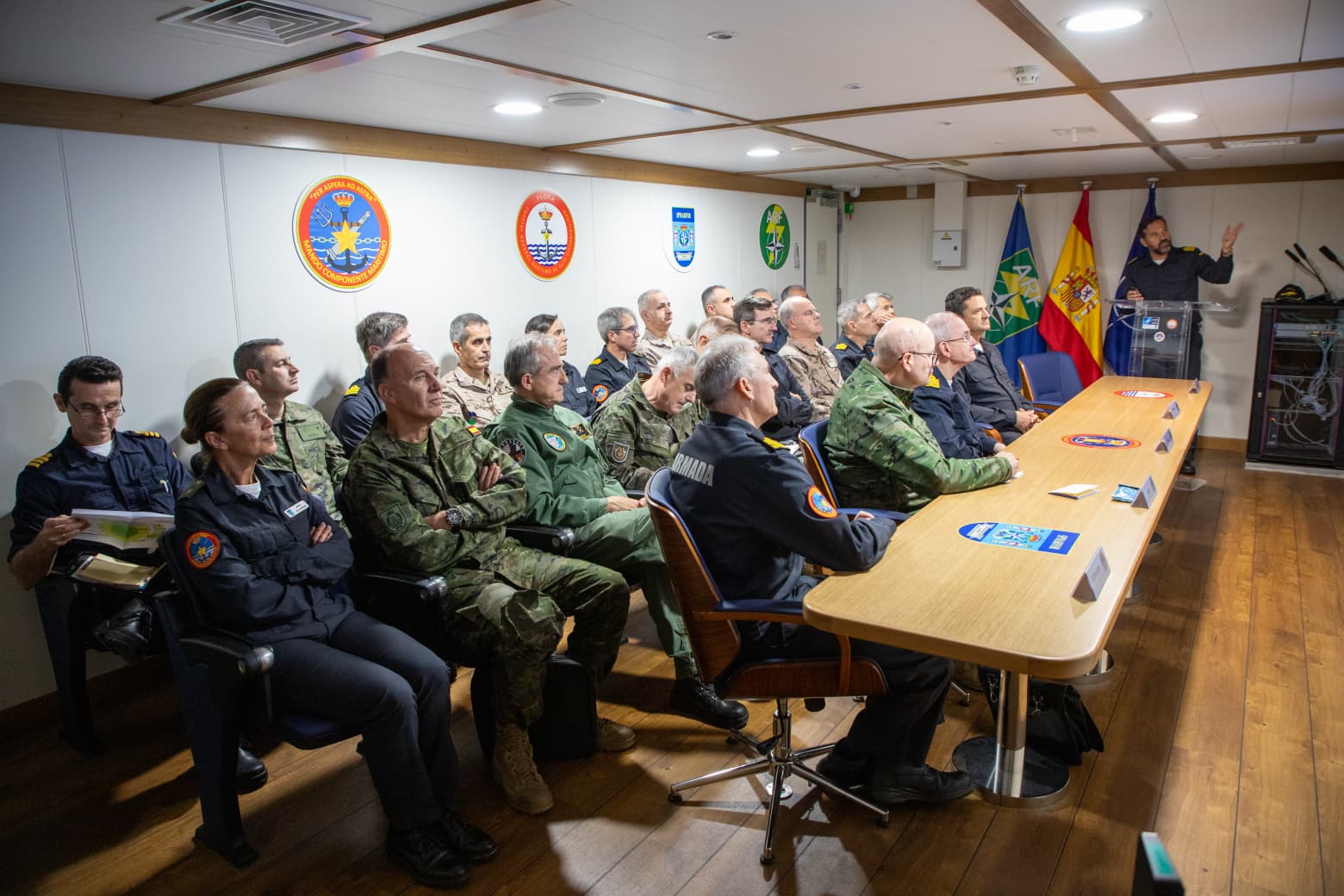
On behalf of the Joint Cyber Command, Admiral López Calderón has been briefed on the data transmission capabilities offered by 5G bubbles in a real-world scenario.
On the ground, a representative of the Joint Special Operations Command presented to the Chief of Defence the actions being carried out by special operations teams in this deployment phase to test this technology and the new capabilities it provides.
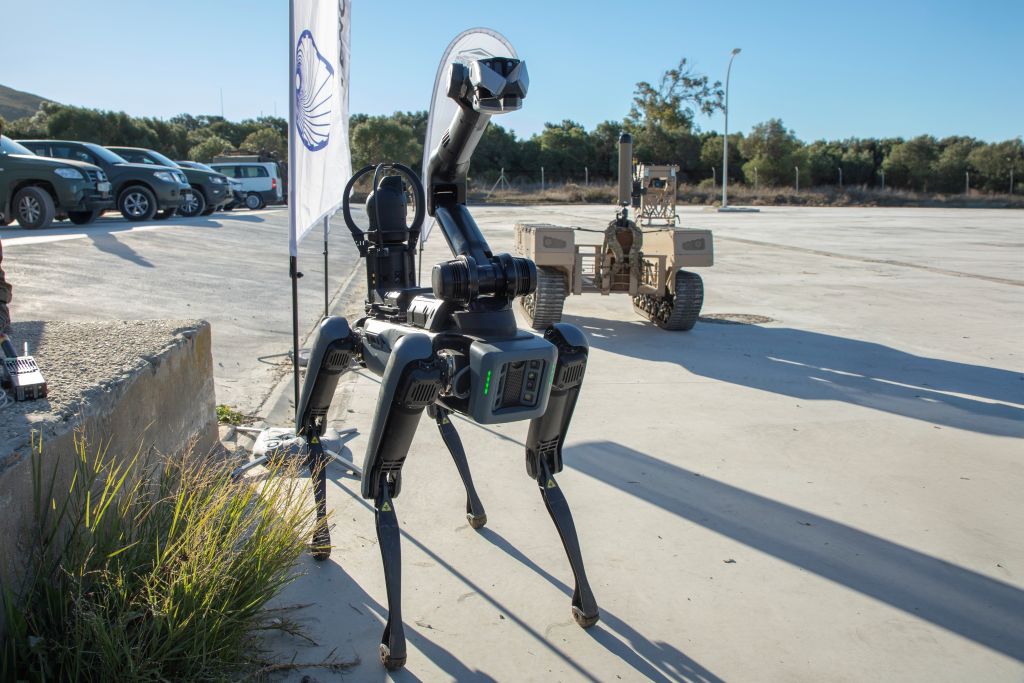
After the two exhibitions, the Chief of Defence was able to see the drones, both land-based and aerial, that are being tested in this livex phase and learn about some of the functionalities that are being experienced.
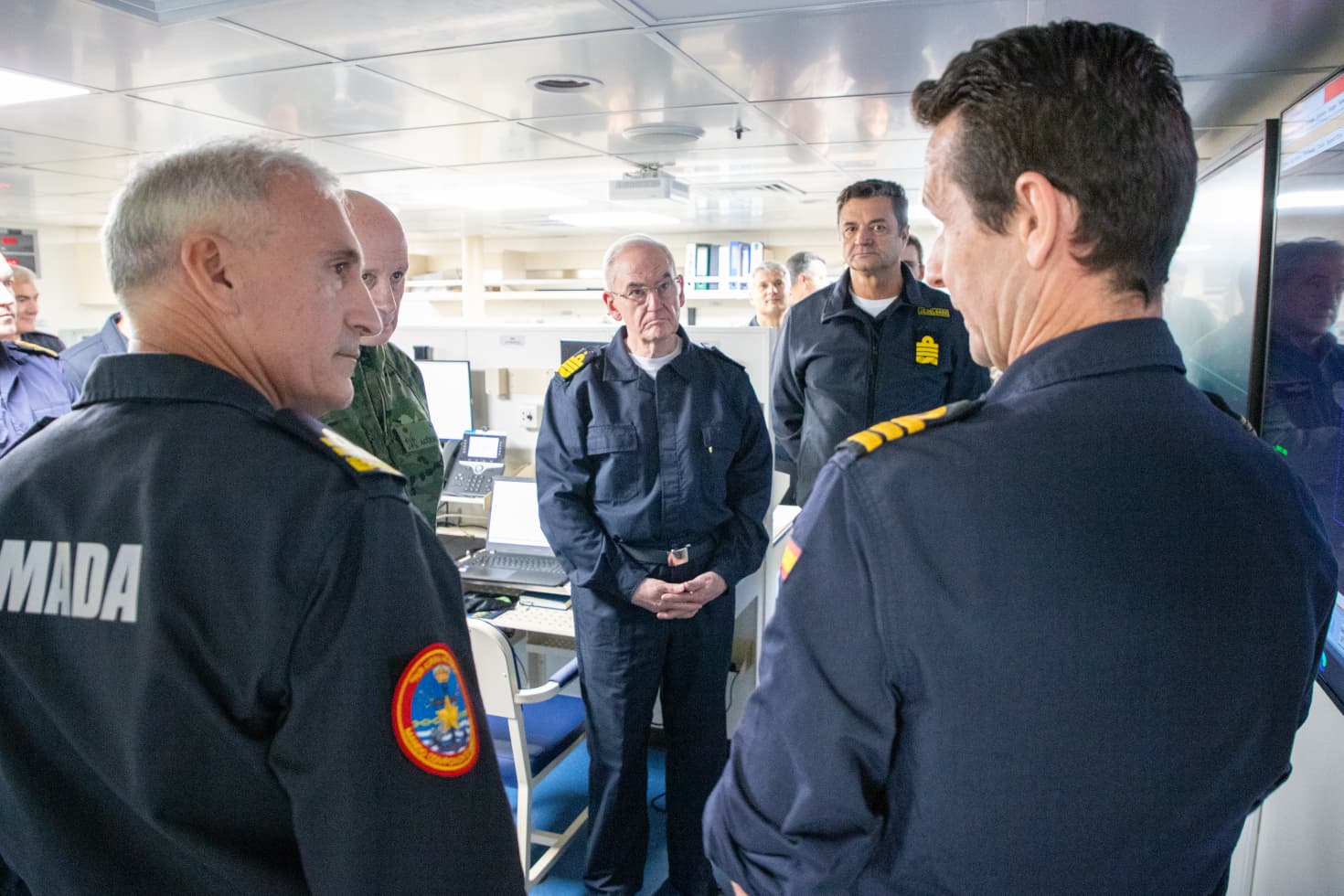
Afterwards, the Admiral boarded the amphibious assault ship “Castilla”, where he observed how 5G bubbles are being used in the naval operations environment.
The JFX/MDO-25 is carrying out multi-domain experimentation activities in which special operations units are transmitting video and data from their operations. To do this, they are using satellite means to link 5G bubbles in order to facilitate the command and control of military actions.
At the same time, electronic warfare units attempt to disrupt and hinder the transmission of data and information, thereby testing the resilience and strength of the communications systems being used.
The Joint Cyber Command (MCCE) has led the experimental part of the JFX25/Livex exercise, related to the use of 5G bubbles deployed by the Navy on the ship “Castila”, the Army at the El Retín training ground, and the Air and Space Force at the Retamares Base. These bubbles were connected via the Spainsat satellite, offering higher than usual transmission speeds.
Thanks to the joint work of military units and technical support provided by Hisdesat, Telefónica, Accenture, XRF, Menpro and COAS, users of mobile devices connected to 5G bubbles have been able to enjoy intuitive data, positioning, call and video call services. Interoperability between the ATAK and APOLO applications, two of the applications used by special operations forces, has also been tested. This has been an example of collaboration between the Armed Forces and civilian companies to overcome significant technical challenges.
ABOUT THE JFX/MDO 25
The JFX exercise, which takes place in a multi-domain environment (MDO), is a training activity held every three years that tests the Operations Command's ability to exercise operational control over the various Component Commands.
All the component commands of the Armed Forces and that depend on the Chief of Defence participate in this exercise, acting against an adversary with highly demanding and advanced capabilities, simulating a high-intensity conflict.
In this edition, civilian companies that are developing the technology being tested in this exercise have collaborated. Among them, Menpro, which brings together Persistent Systems, CACI, Boston Dynamics, Tencore, Axon, Sky Hero, Teledine Flir, HGH, COAS, PARROT; and also Glenair, Telefónica, Accenture, XRF, General Robotics and Red Team-Shield.
Fotos