

The Expeditionary Combat Group ‘Dédalo 25-3’ leads amphibious operations in UNITAS 2025
- The Landing Force takes the beaches of the east coast of the United States as part of the development of this multinational training activity
The UNITAS 2025 multinational exercise is coming to an end. During these weeks of demanding joint training, interoperability between participating countries has advanced rapidly and has become the best tool for ensuring security in a strategic area of prime importance: the east coast of the United States.
In this context, the units of the Spanish Expeditionary Combat Group (GCE) “Dédalo 25-3” have become a clear example of cooperation with the ships, aircraft and marines of the other participating countries, up to 26 in total, led by the US Navy.
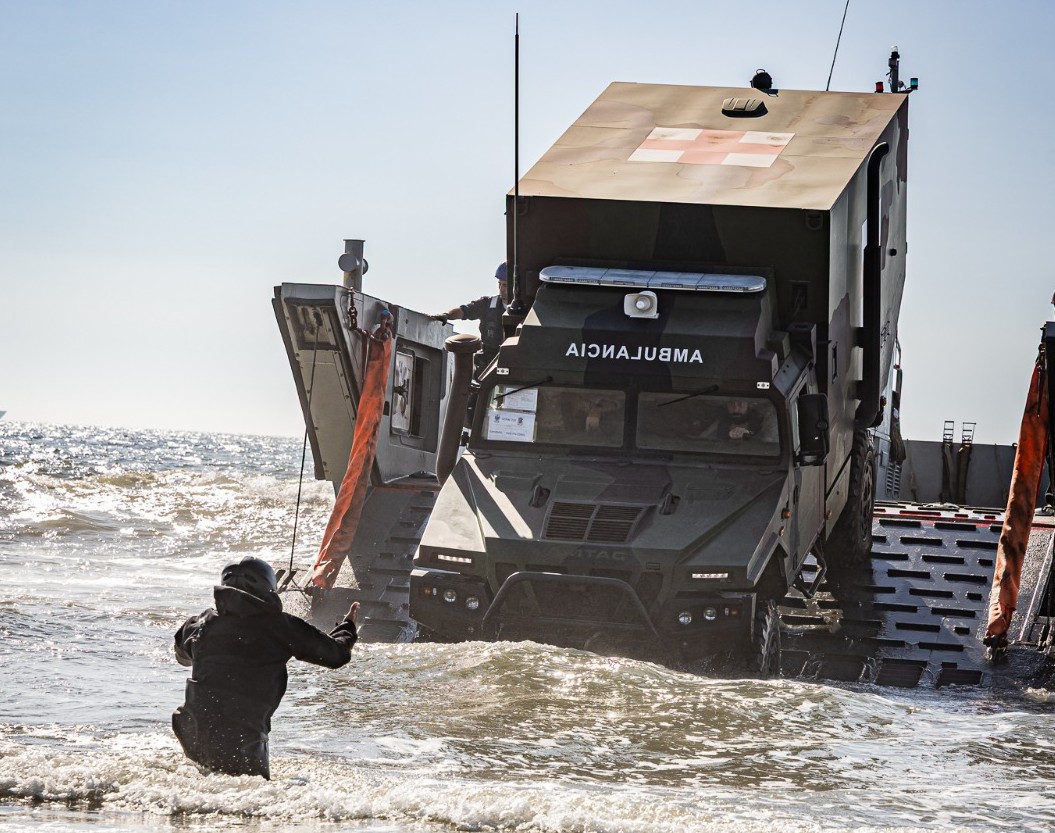
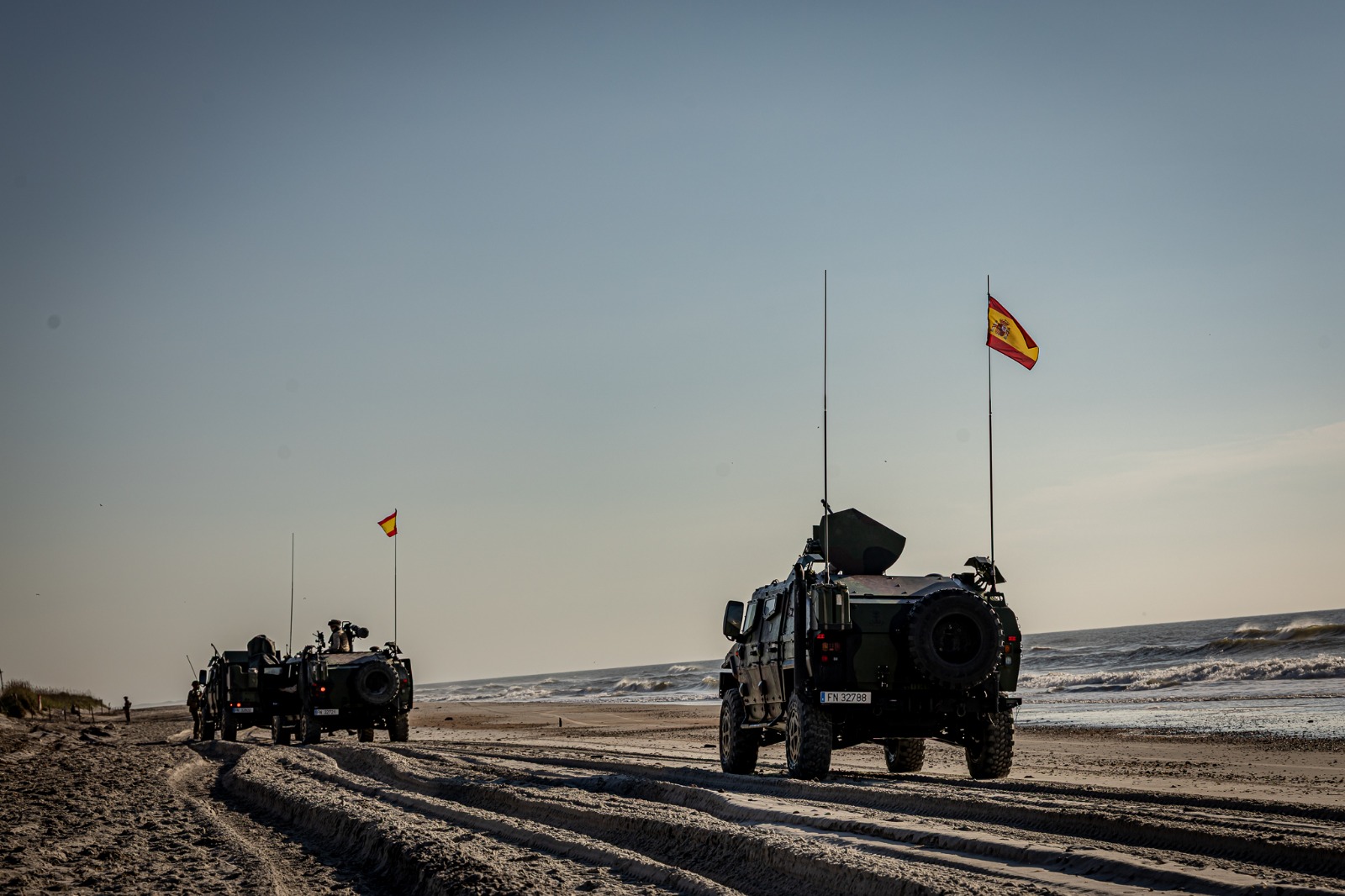
During these exercises, maritime interdiction operations, target shooting, and replenishment at sea manoeuvres, among other naval activities, were carried out. However, the greatest example of UNITAS 25 integration has been the planning, projection, and leadership of amphibious operations, which have resulted in a landing by Spanish Marine Corps forces on the east coast of the United States in collaboration with the US Marine Corps and Navy.
These amphibious operations enable the projection of naval power onto a hostile or potentially hostile coastline and require careful coordination between naval and landing forces to establish a beachhead.
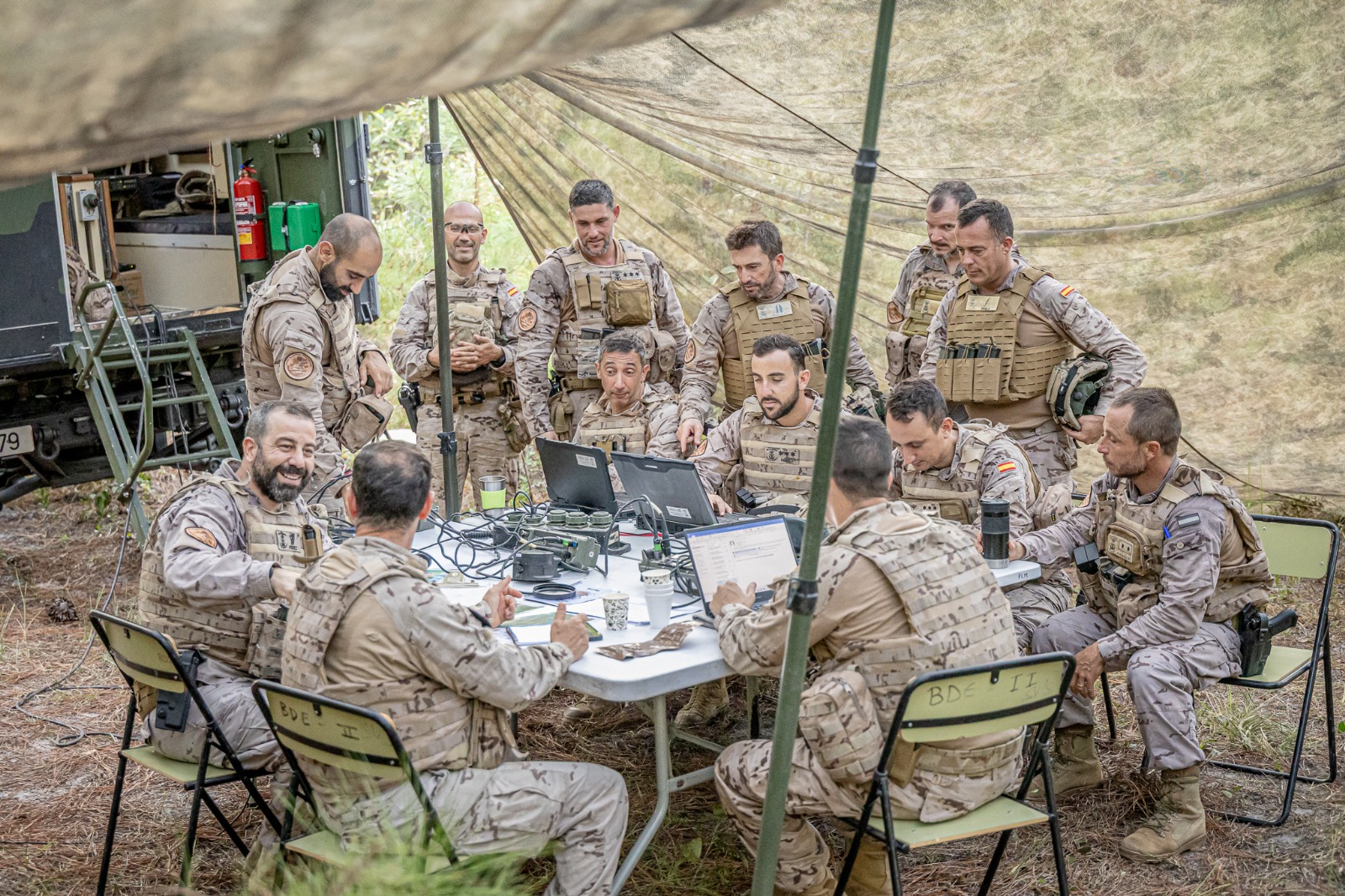
In this exercise, the commander of GCE “Dédalo 25-3” exercised command of the multinational Amphibious Force and was responsible for executing the ship-to-shore movement of more than 300 marines and 30 vehicles. This combined force of Spanish, American, Mexican, Brazilian, Chilean, Ecuadorian, Argentinian, Guatemalan, and Peruvian marines disembarked from the ship Galicia with their LCM1E landing craft from the Beach Naval Group and SH60F helicopters from the Aircraft Flotilla; and also from the ships USS Arlington —with its air cushion vehicles and Osprey multi-rotor aircraft— and Papaloapan of the Mexican Navy.
This amphibious landing demonstrated the naval interoperability of 26 friendly and allied countries, which was the primary objective of the UNITAS 2025 exercise. Furthermore, for Spain and its GCE “Dédalo 25-3”, it was an excellent opportunity to demonstrate its ability to lead and project an expeditionary force at sea and, where appropriate, to integrate other Alliance units or groups under national command.
Expeditionary Combat Group Dédalo 25-3
The Expeditionary Combat Group “Dédalo 25-3” is composed of the amphibious assault ship LPD “Galicia” (L-51) and the frigates “Almirante Juan de Borbón” (F-102) and “Canarias” (F-86). During the start of the Atlantic crossing, the group received logistical support from the Combat Supply Ship (BAC) “Cantabria”.
In the case of the LPD Galicia, it has a Reinforced Marine Infantry Landing Battalion on board, formed by the Second Battalion of the Marine Infantry Brigade, and two SH60F troop transport helicopters. For its part, the frigate “Canarias” (F-86) has an SH60B helicopter for anti-submarine and surface warfare.
On the other hand, and in order to increase maritime security and strengthen Maritime Interdiction Operations (MIO) capabilities, two Security Operational Teams (EOS) from the Navy Protection Force have been integrated: the EOS from the Southern Brigade, embarked on the F-86; and the EOS from the Canary Islands Security Unit, embarked on the L-51.
The deployment of the GCE reinforces the role of our Armed Forces on the international stage, while demonstrating our commitment and active contribution to NATO's deterrence and defence.
Fotos