

Eagle Eye 25-03 concludes: operational readiness and effectiveness to guarantee the air defence of the Canary Islands
-
This operational activity, part of the Sinergia 25 activation, has enabled the integration of air, land and naval resources to strengthen interoperability and joint action for national defence
The Canary Islands and the Atlantic Ocean have been the setting for the Eagle Eye 25-03 activation, led by the Air Operations Command (MOA) and under the operational control of the Operations Command (MOPS). The main objective of this activity has been to demonstrate and increase joint operational capacity to guarantee the air defence of Spain's sovereign territories and areas of interest.
Eagle Eye 25-3 is part of the permanent presence, surveillance and deterrence operations, involving resources from Air and Space Force, Army and Navy, integrated into the national Air Defence System. The activities have improved mutual understanding among the three Armed Forces, thus consolidating the effectiveness of the air defence system.
In this third edition of 2025, Eagle Eye (EE 25-3) has been part of a higher-level activation—Sinergia 25—which will run until 21 September. This has involved the coordination of operational activities carried out by the various Operational Commands—Land (MOT), Maritime (MOM), Air (MOA), Cyberspace (MOC) and Space (MOESPA)—to strengthen surveillance and establish synergies in comprehensive protection of the territory and the national population.
Participation of the Armed Forces in EE 25-3
On behalf of the Air and Space Force, six F-18s from Wing 12—based in Torrejón de Ardoz, Madrid—flew to Gando Air Base, where they carried out Quick Reaction Alert (QRA) missions. The crews remained on duty 24 hours a day to ensure that the aircraft could take off in less than 15 minutes. In addition, interception actions and air-to-air combat manoeuvres were performed, demonstrating the immediate response of the jet fighters to any threat. Commander Miguel Jiménez Barragán, head of training for Wing 12, said: “For all of us the excitement and pride of contributing to the defence of Spanish airspace burns, as it did on the first day, in the spirit of this unit.”
All air operations were directed from the Air Operations Centre (AOC) in Torrejón de Ardoz to coordinate surveillance, air policing and defence of national airspace. Likewise, the Alert and Control Group (GRUALERCON), located at Gando Air Base, has provided a complete overview of the air situation through the radars of the Air Surveillance and Control System and the assigned resources.
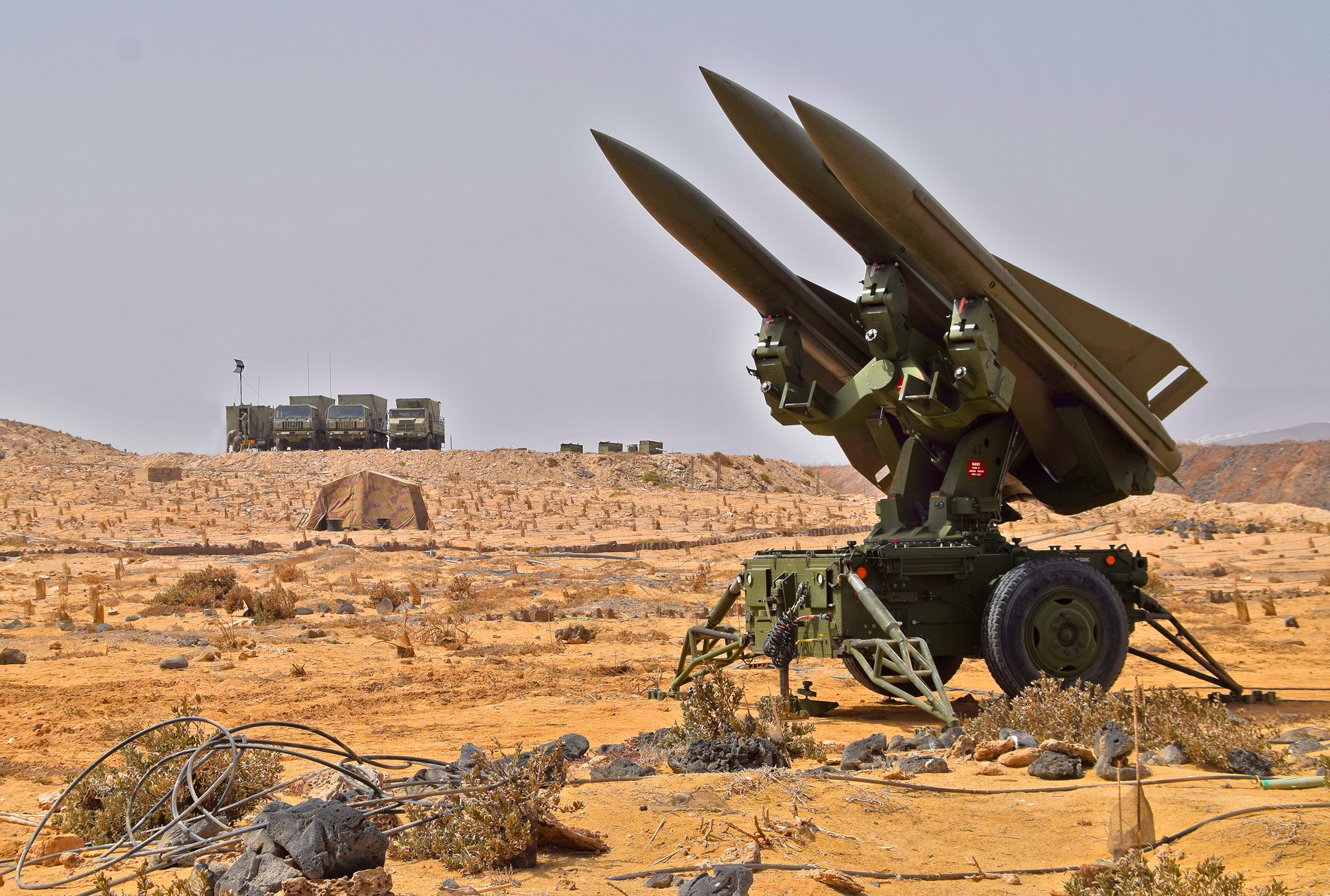
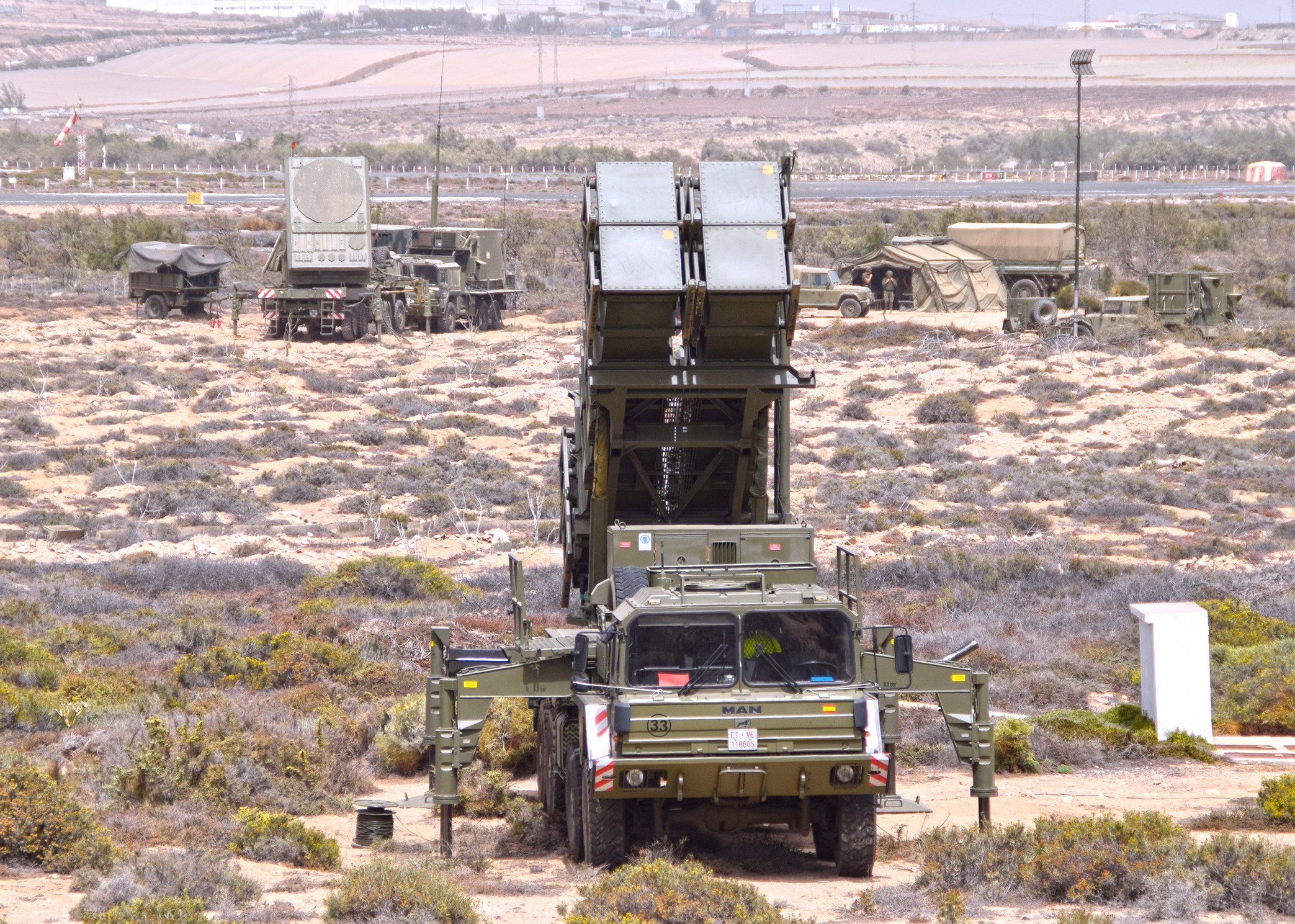
The Army has deployed the III-73 Cancerbero Anti-Aircraft Defence Unit (UDAA) in Gando, comprising HAWK, PATRIOT, NASAMS and MISTRAL systems as well as 35/90 cannons. For Lieutenant Colonel Leonardo Toledo Mira, head of this unit, which has more than 300 personnel and 100 vehicles, “the deployment from our base in Marines (Valencia) to the Canary Island has been an extraordinary logistical challenge. Without hesitation, this effort reflects the Army's ability to deploy and sustain its resources anywhere in the country.” During EE 25-3, UDAA III-73, supported by Anti-Aircraft Artillery Group I/94 (Las Palmas de Gran Canaria), complemented airspace surveillance and provided anti-aircraft defence to the assigned areas, reinforcing the integration of land systems into joint air defence with the rest of the Armed Forces.
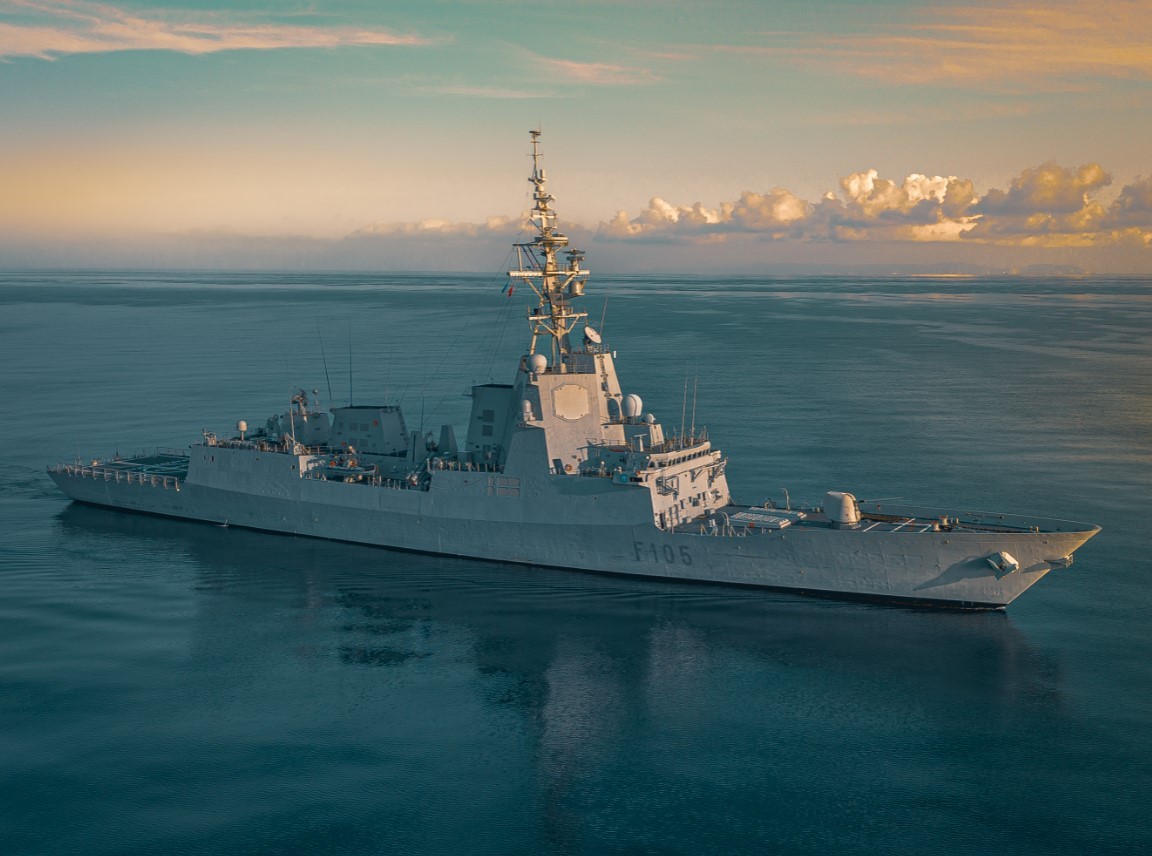
Meanwhile, during her voyage through the southern waters of the Canary Islands, the Spanish Navy frigate Cristóbal Colón F-105 has been integrated into the air defence system, contributing the advanced surveillance and anti-aircraft capabilities provided by her AEGIS system and SPY-1D radar. "We had interception controllers on board who monitored aircraft on air defence missions, as well as GRUALERCON liaison officers. All this support has increased mutual understanding and trust. In short, this activation has allowed us to grow as a unit and as part of a collective defence system," said Lieutenant Commander David Pacheco Goya, chief of operations of the Cristobal Colón.
Finally, he highlighted the participation of small Counter-Unmanned Aircraft Systems (C-UAS), led by the Air Deployment Support Squadron (EADA), together with resources from the Army, Navy and State Security Forces. Their integration has made it possible to test these systems in the detection and neutralisation of unmanned aircraft, which are the most emerging threats in the field of air defence.
A detailed assessment of all actions carried out during Eagle Eye 25-03, which brought together more than 1,000 military personnel from all branches of the Armed Forces, will now begin. However, as an initial assessment in the field, this activation has demonstrated—once again—the high level of preparedness and commitment of all participating units to contribute, on an ongoing basis, to the security and defence of national sovereign airspace. In this regard, coordination has been a key factor in strengthening knowledge, mutual trust and interoperability between the different components of Spain's air defence system.
Fotos