

The Expeditionary Combat Group has concluded Phase Two of Deployment ‘Dédalo 2025’ in the Atlantic and Mediterranean
- With this deployment, Spain has demonstrated its naval power and the joint interoperability of its Armed Forces with its allies, together with the steadfast commitment to NATO deterrence and defense
After successful conclusion of exercises SINKEX-25 in the waters or the Canary archipielago, the Expeditionary Combat Group began its second annual deployment –Dédalo 25-2 last JUN/17 in the Atlantic and Mediterranean waters. This operational activity concludes today, JUL/7, although the task group will not return to Rota until JUL/9. During this period, it has conducted operations-both within the framework of the Atlantic Alliance and together with the Spanish Army and the Air Space Force- as well as bilateral activities with Portugal and France; all carried out under the operational control of the Commander of the Operations Command.
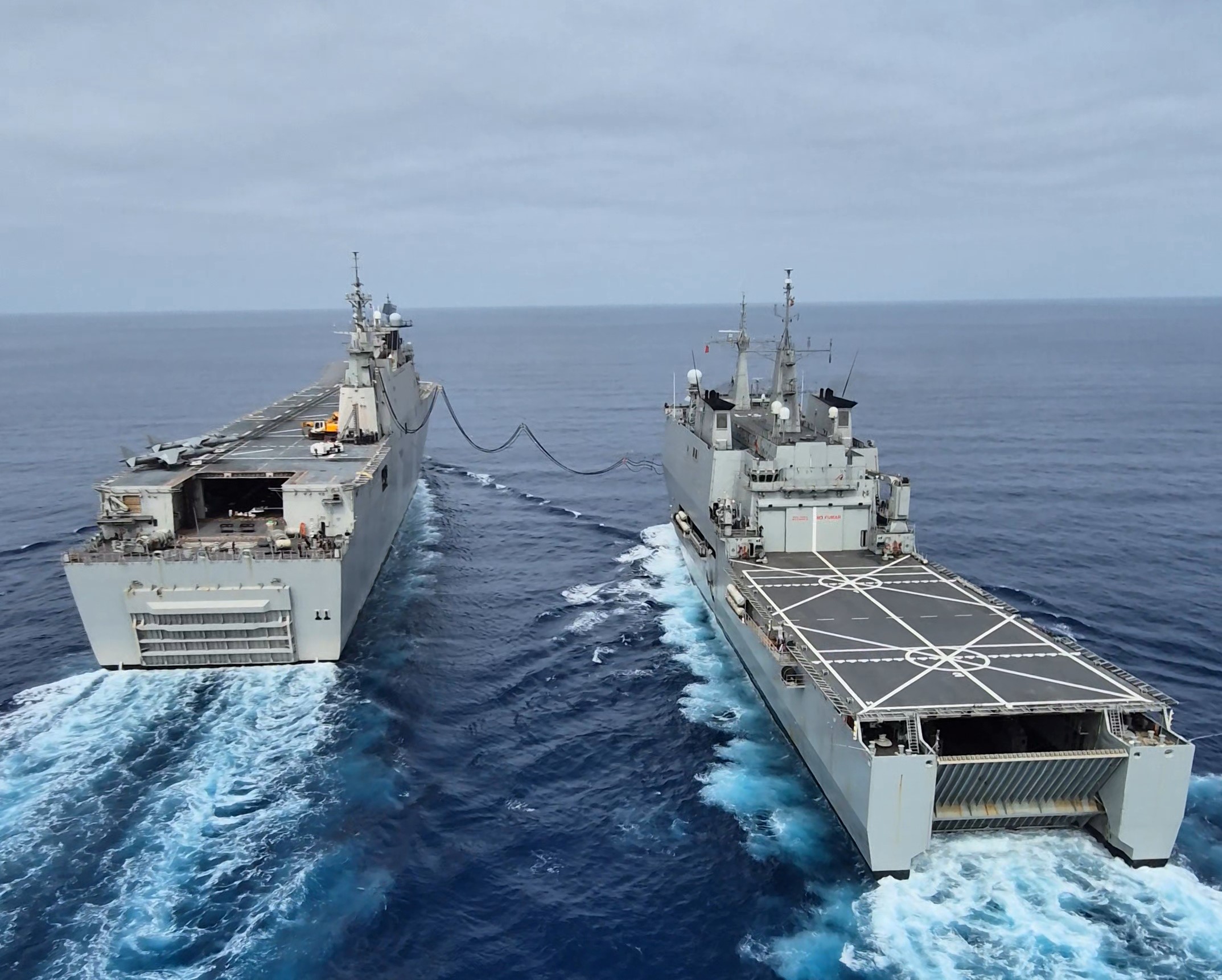
Around 1,850 Navy Personnel have taken part in the ‘Dédalo 25’ Expeditionary Combat Group, under the command of Commodore Antonio González del Tánago de la Lastra. Participating units included the LHD ‘Juan Carlos I’, the frigate ‘Blas de Lezo’ and the combat support ship (BAC, in Spanish) ‘Cantabria’, together with the Second Landing Batallion of the Marine Corps. In terms of equipment and assets, the deployment featured AV8B+, Harrier aircraft, SH-60B,SH-60F and H135 helicopters, as well as Marine Infantry vehicles and landing craft from the Naval Beach Group. Throughout the deployment, the units once again proved their ability to operate autonomously and with full interoperability, alongside other armed services, allied nations and the Atlantic Alliance itself. In addition to that, the remarkable adaptability and flexibility in any circomstances.
For two days, the task group integrated with NATO’S Naval Striking and Support Forces (STRIKFORNATO) to conduct joint operational activities Neptune Strike 25 in the Tyrrhenian sea. On this occasion, the ships executed long-range strikes from the central Mediterranean, against live-fire training in Croatia, Slovakia and Romania. The embarked fighter aircraft launching from ‘Juan Carlos l’ were supported by myltinational Joint Terminal Attack Controllers (JTAC) on the ground in Croatia, Slovakia and Romania.
Furthermore, in the tactical transits through the Strait of Gibraltar, the Expeditionary Combat Group incorporated personnel and equipment from the Spanish Army’s 4th Artillery Regiment (RACTA IV, in Spanish) on board the frigate ‘Blas de Lezo’, sharing their sensor and surveillance assets, which enabled the naval force to monitor the entire passage through the Strait, thereby ensuring maritime security during this phase of navitation.
Within the joint actions with the Spanish Air and Space Force, and demonstrating the capacity for long-range air power from the sea, AV 8B+ Harrier aircraft carried out a land-based mission involving long-range air interdiction flights to engage protected targets while remaining undetected.
The ‘Dédalo’ Expeditionary Combat Group also cooperated with the French destroyer ‘Chevalier Paul’ in Mediterranean waters, conducting surface warfare exercises, air combat drills, replenishment at sea, and external support to the combat support ship (BAC) Cantabria by personnel from the French vessel.
Marine Infantry Actions
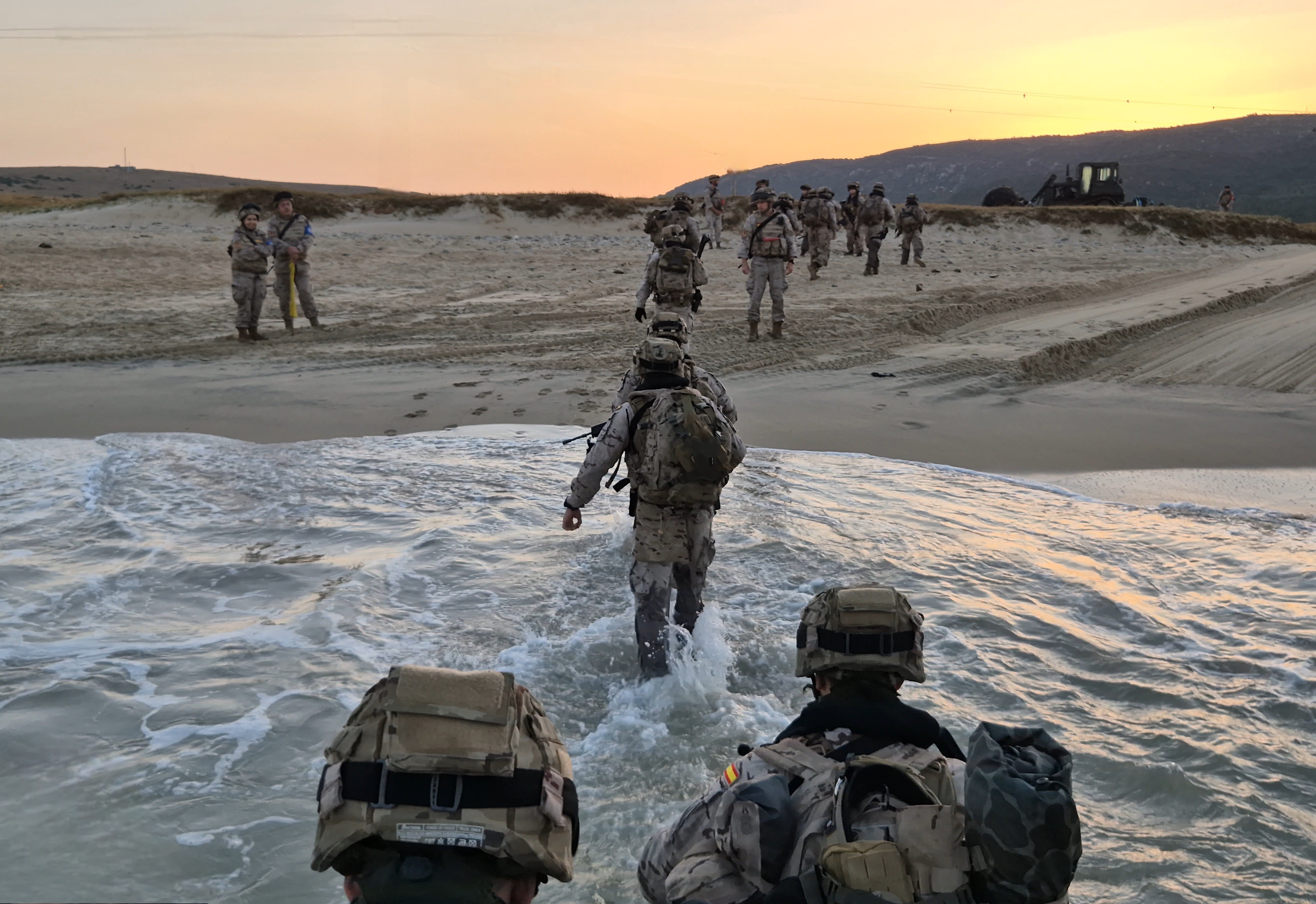
During Deployment Dédalo 25-2, Marine Corps units played a prominent role. In the Balearic Islands, they carried out an amphibious raid with a beach landing to secure positions ashore. In the final phase of the deployment, they conducted amphibious, air, naval, and ground operations over a three-day period in the Atlantic Ocean. The Landing Force of the ‘Dédalo’ Expeditionary Combat Group conducted an initial entry exercise of an Amphibious Force in a high-intensity scenario. In the following days, they faced an opposing force in a defensive posture employing drones. The operation served as a combat readiness exercise for offensive amphibious actions. This same force is scheduled to conduct a landing demonstration on La Malagueta beach (Málaga) on 8 July.
‘Dédalo’ 25: Spains’s Naval Power
This second phase once again demonstrates the Expeditionary Combat Group’s ability to operate in diverse and highly complex scenarios , either independently, in cooperation with other armed services and Allied nations, or fully integrated within NATO’s command structure.
‘Dédalo 25’ will continue its deployment over the coming months, with new maritime and air surveillance activities, as well as participation in international cooperation operations.
Fotos