

Commander of the frigate “Méndez Nuñez” said: ‘During the Highmast deployment, the ship is demonstrating its capacity, reliability and permanent availability’
- The Spanish ship - commanded by Commander Jaime Muñoz-Delgado Pérez - is integrated into the British Battle Group HMS “Prince of Wales”: a unique opportunity to improve readiness and interoperability at sea
Since the end of April, the frigate “Méndez Núñez” has been integrated, along with other ships from partner and allied countries, in the British Navy's HMS “Prince of Wales” Aircraft Carrier Battle Group. The main objective of this European initiative is to carry out complex operations while sailing together in the Indo-Pacific -within the Highmast deployment- to improve efficiency and naval interoperability in the face of any threat at sea.
In this context, the Spanish ship is an example of Spain's technological capacity, while at the same time demonstrating the projection capacity of our Armed Forces in geographical areas far from the national territory. It will remain in this position until next August, when it will leave the group to begin its return transit to Ferrol.
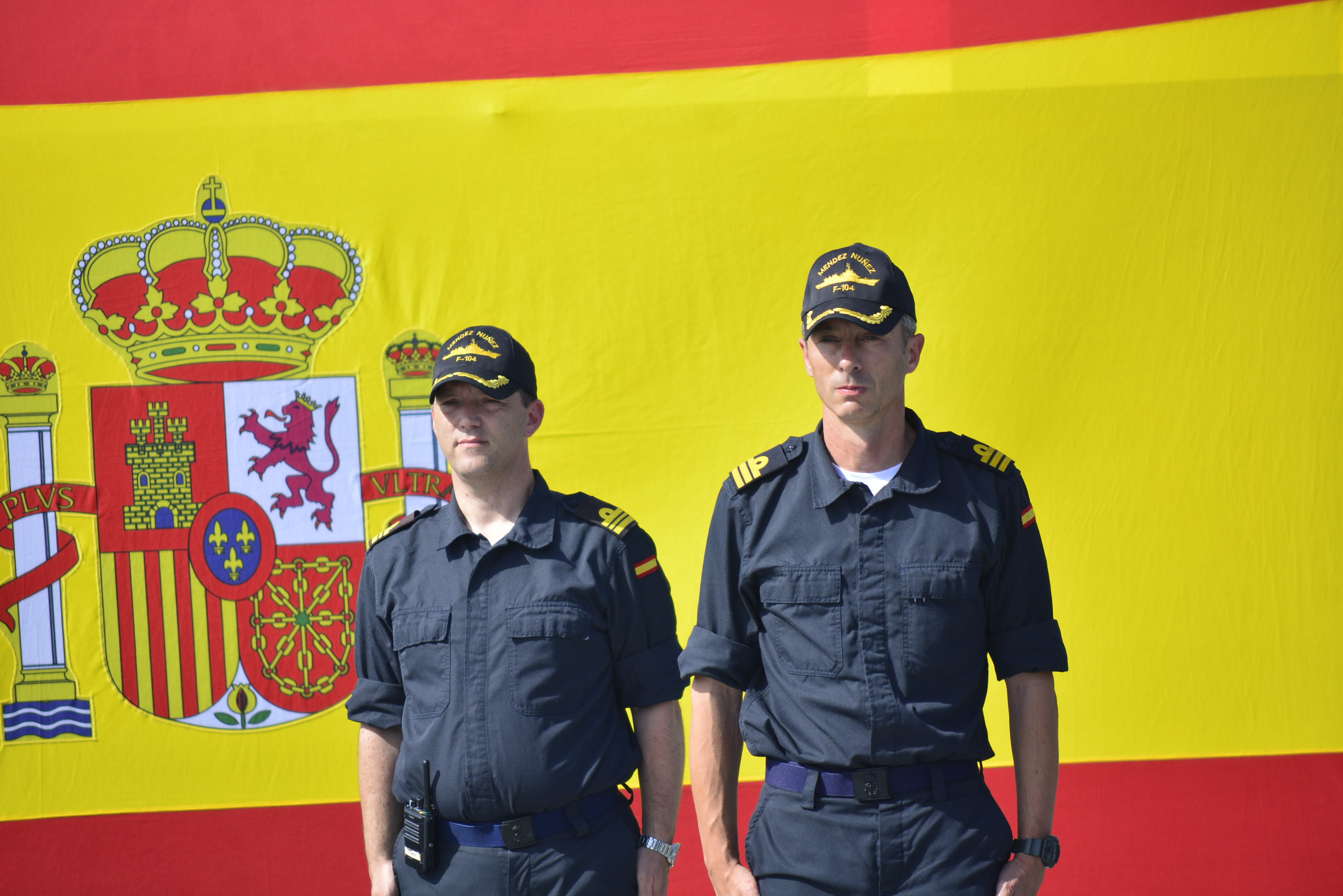
Commanding the “Méndez Núñez” is Commander Jaime Muñoz-Delgado Pérez, who has extensive experience in international operations and deployments on navy ships. For the commander, preparation and experience are the keys to success, but, above all, it is essential to have ‘a cohesive and well-synchronised crew’.
Commander, why is a Spanish frigate deployed as part of a British group in the Indo-Pacific?
Many people may be asking the same question. First of all, it is common for units from allied countries to participate in naval deployments, and the Spanish Navy is a great promoter of these international initiatives. In fact, we usually join permanent NATO naval groups or aircraft carriers from other allied countries such as the United States or France, although on this occasion it was within the framework of the European Carrier Group Interoperability Initiative (ECGII). I undoubtedly consider this an excellent opportunity for Spain and, more specifically, for the training and interoperability of our ships.
It is true that the Prince of Wales carrier group is led by a British command with numerous units from its navy, but it must be stressed that we are part of a multinational naval group made up of units from many countries. Some of them are permanently integrated, while others, such as the “Méndez Núñez”, are integrated for limited periods, which are always previously established in our planning.
We now find ourselves with the battle group in the Indo-Pacific, after a long and instructive navigation along the Atlantic coast, the Mediterranean and the Red Sea. It is clear that the world's centre of gravity has shifted to this strategic area; and Spain, along with the rest of Europe, wants to strengthen its relations and cooperation with the countries of the region by carrying out activities in the operational, diplomatic and industrial fields. With this deployment, the Spanish frigate will give a major boost to strengthening Spain's presence in the region and forging alliances with these countries.
In this deployment, we are part of the Prince of Wales Battle Group (CSG), what does this temporary integration consist of?
In NATO navies, we are used to working together. Our tactical procedures are common, and this allows us to conduct integrated multinational operations and exercises at sea. Overall, we have ensured that our communications, command and control systems, aircraft employment, logistics and many other functions are well defined, and this allows us to operate in a coordinated and effective manner. In short, without forgetting the enormous effort involved, we are interoperable.
This Highmast deployment aims to go one step further: we want to be not just interoperable, but fully interchangeable. For example, the British Commodore commanding the operation could exercise command from a Spanish ship, a function that he would normally only do with British units. This is something that is already being done today, with the “Méndez Núñez” in charge of the group's air defence. In addition, throughout the deployment, we will be integrating units from non-NATO navies that we don't work with on a frequent basis, because we also want to advance with them the interoperability we need to work together effectively.
Many months of sailing, which countries are you going to operate with?
Throughout its deployment, the group will involve many countries. Most of the time it will be vessels from the UK, Norway, Canada and Spain, although we have already operated with US units. Now in the Indian Ocean, we will have integrated escort vessels from New Zealand, Australia, South Korea and Japan, but we will also be working with the navies of India, Indonesia, Singapore, Malaysia, the Philippines and Thailand. It is certainly a unique opportunity to cooperate and share experiences, and always with the aim of being ready to operate together at sea.
And within this deployment, what does the frigate “Méndez Núñez” contribute to the Prince of Wales aircraft carrier group?
This ship has unique capabilities, like the rest of the F100 frigates of its ‘Alvaro de Bazán’ class, especially in the field of air and missile defence. For this reason, the “Mendez Nuñez” has been entrusted with the close air defence of the British aircraft carrier. During the Highmast deployment, the ship is demonstrating its capacity, reliability and permanent availability, as it has remained at sea at all times with a very high degree of operability.
On the other hand, in addition to its original systems, the ship has been fitted with new systems and equipment that allow it to increase its capabilities to face new threats more effectively. Of particular relevance in this context are the new drone detection, identification and neutralisation equipment. All of them, together with the traditional systems, make it possible to have an effective layered defence, for which the F100 was not originally prepared. This equipment and systems are of national manufacture, and our experience in this deployment and other operations will allow us to improve their functionality.
They sail in distant but well-known seas. How do you guarantee the logistics of the “Méndez Nuñez” in these scenarios?
That's right, this is not the first time we have operated in the Indo-Pacific. Even this frigate has sailed these seas not many years ago, and this experience has allowed us to be better prepared for this deployment. On this occasion, because we are part of a group, part of the logistics are managed jointly, especially with bunkering ships or, if necessary, other supplies. On the other hand, we make port calls every three weeks or so, where we take the opportunity to carry out maintenance work, as well as stockpiling spare parts and supplies. And all of this requires a support structure in Spain, which implies a very important effort by the Navy to maintain, in this case, the “Méndez Núñez” at the highest level of readiness and operability, and its crew at the highest possible level of wellbeing.
In conclusion, in these long and distant deployments, what is the major concern of the commander of the “Mendez Nuñez”?
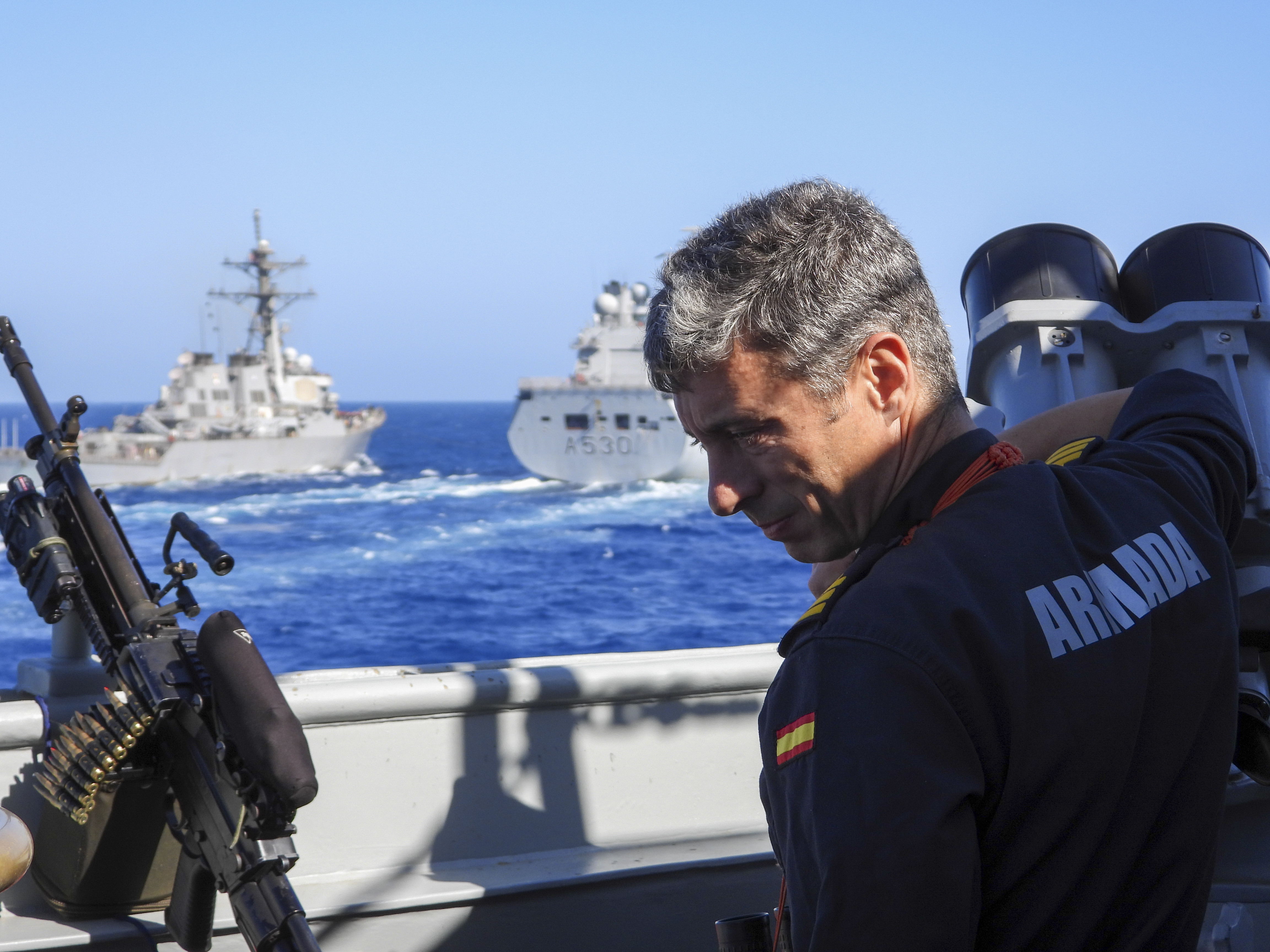
The commander always has two things on his mind: his mission and his crew. In a way, everything else is subordinate to these two concerns. In this Highmast deployment, mission accomplishment takes on special relevance when we sail in waters with a certain level of risk, such as the Red Sea and the Bab-el-Mandeb Strait. In these areas, we have to protect ourselves, as well as the British aircraft carrier and the rest of ships of the battle group. To achieve this, we have prepared intensively in advance together with the other ships and air assets of the group.
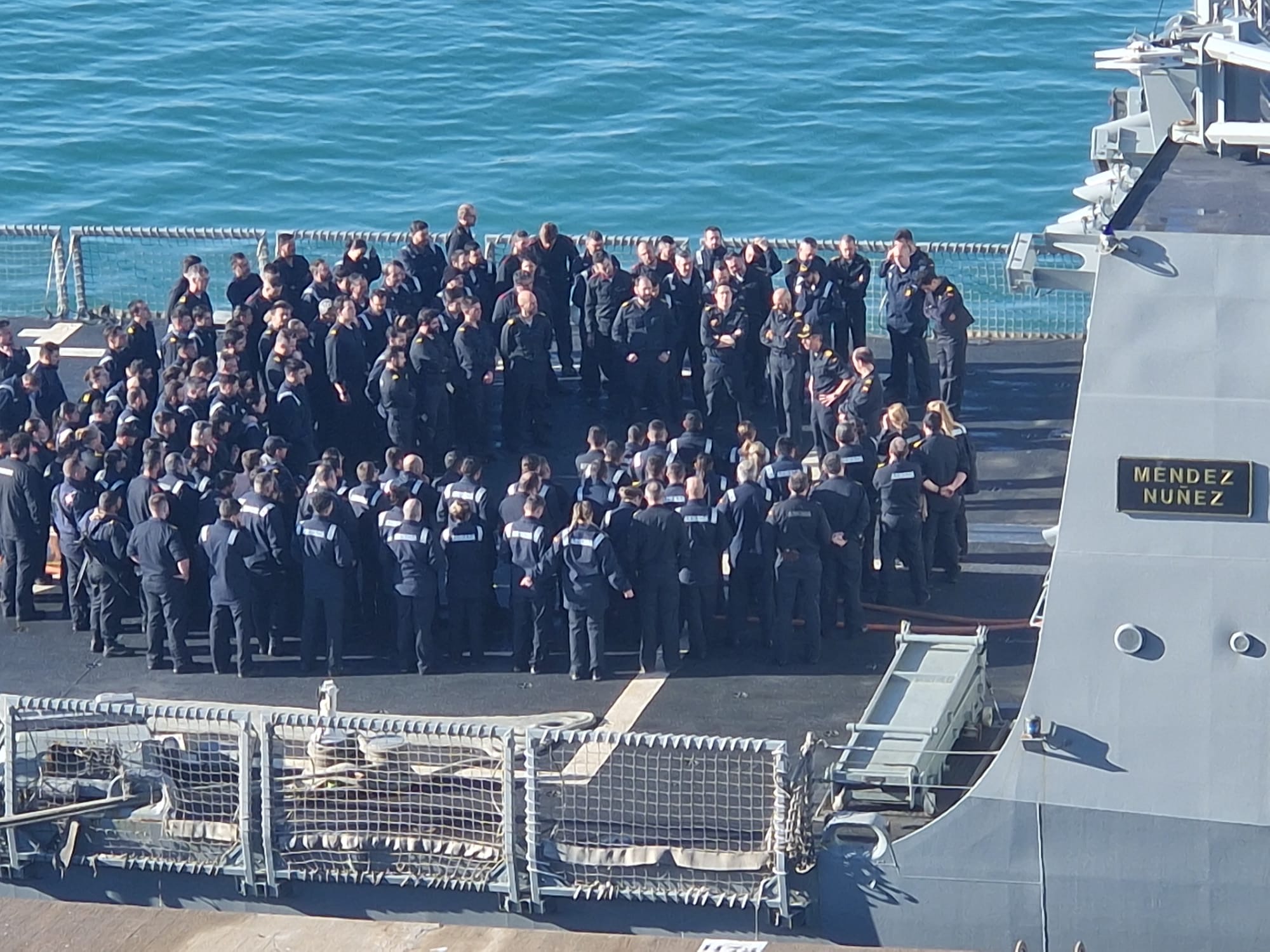
In terms of manning, each and every person in the team must be individually prepared to perform their tasks and, at the same time, be able to function as a cohesive and well-synchronised team. This is something that requires constant and demanding preparation and training, because there is always something to improve and new scenarios to adapt to.
At the same time, this great human team, of which I am deeply proud, is going to live together for more than five months in a small space, in a harsh - sometimes hostile - environment such as the sea, and in a unique geographical area with tropical temperatures. The older ones are very used to and teach the younger ones how to work and live in these conditions. Although the activity is constant, we try to have time to rest, exercise and keep in touch with our families, who are always our greatest support from afar. In short, we do our best to cope with the difficulties of life at sea in a mission that, for any seafarer, is a magnificent experience.
Fotos