

Second ‘Eagle Eye’ activation of 2025 concludes successfully, mainly conducted in Galicia
- During this reinforced activation, various defensive air missions were conducted, integrating air, land, and naval assets
The north-western region of the Iberian Peninsula served as the setting for activation ‘Eagle Eye 25-02’, led by the Air Operational Command (MOA in Spanish) and under the operational control of the Operations Command (MOPS in Spanish). This activation falls within the framework of presence, surveillance and deterrence operations and involved the activation of assets from the Spanish Air and Space Force, the Army, and the Navy. These were integrated into the national Air Defence System with the aim of maximising the efficiency of the participating assets in guaranteeing the surveillance and defence of sovereign and national interest airspace.
To this end, various defensive air missions—both specific and joint—were conducted in response to incursions and movements of unidentified aircraft. These missions enabled enhanced training and interoperability among all participating units.
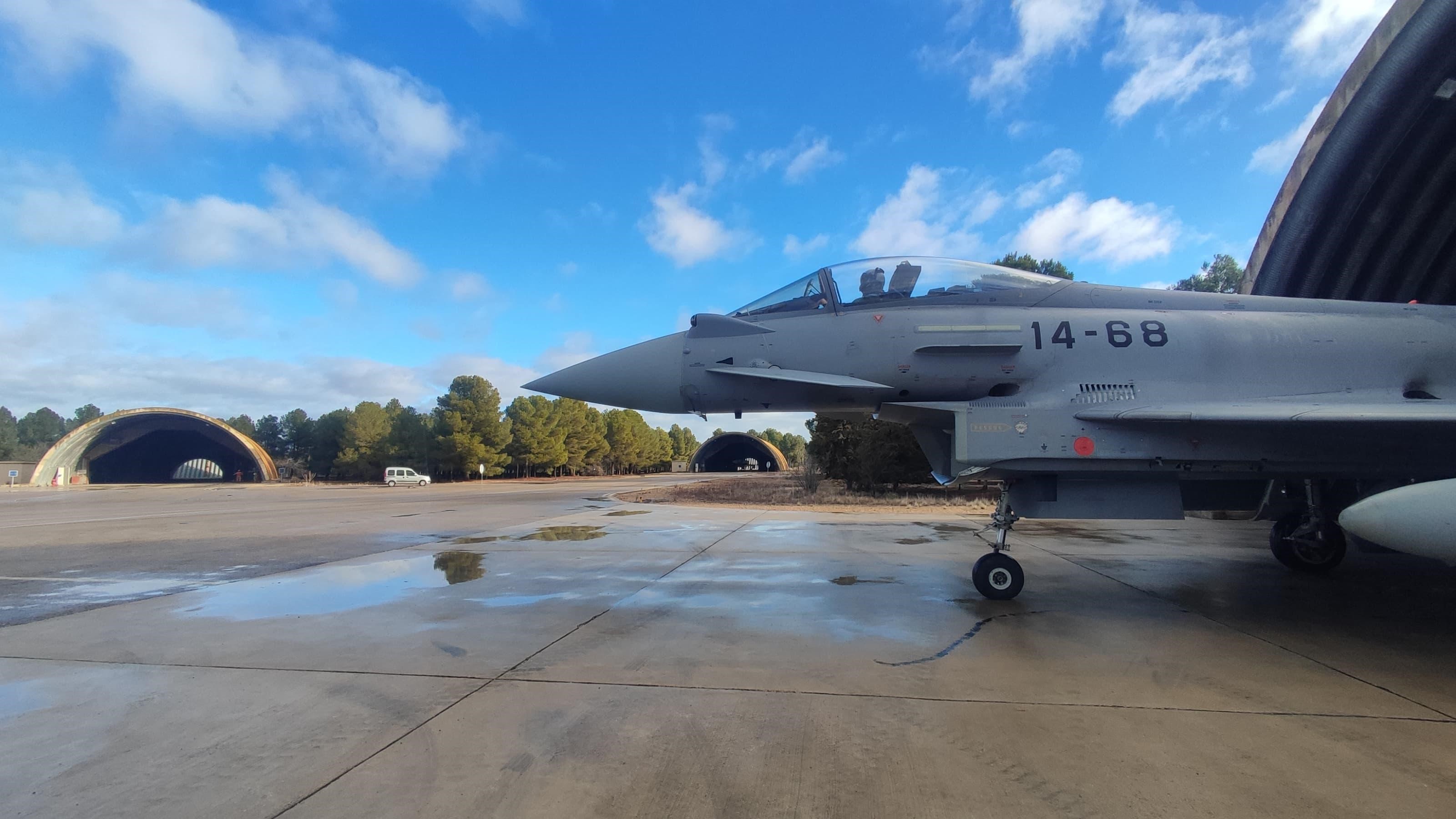
From the Air and Space Force, six Eurofighter jets from Wing 14th (Albacete) deployed to the Military Airfield in Santiago on a Quick Reaction Alert (QRA) mission. During the activation, the fighters carried out air-to-air combat manoeuvres and interception missions, demonstrating their capacity to respond swiftly to potential threats. Escort and protection exercises for strategic assets were also conducted, highlighting the versatility and strength of these aircraft in simulated combat scenarios. The deployed pilots were on 24-hour standby, ready to be airborne in the shortest possible time depending on the situation.
Successful execution of this aerial surveillance mission was made possible by essential support and maintenance personnel, who ensured the aircraft, were mission-ready at all times. A total of 20 QRA sorties were conducted, amounting to over 30 flight hours in air defence missions. Wing 14th’s performance was instrumental in assessing interoperability with other air and ground platforms, which strengthened cooperation and coordination among the various deployed units, and contributed to improving joint tactics and strategies in a multi-platform environment.
Command and control were exercised from the Air Operations Centre (AOC), which provided tactical command and control of surveillance, air policing, and air defence operations over sovereign national airspace. Where necessary, control was delegated to entities integrated into the Air Defence System (ARS/F-100/UDAAA).
Additionally, the Central Command and Control Group (GRUCEMAC in Spanish) provided full situational awareness of the monitored airspace via Link systems, identifying tracks using assigned assets to determine the appropriate tactical response in each scenario. From the ARS, aerial assets involved in the activation were controlled and managed, with radar parameters from the Air Surveillance and Control System optimised for maximum effectiveness.
Army and Navy: operational integration
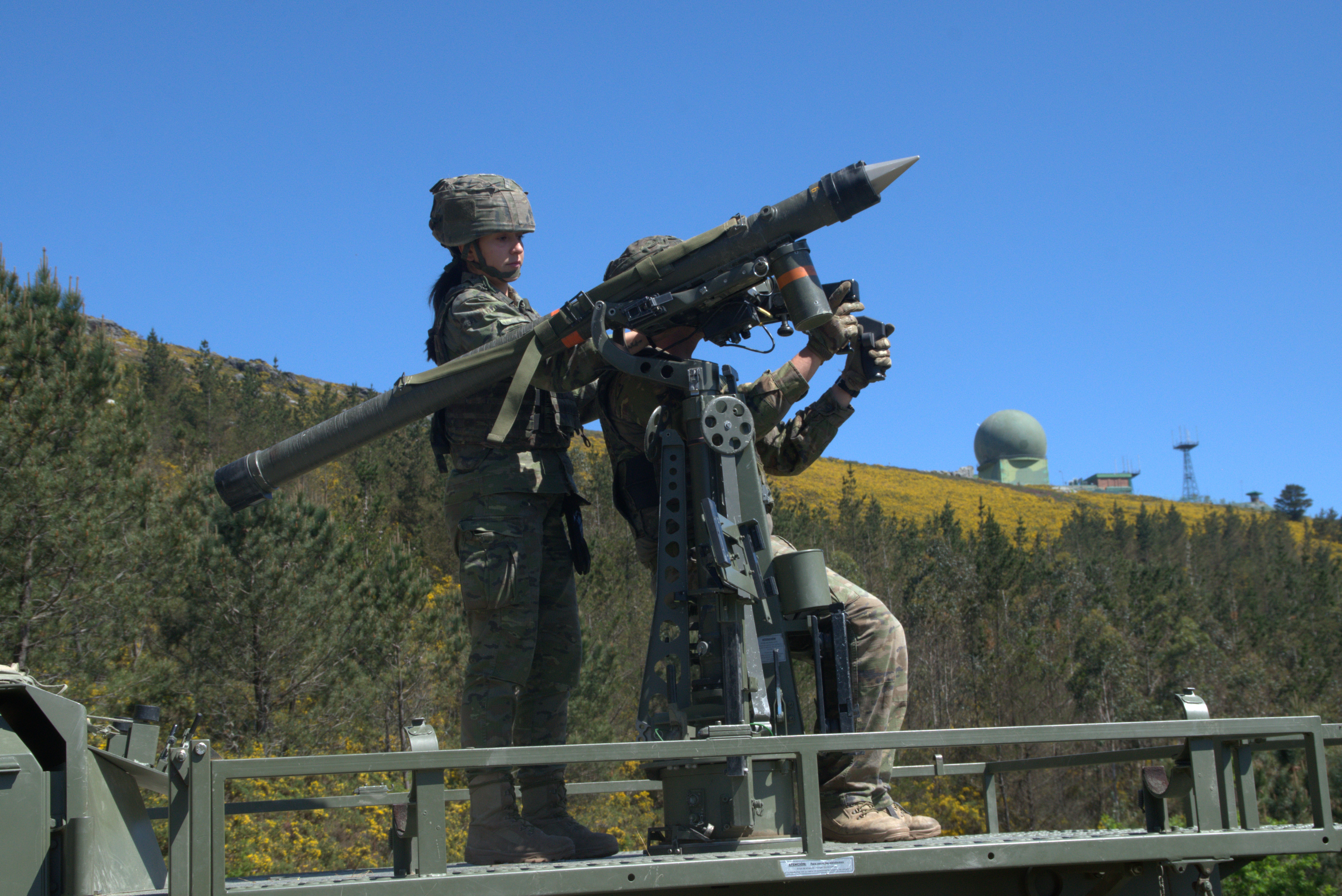
Regarding the Spanish Army, the Cancerbero Anti-Aircraft Artillery Unit (UDAA in Spanish) was deployed around the Galician towns of Noia and Santiago de Compostela. It was formed on the basis of the Anti-Aircraft Artillery Command (MAAA in Spanish), organised and led by the III/73th Patriot Anti-Aircraft Artillery Group from Marines (Valencia). This mixed unit comprised Patriot and Hawk anti-air missile systems, Mistral missile units (from both the MAAA and the 12th Field Artillery Group), and 35/90 anti-aircraft guns, along with the MAAA’s Signals Unit and a Force Protection unit from the Infantry Battalion I/29 ‘Zamora’ of the ‘Galicia’ VII Brigade. In total, around 275 Army personnel from various units across Spain participated.
Throughout Eagle Eye 25-02, the UDAA fulfilled its mission due to its continuous readiness to ensure the security of airspace of national interest through presence, surveillance, and deterrence operations.
From the Navy, the frigate ‘Blas de Lezo’ (F-103) contributed to national air surveillance and defence in the Atlantic Ocean during the Eagle Eye activation. Its primary role was to actively support Air Defence. Onboard systems—most notably the AEGIS Combat System and SPY-1D radar—ensured early detection of aerial tracks and the ability to counter any emerging threats. This enabled the maintenance of operational readiness and provided an opportunity to assess the integration of air, naval, and ground systems in complex scenarios.
In conclusion, activation Eagle Eye 25-02 involved more than 1,800 personnel who demonstrated their high level of readiness to ensure the security and defence of national sovereign airspace, 24 hours a day, 365 days a year. The activation showcased the perfect synchronisation and interoperability between the participating systems of the Air and Space Force, the Army, and the Navy, proving their ability to integrate fully into the Air Defence System (SDA in Spanish) and to generate synergies for conducting multi-domain operations within the framework of permanent operations on national territory.
Fotos