

The Joint Special Operations Command participates in the Multinational Exercise ‘FLINTLOCK 2025’
-
This exercise represents the active participation in this international cooperation initiative that brings together special operations forces from Europe, Africa, and North America
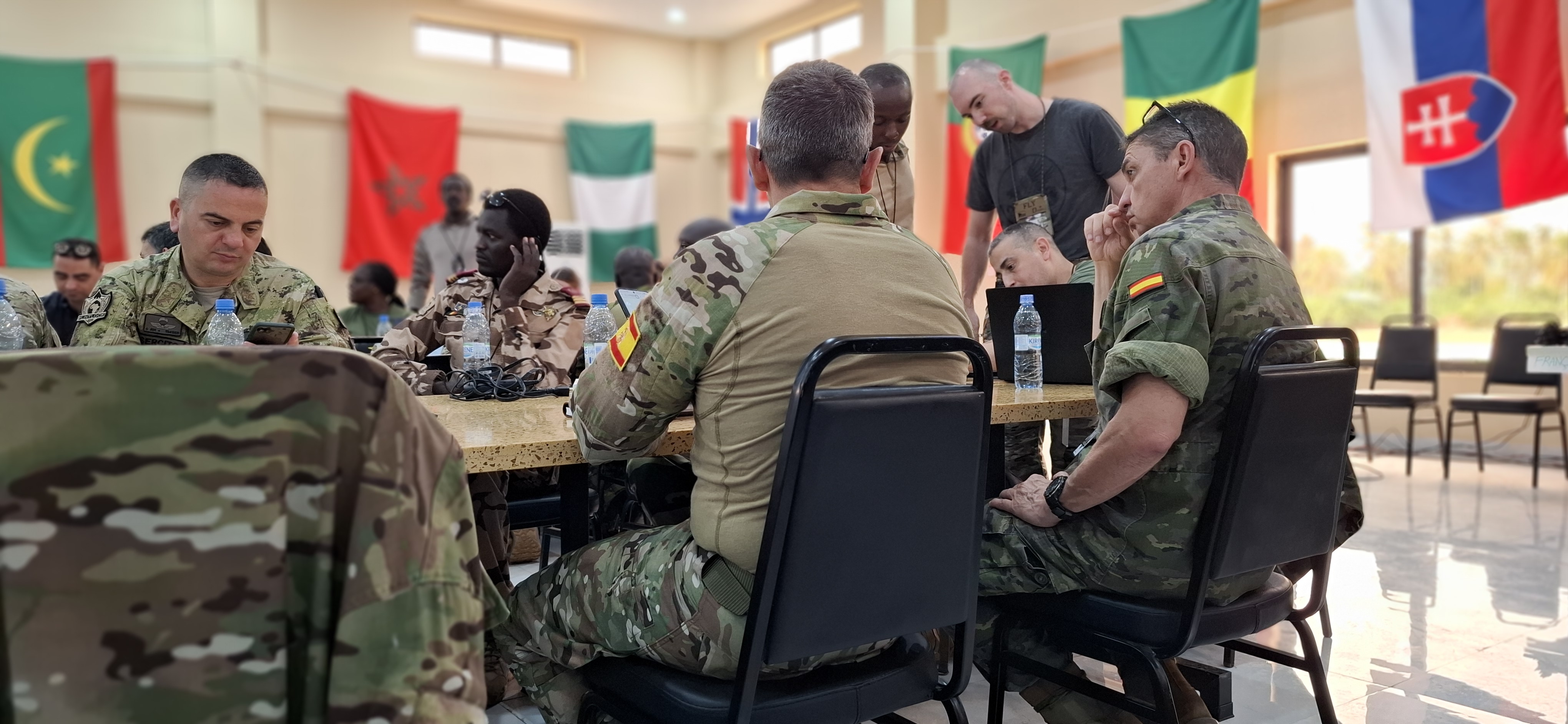
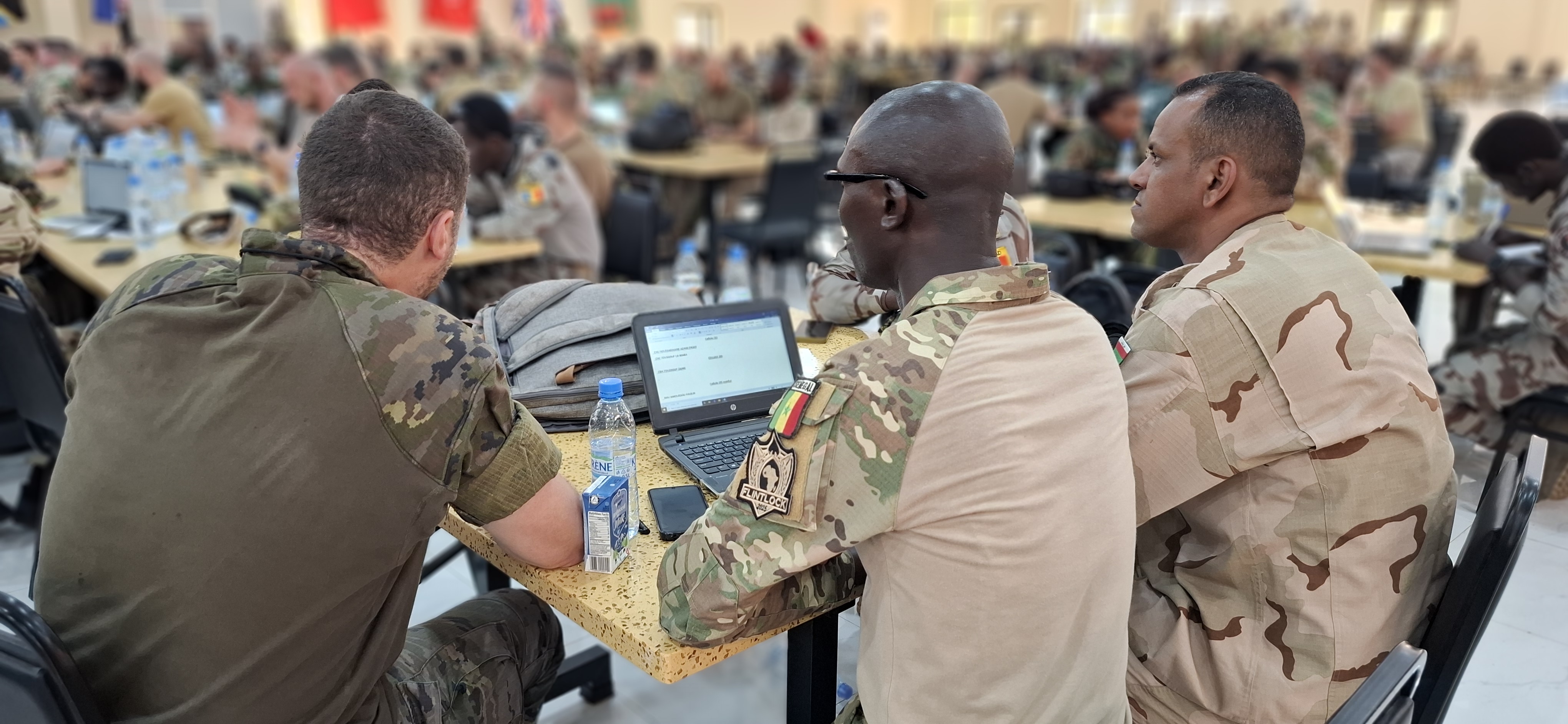
Within the framework of the commitment to international cooperative security, the Joint Special Operations Command (JSOC) is taking part in the multinational activity ‘FLINTLOCK 2025’, organised in Ivory Coast by the United States Special Operations Command Africa (SOCAF). This exercise constitutes the main annual special operations training event on the African continent and brings together units from Europe, Africa, and North America.
The objective of FLINTLOCK is to strengthen regional security cooperation and improve interoperability among the different participating special operations forces – American, European, and NATO (North Atlantic Treaty Organisation) forces. Its aims include:
- The fight against violent extremist organisations (C-VEO, Counter-Violent Extremist Organisations).
- The reinforcement of logistical sustainment and the joint employment of units.
- The integration of a Combined Joint Special Operations Task Force (CJSOTF).
- The improvement of command and control capabilities, intelligence sharing, and information operations in the African environment.
All this is developed within the framework of respect for human rights and the promotion of trust among the local civilian population, which are the principles that guide the actions of all participating forces.
Spanish participation
JSOC has coordinated the deployment of personnel from special operations units of the Spanish Army (ET) and the Spanish Air and Space Force (EA), as part of its active involvement in this multinational initiative. The deployment began on 20 April from San Javier Air Base, from where a T-21 aircraft (Airbus C-295) of the 35th Wing of the EA departed, with Spanish personnel and equipment on board.
The aircraft subsequently made a stop to embark the participating Mauritanian personnel, before proceeding with the joint transfer to the Counterterrorism Base in Jacqueville (Ivory Coast), the main operational hub for ‘FLINTLOCK 2025’
Multinational academic sessions
During the initial phase of the exercise, Spanish personnel have taken part in various academic sessions, which have included doctrinal seminars, planning exercises, and joint analysis panels. These sessions have involved the collaboration of African, European, and North American forces and have enabled the exchange of experiences and procedures in special operations, enhancing interoperability.
Fotos