

Frigate Méndez Núñez Joins HMS Prince of Wales Carrier Strike Group
-
Over the next four months, the Spanish Navy vessel will take part in the UK-led ‘Highmast’ deployment, alongside warships from allied and partner nations
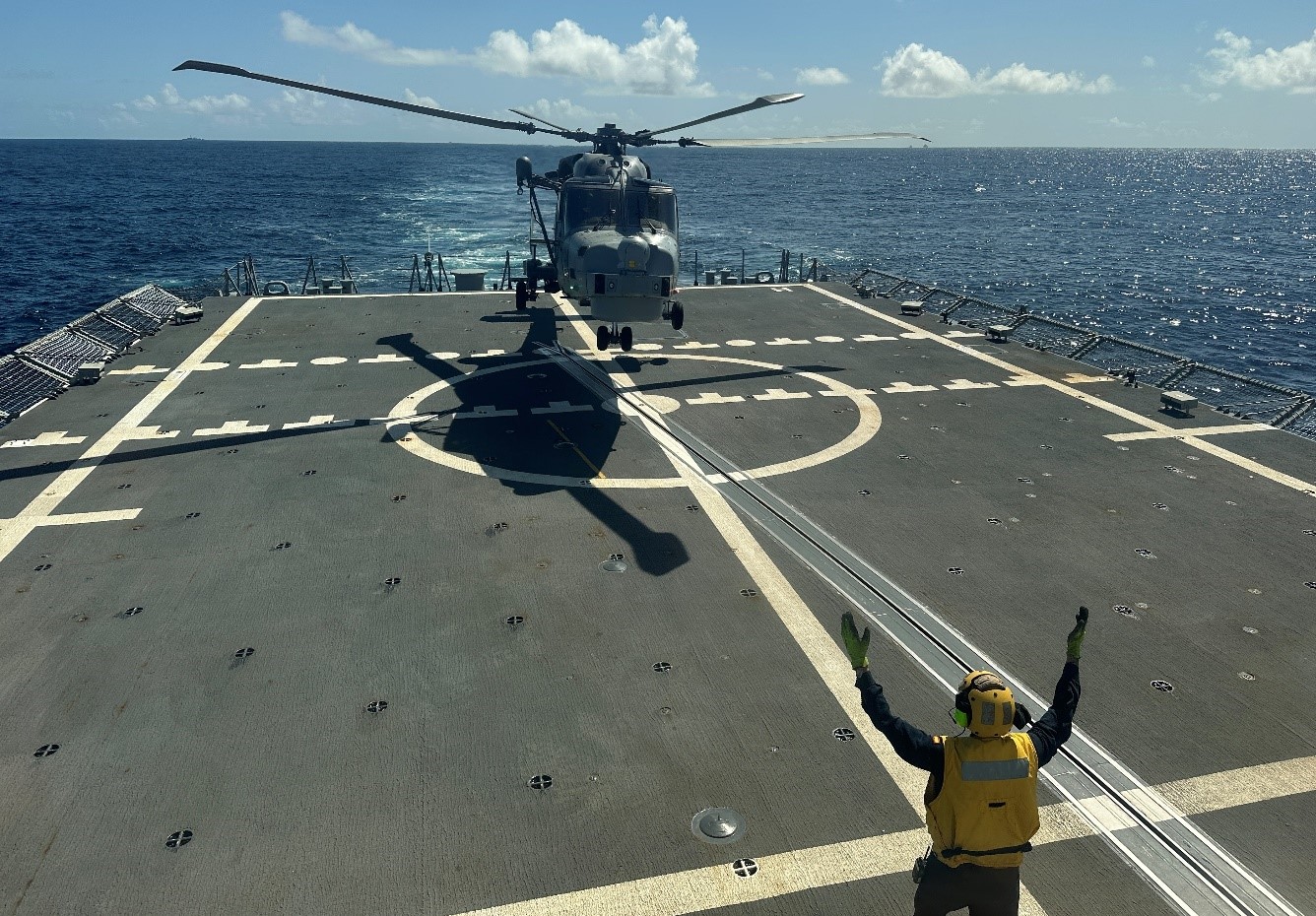
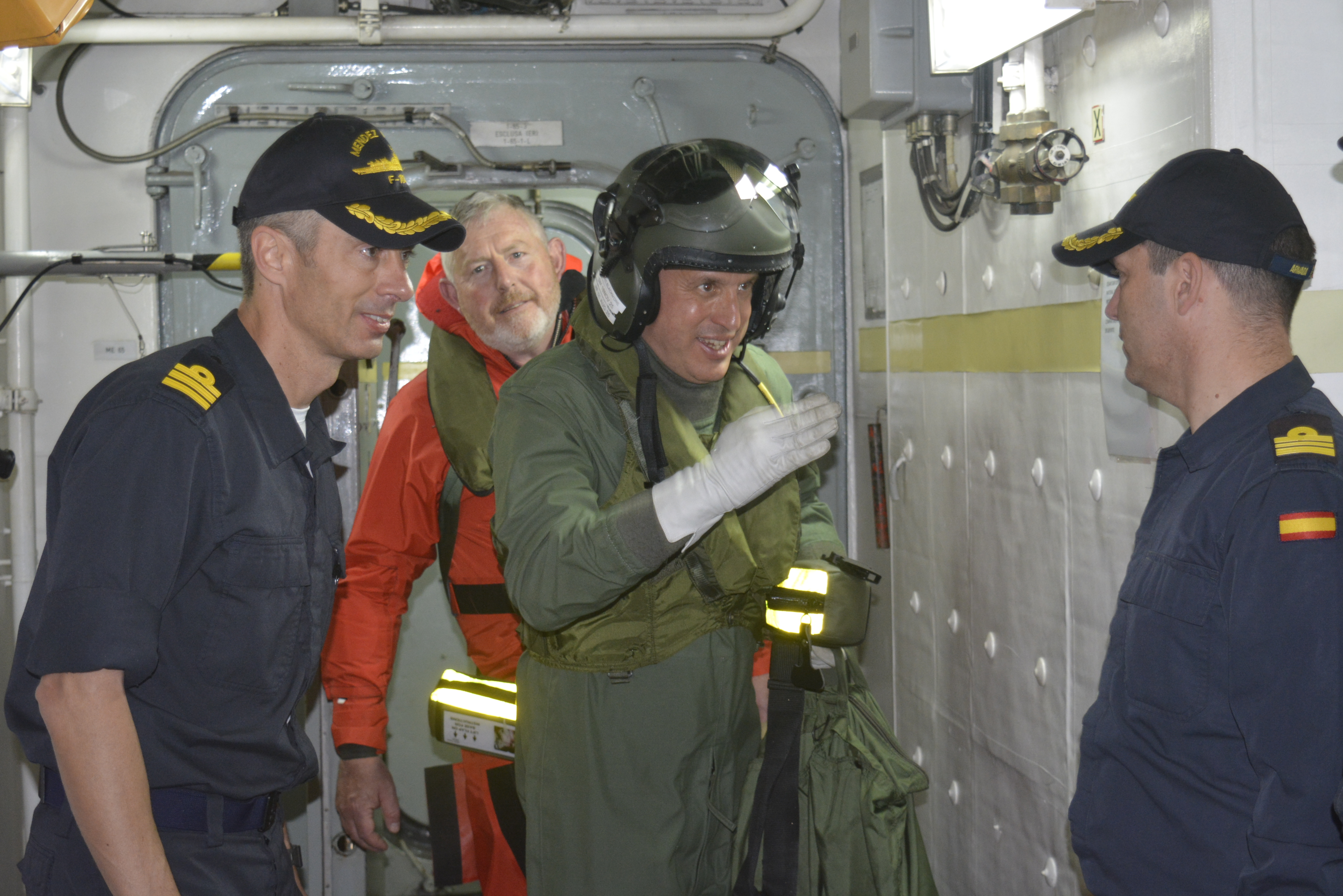
The Spanish Navy frigate Méndez Núñez (F-104) has now formally joined the Carrier Strike Group (CSG) 25, centred around the British aircraft carrier HMS Prince of Wales. The ship will operate with the task group for the next four months. Since departing from Ferrol Naval Arsenal, the frigate has carried out a series of preparatory activities to move towards full interoperability within the multinational formation. One such activity involved a training exercise in which Méndez Núñez acted as an adversary ship against the rest of the naval units. During this phase, the Commanding Officer, Commander Jaime Salvador Muñoz-Delgado Perez, along with two of his officers, was transported by helicopter to HMS Prince of Wales to participate in the initial command conference alongside other deployment participants.
During these initial stages of integration, Méndez Núñez and the other participating vessels established the requisite communications and command-and-control networks to facilitate coordinated operations. As a result, naval units from the United Kingdom, Norway, Canada, and Spain are already conducting joint operations.
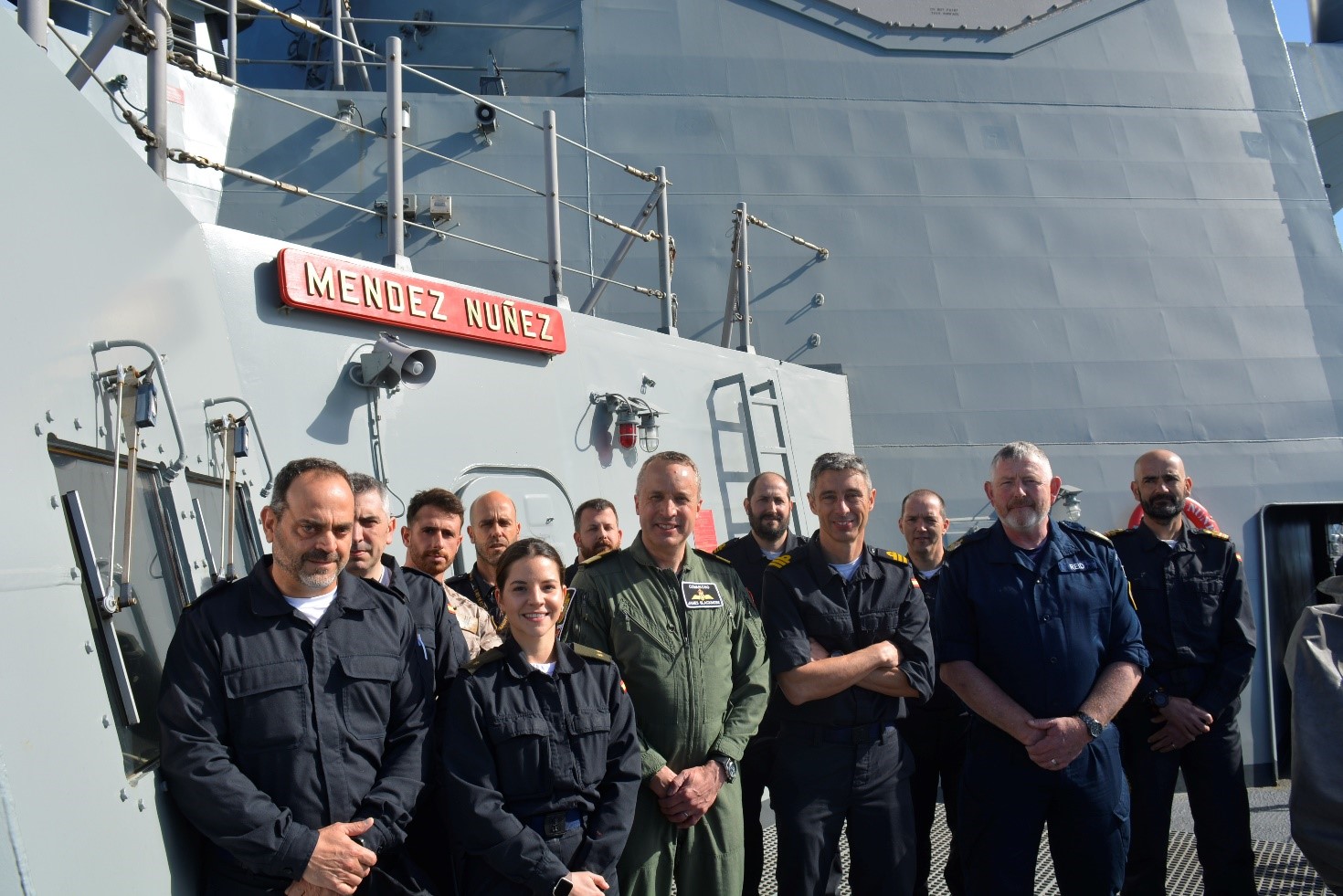
The Carrier Strike Group Commander, British Commodore James Blackmore, embarked aboard Méndez Núñez to gain first-hand insight into the Spanish ship’s capabilities and to engage with its crew. The visit served as an opportunity to exchange views on the operational aspects of the early phases of the deployment.
As the task group continues its passage toward the Mediterranean, the vessels are conducting constant training, both individually and collectively, to achieve full operational readiness in the shortest possible time. Air defence, surface warfare, and anti-submarine exercises are being carried out, alongside qualification flights for Spanish pilots operating the fighter jets and helicopters embarked on the British carrier.
Having met the initial milestones of its integration into CSG 25, Méndez Núñez is now sailing with allied warships toward the Indo-Pacific area of operations, demonstrating both her operational capability and the readiness of her crew. As Commander Muñoz-Delgado noted, ‘This rapid and effective incorporation into the naval task group reflects the high degree of interoperability we share with our allies, built upon NATO-standard procedures, and the high level of training of our crew. Moreover, the warm welcome extended by Commodore Blackmore and the commanding officers of the participating vessels, along with the strong sense of camaraderie, has made our integration even smoother’.
Preparation and Readiness
The full integration of Méndez Núñez into the Highmast deployment was preceded by extensive operational and logistical preparation, which began in September following the completion of her scheduled maintenance period. During this time, the frigate took part in several national exercises before undergoing operational qualification assessments in January and February. These confirmed the ship’s readiness and training level to perform her duties within the task group.
From a logistical perspective, preparation for the deployment—lasting over four months and taking place in the distant waters of the Indian and Pacific Oceans—required significant effort. This included the tuning and readiness of onboard systems, procurement of critical spare parts to maintain operational functionality, crew preparation (including medical readiness through preventive vaccinations), and the loading of essential supplies and provisions required for such a long and demanding mission.
Participation in Operation Highmast represents a significant operational challenge for Méndez Núñez and her crew. However, above all, it is an opportunity to showcase Spain’s technological independence, the strategic reach of the Spanish Armed Forces, and the country’s firm commitment to maritime security and global stability.
Fotos